
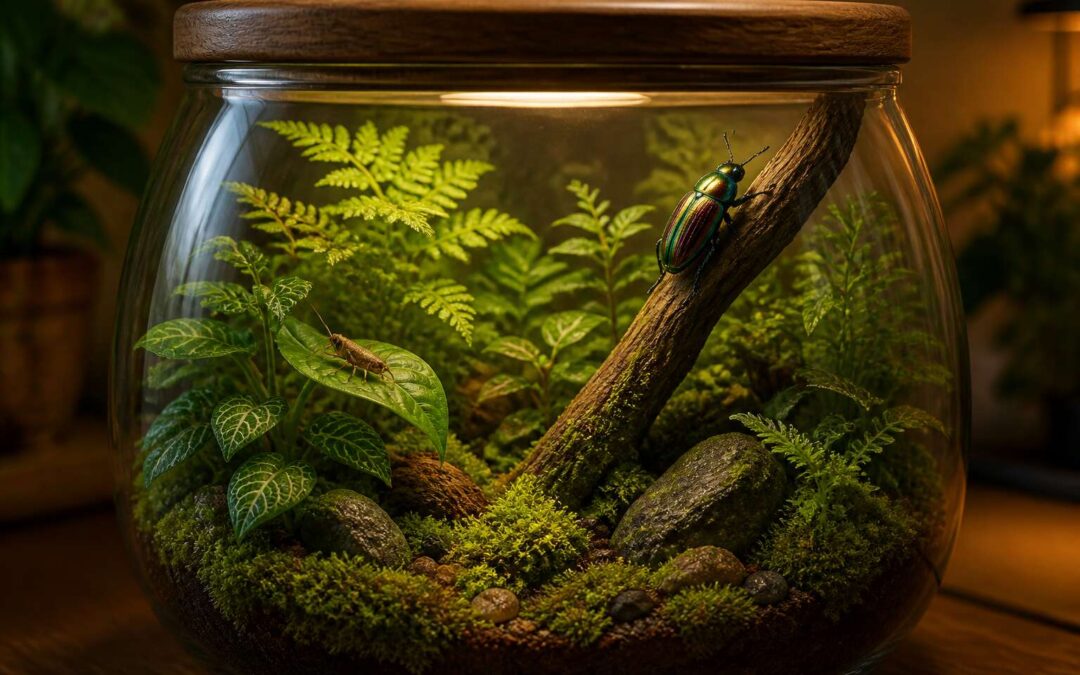
Choosing the Right Inhabitants
Choosing the inhabitants for a terrarium with insects demands patience and observation. Few people realize that beetles and springtails have vastly different moisture needs. You must match each species to your enclosed environment.
Some prefer arid zones, others thrive in damp leaf litter. Start with hardy species like isopods, which forgive beginner errors. Avoid mixing predators with prey unless you intend a brutal cycle.
- Check the humidity tolerance of every species.
- Confirm their dietary range, as some eat only decaying wood.
- Quarantine new arrivals to prevent disease.
Your terrarium with insects becomes a living system, not a display case. Watch how they interact. Their movements will tell you more than any guidebook.
Designing a Self-Sustaining Habitat
The first time I saw condensation bead on the glass of my terrarium with insects, I felt a quiet thrill. That moisture cycle is the heartbeat of a self sustaining habitat. It means life is moving, but also that the system is balanced. Building this world starts from the ground up, literally. Your substrate is the foundation. I found that a layered base works best for drainage and for the microfauna that keep the soil healthy.
– A drainage layer of small pebbles or clay balls
– A separation screen of geotextile fabric
– A thick layer of activated charcoal to filter the air
– The main substrate, a mix of sphagnum moss and organic topsoil
This terrarium with insects becomes a small, honest reflection of the wild, complete with its own cycles and quiet struggles. It is not about control. It is about observation. When the plants root and the isopods breed, you see the real charm of rural patience. A jar of life needs no grand gestures. Just the steady, deliberate pace of nature doing its work.
Feeding and Nutritional Essentials
A terrarium with insects demands a careful hand at mealtimes. These creatures are brutally honest about their appetites, eating what they need and leaving the rest to rot. That leftover banquet, however, is where trouble begins. Excess food breeds mould and fruit flies, ruining the habitat.
Observe your insects after each offering. Crickets are greedy, isopods methodical, and mantises dramatic. Adjust portions based on consumption. A sound rule is to provide only what they can finish within a day.
- Protein from feeder insects or fish flakes.
- Calcium via crushed cuttlebone or commercial dust.
- Plant matter for omnivorous species.
That final point carries the most weight. Monotony in a terrarium with insects leads to nutrient gaps. Vary the menu, and your colony will respond with stronger activity and longer lives!
Maintenance and Population Management
A single pair of crickets can produce hundreds of offspring in a month. In a compact terrarium with insects, that boom quickly becomes a crisis. Overcrowding leads to waste buildup, stress, and even cannibalism. I have watched keepers lose entire colonies because they ignored early warning signs.
Maintenance demands consistent observation. Check for uneaten food, frass piles, and unusual behaviour every few days. When numbers climb, act immediately. Remove excess adults, separate egg-laying substrate, or introduce a predator. Pick one method and apply it consistently.
- Count your insects weekly to spot population trends.
- Replace substrate monthly to control ammonia levels.
- Quarantine new individuals for seven days.
This routine keeps your terrarium with insects balanced. Adjust feeding and moisture based on current numbers, not a fixed schedule. Small corrections today prevent total collapse tomorrow!