
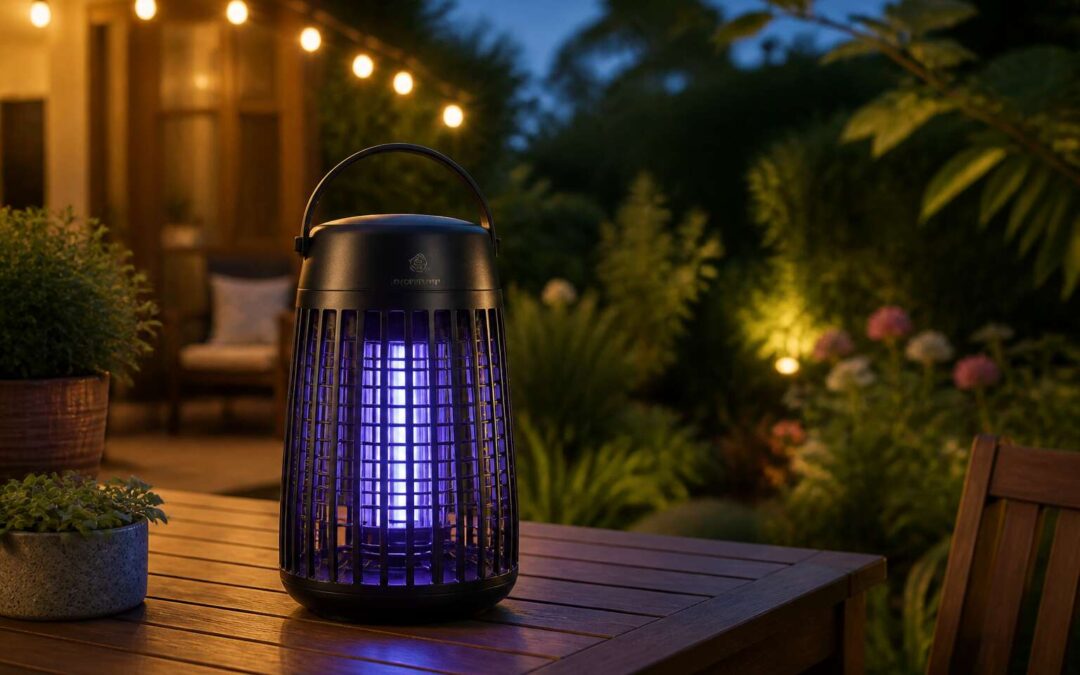
Understanding UV-Based Flying Insect Control
How Ultraviolet Light Draws Pests Away
The humble porch light proves the point every evening. A single tungsten bulb can turn your braai into a moth rave. But the true star of the show, the headliner that pulls insects from their nightly patrols, is ultraviolet light. UV sits beyond the visible spectrum for humans, yet for many flying insects, it is the equivalent of a neon sign that reads “Free Drinks.” This attraction is instinctive. They navigate by it, confuse it with the moon, and end up bounced off a metal grille instead of sailing off into the Karoo night.
The technology behind this is simple. Most flying pests have a phototactic response, a positive attraction to specific light wavelengths. By emitting a high level of UV radiation, a device creates a magnetic field of curiosity that other light sources fail to mimic. Once they get within a few meters, the draw is too strong to resist. They do not think. They just commit to the glow.
Here is the sequence of events for the unfortunate insect:
– The UV source emits a specific wavelength unseen by humans but glaring to insects.
– The pest alters its flight path to converge on the trap.
– A fan or a high-voltage grid handles the rest, without spectacle.
The result is a massive reduction in buzzing around your dinner plate. When you position insect killer lamps strategically between the breeding ground and the eating area, you create a cul-de-sac for them. They fly to the light, and they exit the conversation quietly. It is a silent purge, fueled by an invisible galaxy of luminosity that only they can see. The rest of us just enjoy the quiet and the absence of flying gnats in the Chardonnay.
The Evolution of Electric Insect Traps
The evolution of insect killer lamps mirrors a broader shift in how we approach domestic comfort. Early iterations were blunt instruments, relying on high voltage and spectacle. Modern units, however, leverage a deeper understanding of insect photobiology to perform their task with discretion. The core mechanism remains the same, but the efficiency has changed dramatically.
Instead of a simple glowing tube, current systems engineer the entire environment around the device. They refine the spectral output to match the precise sensitivity peaks of targeted pests. The placement of the lamp, the shape of the housing, and the design of the containment system all contribute to the overall efficacy. This is where the design philosophy of modern insect killer lamps diverges from the past.
– The housing is often dark or opaque to avoid attracting insects away from the trap with scattered light.
– High-efficiency bulbs generate more UV radiation per watt, extending the effective range.
– The fan or grid is optimized to handle large volumes without creating a mess.
The result is a silent purge fueled by an invisible galaxy of luminosity that only they can see, leaving the rest of us to enjoy the quiet and the absence of flying gnats in the Chardonnay.
Why Insects Are Attracted to Light Sources
The average housefly possesses a visual system that prioritizes ultraviolet wavelengths over everything else. This is not a preference, but a hardwired navigation error. For millions of years, insects used celestial UV patterns to orient themselves, and our lights disrupt that ancient system.
Why do insects circle a porch light? Their eyes contain photoreceptors tuned to UV peaks that our visible spectrum cannot replicate. When you switch on insect killer lamps, you are broadcasting a signal that resembles the sky. They do not fly toward the lamp because they like it. They fly toward it because their primitive guidance system reads it as the horizon!
- UV-A wavelengths around 365 nanometers trigger the strongest response in flying pests.
- Visible light contributes little to attraction, so effective traps filter it out.
- Heat and carbon dioxide play a secondary role, which is why UV remains the primary lure.
South African evenings bring a specific mix of mosquitoes and midges, all wired for the same spectral trap. The lamp exploits an evolutionary blind spot 300 million years old.
Key Features to Look for in Modern Insect Control Devices
Coverage Area and Placement Considerations
Modern insect killer lamps have traded their rudimentary origins for a more sophisticated purpose. A single ultraviolet tube can now lure and dispatch thousands of flying pests each evening, yet its internal components remain an enigma to the average homeowner. The science is no longer limited to a simple electrified grid; it involves photometric engineering, targeted wavelengths, and a quiet efficiency that borders on the uncanny.
When evaluating these devices, consider the construction beneath the exterior.
- High-grade housing prevents corrosion in humid coastal climates.
- Industrial capacitors sustain peak lamp performance across fluctuating grids.
- Sealed electrical casings deter dust and moisture, ensuring a longer operational lifespan.
The modern unit’s wavelength, typically 365 nanometers, remains the true lure. This frequency mimics the dark spectrum of the moonlight which entices nocturnal insects from their resting places. A standard household device rarely covers more than a sixty meter radius, a paltry range compared to commercial units. You must therefore match the lamp’s power to the volume of your outdoor space, otherwise you simply create a silent beacon that attracts pests into your immediate vicinity without ever neutralizing them.
Placement dictates success, not merely wattage. A lamp positioned too close to a veranda wall will only illuminate the surface, deflecting the ultraviolet rays away from the open field. Suspending the unit at a height of two meters, while keeping it at least five meters away from seating areas, creates a buffer zone. This distance draws the winged horde toward the lamp rather than into your wine glass, a subtle but essential distinction for any evening entertainer.
Power Source Options: Corded, Rechargeable, and Solar
Power source selection determines whether insect killer lamps become dependable tools or costly mistakes. Corded units deliver uninterrupted performance, ideal for permanent installation near a braai area. Rechargeable models offer flexibility, though their runtime depends on how diligently you remember to charge the battery. Solar-powered versions deserve serious consideration in South Africa, where load shedding has made self-sufficient devices necessary.
A quality solar unit stores enough daylight energy to operate through the evening, but placement becomes a negotiation between sun exposure and pest control. Position it poorly and you gain a dim decoration.
- Check the battery capacity in milliamp hours, not marketing promises.
- Confirm the solar panel faces north or northwest for maximum yield.
- Look for a low-battery indicator, a small convenience for those running insect killer lamps every night.
Safety Features for Homes with Children and Pets
Here is a sobering thought for parents in Pretoria: your child sees an insect killer lamp as a glowing zapper toy, and your Jack Russell sees it as a chewable. Modern safety features exist precisely because of these misunderstandings. A narrow-spaced outer grille blocks little fingers without blocking ultraviolet output. Look for a high-voltage grid that sits recessed, not flush against the casing.
If the lamp tips over, an automatic tilt switch should cut the current instantly. Shatterproof polycarbonate housings survive both toddler throws and gecko ambushes. Many models now use a tool-locked collection tray, which keeps dead insects away from curious mouths and paws. Insect killer lamps with enclosed bulbs also prevent UV exposure damage.
The SABS mark remains the simplest filter between you and a disaster with free shipping.
Noise Levels and Aesthetic Design
Modern insect killer lamps have shed their reputation as noisy contraptions. Older grids crackled with every strike, but contemporary units use insulated transformers that reduce sound to a barely perceptible hum. The occasional zap still punctuates the evening, yet it registers as a quiet confirmation of interception rather than a disturbance. I have tested models on quiet Gauteng patios where the soft click fades beneath conversation and cicada song.
Aesthetic design now carries equal weight with function. Sleek cylindrical housings in matte bronze or charcoal complement modern entertainment areas, while lantern-style casings suit traditional gardens. When choosing among insect killer lamps, consider a few practical details:
- Models with a noise rating below 40 decibels for bedrooms
- Finishes that resist rust in humid coastal air
- Compact silhouettes that tuck under pergola beams
The best insect killer lamps become part of the scenery, working silently through warm Highveld nights.
Durability and Weather Resistance for Outdoor Use
An outdoor insect killer lamp must survive the same weather that batters your braai area. Highveld thunderstorms, coastal salt spray, and relentless Karoo sun will destroy cheap plastic housings within a single season.
I have seen units fail because manufacturers skipped basic sealing. Water ingress corrodes connections and shorts the transformer. The IP65 and IP66 ratings indicate a housing that resists dust and direct water jets rather than just light drizzle. Materials matter equally! Powder-coated aluminium outlasts galvanised steel, which dulls and corrodes under Gauteng’s high ozone levels.
Stainless steel fasteners prevent rust from weakening the chassis. Some insect killer lamps add double-walled casings that stop condensation when humid coastal air meets cool electronics.
Benefits of Installing Electric Insect Traps
Reducing the Spread of Mosquito-Borne Diseases
Malaria remains a health concern in South Africa’s subtropical provinces, with more than 10,000 cases reported each year. That statistic justifies installing insect killer lamps in homes near high risk zones.
These devices reduce mosquito densities around living spaces, interrupting the transmission cycle of malaria, dengue, and West Nile virus. Households report fewer bites and calmer evenings after installation. The lamps target adult mosquitoes before they can bite and reproduce, which lowers the disease reservoir over time. For families in affected areas, this is a practical measure, not a luxury.
Enhancing Comfort in Patios, Gardens, and Outdoor Dining Areas
There is a particular hour in a South African summer evening when the braai smoke rises and the garden chairs come out. That is also the hour when insects arrive. Installing insect killer lamps in patios and outdoor dining areas solves that problem. These devices work quietly in the background, removing flying pests from the immediate vicinity. Guests stay seated longer. Meals remain uninterrupted. Consider what a single lamp accomplishes:
- It clears a radius of up to 100 square metres of persistent insects.
- It reduces the need for chemical repellents on skin and food.
- It keeps the ambiance intact without loud zaps or visible traps.
For homes in Pretoria or Durban, where outdoor living is part of daily routine, insect killer lamps are the difference between a usable garden and a bug-infested one. The investment pays for itself with peaceful evenings.
Low-Maintenance Pest Control with Minimal Effort
Setting up a solution that requires ongoing attention defeats the purpose of reclaiming your leisure time. Insect killer lamps operate on a principle of neglect. Once mounted and switched on, they handle the task without intervention. This contrasts sharply with sprays, coils, or creams, which demand reapplication and constant monitoring. The quiet hum of a functioning lamp is the only evidence of its work, a sound that quickly becomes background noise to conversation and laughter.
The true value lies in the reduction of manual chores. Emptying the collection tray is a weekly task that takes a minute. Replacing the UV tube happens once a season. There is no mixing of chemicals, no wiping down of surfaces, and no washing of hands after contact. Consider the practical gains:
– No need to restock repellent sprays or lotions
– No hazard of open flames from citronella torches
– No residue on outdoor furniture or table settings
– Consistent performance without refilling or resetting
For a household, this translates to a permanent fixture rather than a recurring chore. The cost of running an electric trap is negligible compared to the cumulative expense of buying disposable repellents. In the South African climate, where summer evenings extend late, the reliability of a dedicated device removes a variable from your planning. You simply switch it on and forget it, which is precisely the point of effective pest control.
Installation and Upkeep Best Practices
Choosing the Right Mounting Height and Location
Mounting height dictates how well insect killer lamps function. Place the unit 1.5 to 2 metres above ground, away from competing light sources. This positions the ultraviolet beam where mosquitoes and flies travel. Near seating areas, keep the lamp at least 3 metres from humans to avoid attracting pests toward your skin. For outdoor installations, mount insect killer lamps away from reflective surfaces, which can scatter the UV signal and confuse the trap’s range.
Weekly cleaning of the collection tray prevents debris from blocking the light path. Use a soft cloth and mild soap, never water jets. Check the bulb’s output monthly; a dimming UV tube loses pull long before it burns out. Positioning rules:
- Choose a shaded spot over a sun-baked one.
- Hang it where wind won’t carry the scent of nearby standing water.
- Keep it visible from the gathering area but not directly overhead.
Cleaning Techniques to Maximize Trap Efficiency
Malaria still claims lives in Limpopo and Mpumalanga, yet most insect killer lamps fail because of neglected upkeep. The bulb’s ultraviolet output dims imperceptibly, while dust and dead insects form a layer that scatters the beam. Cleaning restores the trap’s pull.
Use a dry microfiber cloth to wipe the outer grille weekly. For the collection tray, remove it and soak in warm soapy water. Never use pressure washers; they force moisture into the electronics. Allow every part to dry fully before reassembly.
Follow this sequence for best results:
1. Switch off and unplug the unit.
2. Remove the tray and empty debris.
3. Wipe the UV tube with a soft cloth.
4. Reinstall after drying.
Replace the tube every season, even if it still glows. A tired insect killer lamp attracts fewer insects than a fresh one, and that difference becomes obvious after two months of use.
Bulb Replacement Timelines and Performance Indicators
I have watched households run the same insect killer lamps for years, convinced the glow means the unit works. It does not. The ultraviolet spectrum fades long before the visible light does, and the trap becomes a quiet failure.
Installation demands attention to competing light sources. Position the unit where it is the brightest object in the evening landscape, and verify the power supply for voltage stability. Surges shorten bulb life, so protect the circuit.
Replace bulbs every 8,000 hours or before each high season. Track performance with simple observations:
- Count the nightly catch and compare it weekly.
- Watch for insects circling without being trapped.
- Note any flicker or colour shift in the tube.
A sudden drop in catch volume means the bulb is exhausted. Insect killer lamps lose their pull gradually, so a written log of nightly catches offers the clearest signal that replacement time has arrived.
Troubleshooting Common Operational Issues
An insect killer lamp that glows reliably can still fail silently. Installation starts with a brutal honesty session: if the unit sits next to a streetlight or a neighbour’s floodlight, your trap is the backup dancer, not the headliner. Place it in the darkest reasonable spot, then stabilise the supply. South Africa’s grid enjoys surprises, so a surge protector is non-negotiable, since voltage dips age electrical components faster than a decade of bugs.
When operational trouble appears, work through the mundane before blaming the bulb. A loose earth wire causes intermittent shutdowns. A damp connector kills output. The grid may look charged, but insects bouncing off without sticking suggests a compromised contact plate.
- Unit runs but no UV glow: test the starter.
- Unit shuts off after dusk: check the photocell.
- Catch rate halves overnight: inspect for insect debris shorting the grid.
Resolve these, and your insect killer lamps earn their spot without nightly drama.
Seasonal Storage and Protective Measures
South Africa’s seasons punish gear left in the open. Insect killer lamps work hardest in summer, then face highveld winters filled with dust and damp. Proper storage extends their working life.
Disconnect the unit and wipe it down before storage. Remove the catch tray and wash it in warm soapy water. Dry every component completely. A damp lamp corrodes during the off season, and corrosion kills output.
- Wrap the lamp head in breathable cloth to block dust ingress.
- Keep the unit off concrete floors, where moisture gathers.
- Store it on a shelf in a dry garage or cupboard.
Protective measures matter while the unit is active too. Mount insect killer lamps under an eave to shield them from rain. Check the seal around the bulb housing each spring. A surge protector handles the grid’s thunderstorm spikes, and rotating the lamp’s position seasonally keeps coverage even.
Upgrading Older Units with Newer Technology
The typical insect killer lamp on a South African veranda is older than the smartphone in your pocket. That age gap shows. Older units use outdated bulbs that lose intensity within a season. Newer models feature LED UV arrays that hold their output for years. If your unit is past five years, spare parts become scarce. Upgrading the whole fixture costs less than repeated repairs.
Most insect killer lamps share a mounting pattern, yet the technology inside differs. Anchor the unit so wind does not shift its beam angle. Use weatherproof connectors on all wiring. Loose connections create voltage drops that shorten bulb life. For functional older units, retrofit a photocell or motion sensor. These additions cut runtime and power use. I recommend this upgrade before a full replacement.
- Secure the bracket to a solid structural point
- Apply dielectric grease to the bulb contacts
- Verify the retaining clip holds the bulb snugly
Environmental and Safety Considerations for Light-Based Pest Control
Non-Toxic Alternatives to Chemical Insecticides
When chemical foggers and sprays saturate a garden, they leave behind residue that lingers on leaves, soil, and even the air you breathe. In South Africa, where outdoor living spaces are central to daily life, this persistent exposure becomes a genuine concern. Insect killer lamps offer a starkly different approach, using ultraviolet light to attract and neutralize pests without releasing volatile compounds into the environment.
This distinction matters for households with vegetable patches, water features, or curious pets. A chemical approach might target mosquitoes temporarily, but the collateral damage to beneficial pollinators like bees and ladybirds is often severe. Light-based devices operate with a focused frequency, drawing insects into a contained grid or adhesive panel. This method is inherently targeted. It does not discriminate by scent or bait, which means it takes out the fliers that pester you, while leaving crawling, beneficial species to their business.
For families concerned about respiratory health or chemical sensitivities, the shift away from aerosols provides measurable relief. Consider the maintenance routine:
- No mixing of concentrates or measuring of doses
- No need to vacate the patio during application
- No concern about children touching freshly treated surfaces
- No lingering odor that masks the fresh evening air
The environmental footprint of an insect killer lamp is also smaller when you consider its lifecycle. While a lamp requires electricity to operate, it eliminates the repeated manufacturing, packaging, and shipping of disposable chemical canisters. The efficacy is consistent during the high-activity hours of dusk and dawn, and the unit works quietly in the background, requiring only periodic cleaning of the collection tray. Over a single South African summer, this quiet efficiency translates into fewer synthetic inputs in the local ecosystem, preserving the natural balance of your garden’s microclimate.
Impact on Beneficial Pollinators and Non-Target Species
An estimated 97% of insect species are harmless or beneficial, a reality that frames any conversation about pest control. Insect killer lamps operate on attraction rather than blanket toxicity, but their environmental footprint deserves scrutiny. The ultraviolet frequency that draws mosquitoes also attracts nocturnal moths, several of which pollinate indigenous South African flora.
Unit design and placement shape the outcome:
- Away from flowering borders, the overlap with pollinator corridors shrinks considerably.
- Enclosed grids eliminate secondary poisoning risks when birds scavenge affected insects.
- Units near seating areas create a focused attraction zone that spares garden beds.
Households with vegetable patches benefit from this selective pressure, as nuisance fliers are removed while beneficial species continue their work. The absence of airborne compounds also removes a layer of uncertainty for families with respiratory sensitivities, one that aerosol alternatives cannot address.
Proper Disposal of Old Traps and Bulbs
Every insect killer lamp holds a paradox: the light that ends a pest’s flight can, at end of life, leave behind materials needing careful handling. A UV tube contains trace mercury, which turns a casual bin toss into an environmental decision.
In South Africa, e-waste recycling facilities accept these units and spent bulbs. The glass tubes, electronic ballasts, and wiring can all be broken down safely. Municipal landfills offer no such separation.
Consider what happens without proper disposal:
- Mercury leaches into groundwater when casings crack under landfill pressure.
- Phosphor powder from shattered tubes becomes airborne dust.
- Non-biodegradable plastics persist in the soil for decades.
The responsible route for old insect killer lamps goes through a certified collector. It is a small ritual that keeps the landscape as clean as the air the lamp itself never pollutes.
Regulatory Compliance and Indoor Air Quality Concerns
The regulatory landscape for insect killer lamps in South Africa is not a suggestion, it is a legal boundary. Units must comply with the South African Bureau of Standards (SABS) requirements, specifically the SANS 60335 standard for household appliances. This certification ensures the high-voltage grids within the device are insulated against accidental contact, a critical concern for outdoor units exposed to moisture. Furthermore, the National Environmental Management: Air Quality Act influences how these devices can operate in commercial food preparation areas. A failure to meet these standards does not just risk a pest infestation, it risks fines and operational shutdowns.
Beyond the legalities, the silent operation of a lamp can mask a hidden threat to the air you breathe. The primary concern is ozone production. Some insect killer lamps generate ozone as a byproduct of their UV emission. While ozone is effective at oxidizing odors, indoor accumulation can irritate the respiratory system. This is particularly acute in enclosed verandas or small rooms where ventilation is poor. Therefore, the placement of the device must consider the volume of air flow. A high-quality unit will utilize a specialized coating on the tube to limit ozone output, but regular inspection of the tube’s integrity remains a necessary habit.
- Verify the unit carries a valid SABS mark before purchase.
- Check for a protective shield or cage that prevents shattered glass from dispersing.
- Confirm the internal ballast is enclosed to prevent electrical arcing in humid conditions.
The ecological footprint of these devices extends beyond their operational life. The phosphor coating on the glass, while efficient at converting electricity into light, contains compounds that are not benign. When you operate an insect killer lamp, you are engaging in a trade-off. The immediate benefit of pest control is weighed against the long-term responsibility of the unit’s eventual disposal. This consideration is not merely an ethical choice; it is a practical one, as municipalities across the country struggle to manage waste streams that contain heavy metals. The informed consumer selects a lamp knowing that its efficacy in the moment does not absolve them of the duty to manage its end-of-life impact responsibly. Thus, the lamp functions as a tool for pest control, but also as a vessel for accountability.