
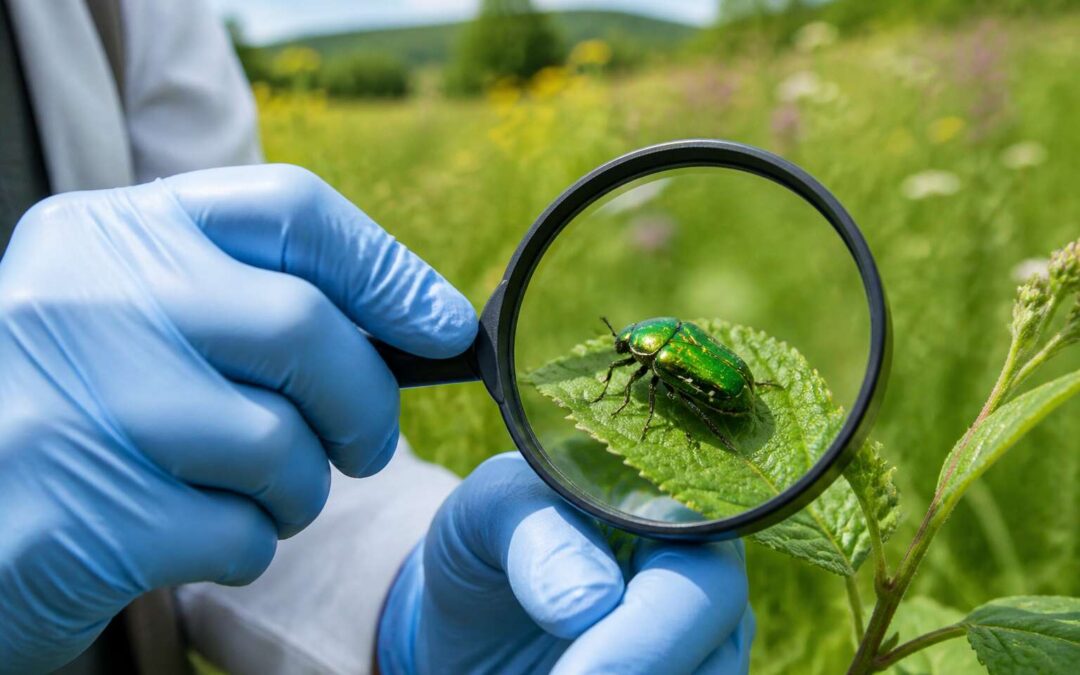
Defining Entomology as a Scientific Discipline
Entomology is the scientific study of insects, a discipline with a deceptively simple name. Most people picture eccentric professors chasing butterflies. The reality involves genetics, climate modelling, and forensic analysis, none of which require a net. South Africa alone hosts over 50,000 described insect species, each one demanding serious attention.
- Insect taxonomy and phylogenetics
- Behavioural ecology and sociobiology
- Applied pest management and vector control
I have spent years in this field, and the sheer complexity never stops being astonishing! Rigorous methodology rewards curiosity with unexpected insights. Without proper entomological research, we would lose track of entire ecosystems.
Foundational Tools and Techniques in Insect Research
Entomology demands patience before technology. A field notebook is essential for any serious study of insects. You record times, conditions, and behaviours, then reflect. The aspirator, a simple tube, lets you collect a specimen without harm. It is practical and absurd, but it works.
For social insects, observation requires subtlety. Video cameras capture interactions that the human eye misses. Combine them with:
- Calibrated thermometers for microhabitat data
- Pitfall traps for ground-dwelling species
- Fine forceps for delicate handling
Each tool serves a purpose. The field rewards methodical effort more than elaborate equipment.
Ecology and Behavior of Insects
Half of all described species are insects, yet we mostly notice them when they land on our braai. The study of insects reveals a quieter chaos. Dung beetles navigate by the Milky Way. Termites build ventilation shafts that outshine any green building.
- Some ants raise aphids like livestock, milking them for honeydew.
- Honeybees share directions through a waggle dance that would baffle any GPS.
- Parasitoid wasps convert living caterpillars into nurseries for their young.
That is some household drama! Ecology ties these behaviors to real consequences. Pollination depends on bee patrol routes. Decomposition follows the appetites of beetles and flies. Each species fills a slot, and removing one changes the system.
Applied Entomology and Human Impact
Applied entomology turns insect behavior into actionable intelligence. The study of insects has halted crop devastations and mapped the spread of sleeping sickness across the Lowveld. Consider what a single field survey can expose.
- Resistance patterns in disease vectors, tracked over seasons.
- Predator-prey shifts caused by pesticide drift.
- Pollinator declines tied to agricultural expansion.
Human impact shapes every insect population. When we alter habitats, we deliberately invoke ecological responses. I have seen boreholes become breeding grounds for Culex mosquitoes. Our choices, from housing design to waste management, directly steer insect behavior. Applied entomology turns those consequences into predictable data. It is not magic; it is science with stakes.
Emerging Frontiers in Insect Science
There is a quiet revolution happening in entomology, the study of insects. In South Africa, researchers are using genome sequencing to understand how locust swarms coordinate. One lab found that a single gene alters their behavior entirely.
This work extends beyond traditional field observation. Emerging technologies now allow scientists to track individual bees using tiny radar tags. They can map the spread of mosquito-borne diseases in real time. The results are astonishing, and they demand fresh thinking.
- Urban insect ecology, exploring how species adapt to cities like Johannesburg
- Biochemical analysis of insect venom for medical applications
- Machine learning models that predict pest outbreaks from weather data
Each of these frontiers asks new questions. And that is what makes the study of insects so compelling. The answers may change how we protect crops, treat disease, and even understand social behavior.