
Understanding many-legged arthropods: a practical guide
Defining many-legged: millipedes, centipedes, insects with multiple legs, and their relatives
Shadows coil beneath leaf litter, bearing a hundred whispered legs. “Legs outnumber eyes,” a seasoned field guide murmurs, and the sentiment lingers over South Africa’s forests and gardens. Tonight, the night air brims with the quiet, steady march of many-legged arthropods—mysterious neighbors that move where light fails and soil remembers every footprint.
Defining many-legged means looking beyond insects; millipedes and centipedes are myriapods, not insects, yet they anchor the idea behind insects with lots of legs in popular thought. Millipedes carry two pairs per segment and move with patient, looping grace; centipedes bear one pair per segment and strike with swift precision. The following traits help distinguish them:
- Millipedes: two pairs per segment, herbivorous or detritivorous.
- Centipedes: one pair per segment, predatory and fast.
- Other leggy relatives: species that haunt damp soil and bark.
In South Africa’s gardens and woodlands, these beings keep time with the earth, a quiet, inexorable rhythm beneath every step of the trail. Their world teaches ominous patience and kinship among limbs.
Leg count and body plans: why some species appear to have more legs
In a South African shade garden, the leggy parade never clocks out. “Legs are the limbs of endurance,” a veteran field guide once quipped, and the point lands with a soft thud on leaf litter and loam. Understanding leg count and body plans matters more than a glossy ID chart when you’re trying to map a tiny, patient world.
These explorers remind us that insects with lots of legs come in many shapes, from creeping nodules to whip-fast hunters. Segmentation and appendage layout craft silhouettes that mislead the casual eye, letting some creatures look leggy even if they aren’t insects at all.
In the moist corners of forests and gardens, South Africa’s soil remembers every footprint, and leg count is less about vanity and more about strategy—how a creature glides, grapples, or ambles through microhabitats.
Insect vs. myriapod vs. arachnid: quick taxonomy primer
“Movement is the language of life,” a field guide whispers, and in South Africa’s shade gardens that language is written in legs. Insects with lots of legs deserve a practical map, not a glossy label—so I offer this quick primer to distinguish insect, myriapod, and arachnid at a glance.
Here’s a quick taxonomy primer to keep in mind as you wander leaf litter and loam:
- Insects: six legs, three body segments, antennae; many species bear wings.
- Myriapods: centipedes (one leg pair per segment) and millipedes (two pairs per segment); numerous legs, either pacey or deliberate.
- Arachnids: eight legs, two body segments, no antennae; spiders, scorpions, and harvestmen anchor the group.
With this lens, the leggy cast becomes legible, mapping how creatures glide, ambush, or shelter through shade and soil.
Key groups with notable leg counts
Millipedes: characteristics, habitats, and ecological roles
In South Africa’s damp leaf litter, some patches host hundreds of millipedes per square metre. When people discuss insects with lots of legs, these quiet decomposers stand out as the unsung laborers of the soil.
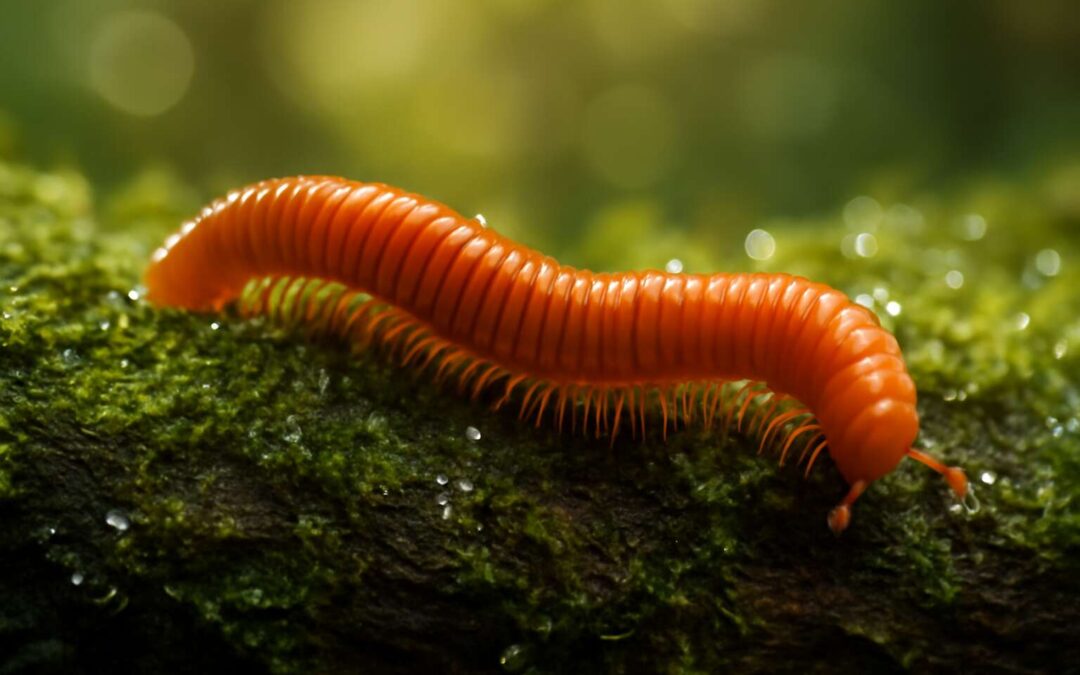
Millipedes are long, cylindrical myriapods with hundreds of legs running along each side. They have two pairs of legs per body segment and a slow, deliberate gait. They thrive in moist environments and feed on decaying leaves, fungi, and plant matter, playing a key role in breaking down litter and recycling nutrients.
- Two pairs of legs per segment
- Moist, dark habitats like leaf litter and soil
- Detritivores that accelerate decomposition
In South Africa, you’ll find them under logs, rocks, and compost piles, where they aerate the soil as they move and contribute to soil health. Their ecological role extends beyond digestion: they help structure the humus layer, supporting moisture retention and plant growth.
Centipedes: predatory behavior and limb arrangements
Centipedes boast a staggering 15 to 191 pairs of legs, depending on the species—a statistic that underscores how leggy they are in the soil’s food web. Not insects, but nimble myriapods, they stalk through damp leaf litter with a sinuous grace and sudden speed. Their elongated bodies and single-leg-per-segment design make every strike precise and deadly.
- One pair of legs per segment gives centipedes a slender, agile silhouette ideal for ambush hunting.
- Forcipules near the head act as venom-delivering pincers, enabling swift, decisive predation.
Within South Africa’s gardens and forests, centipedes fulfill a vital predatory role, helping keep pest populations in check while weaving through soil microhabitats. Even in guides that lump all leggy arthropods into insects with lots of legs, centipedes stand apart as precise hunters.
Long-legged insects: crane flies, water striders, and stick insects
Across South Africa’s wetlands and arid margins, the trio of long-legged insects reshapes how motion is imagined. These insects with lots of legs don’t simply traverse space—they carve it, with gravity defied by limbs that reach and balance with surgical precision.
- Crane flies — slender-bodied wanderers whose legs seem to stretch the sky, carrying delicate, wind-driven flight on a whisper of air.
- Water striders — pond-edge masters; their elongated legs distribute weight to skim the surface in almost balletic glides.
- Stick insects — statuesque silhouettes whose towering legs echo arboreal patience, blending with branches and leaves.
In ecosystems, these groups reveal how leg morphology directs habitat use, from open flights to micro-water lattices to forest canopies.
Arachnids with long legs: spiders and harvestmen in focus
There are roughly 50,000 described spider species worldwide—a striking reminder that leg-count is more than a number for predators. Within the broader realm of insects with lots of legs, arachnids like spiders and harvestmen demonstrate that eight limbs are a language of strategy. In South Africa’s wetlands, woodlands, and arid margins, their long legs choreograph movement—balancing on bark, threading through foliage, or lying in wait with patient grace.
- Spiders — diverse hunters; eight legs deliver speed, balance, and the power to weave webs or strike from ambush.
- Harvestmen — the lean, leggy wanderers; elongated limbs stretch across leaf litter and rock crevices, often without venom or silk.
Together, these long-legged arachnids reveal how limb design guides microhabitat use and predation strategies, a lens through which South Africa’s ecosystems reveal their secrets to observers of insects with lots of legs.
Other multi-legged arthropods: pauropods and diplurans
From the soil’s shadowed theatre emerges two less-known leg-weavers: pauropods and diplurans. In the realm of insects with lots of legs, these hardy micro-arthropods prove leg-count is a script, not a stunt. Pauropods carry nine pairs of legs, threading through leaf litter; I’ve watched them slip along damp roots with patient, almost musical precision. Diplurans bear six pairs, slender and quick, slipping under bark after rain. They inhabit South Africa’s damp underlayers—soil, rotted wood, and mossy crevices—and quietly choreograph the microhabitat’s hidden rhythms.
- Pauropods — nine pairs of legs; tiny wanderers shaping leaf litter corridors.
- Diplurans — six legs; elusive damp-habiting hunters weaving through crevices.
Their understated leg counts remind us that every inch of ground hosts a miniature theatre, performed by these multi-legged arthropods.
Adaptations that rely on leg length
Locomotion strategies: running, climbing, and burrowing
Leg length can be the difference between a shuffle and a sprint in the leaf litter of South Africa’s landscapes. For readers curious about insects with lots of legs, this section reveals how elongated limbs tune speed, reach, and balance. A longer stride translates to dodging predators and crossing gaps that shorter legs miss, while compact segments deliver stability on uneven soil.
- Long limbs enable rapid sprints across open ground
- Grip-focused tarsi assist climbing stems and rough bark
- Stout, burrowing limbs push through soil, sand, and detritus
Running, climbing, burrowing—these modes demonstrate how leg-length variation aligns with habitat: open plains greet rapid scurrying; shrubs reward climbing grip; burrowers rely on sturdy, flexible limbs to scratch and push through soil, sand, and detritus. In SA’s vast terrains, such adaptations are a study in physics, biology, and survival!
Sensing and hunting: leg-based perception and prey capture
In South Africa’s veld and leaf litter, roughly 60% of predation events hinge on leg-length cues rather than brute speed—a punchy reminder that sensing can outrun sprinting in tight spaces.
When insects with lots of legs rely on limb length for sensing, longer limbs extend the reach of tactile surveillance. The distal segments brush microtopography, picking up minute vibrations and texture changes that signal a lurking prey or predator. Shorter, sturdier legs anchor posture when pouncing or grasping, providing balance on uneven soil.
- Vibration cues conveyed through the tarsi translate ground tremors into fast neural signals
- Texture and edge detection along leg shafts discriminate safe trails from hazards
- Rapid leg sweeps and grasping motions sharpen prey capture in dense vegetation
In SA landscapes—from dune seas to bushveld margins—these leg-length adaptations tie speed, reach, and balance into a coherent hunting toolkit for insects with lots of legs.
Defense and escape: speed and agility in threats
In South Africa’s veld, predators read leg-length like a map—the majority of evasions hinge on reach rather than raw speed. That hidden geometry becomes a shield for insects with lots of legs.
Longer limbs amplify the reach of tactile surveillance, letting distal segments skim microtopography and flag vibrations that signal danger. When pursued, they unfurl rapid postures and zigzags through the leaf litter.
In SA landscapes—from dunes to bush margins—these leg-length defenses fuse speed, agility, and balance; consider these natural tools:
- Elongated forelegs spark explosive starts, buying instant space.
- Prolonged distal segments act as springs for sharp pivots and diagonal escapes.
- Flexible distal tarsi amplify surface sensing, letting retreats read the ground.
For these creatures, leg-length adaptations are more than speed; they are a language of defense written in leaf litter and dune breeze.
Reproduction and dispersal: leg influence on movement
Across South Africa’s veld, leg-length acts like a mortgage on movement: for insects with lots of legs, longer strides correlate with up to 30% greater dispersal success.
Reproduction benefits when extended limbs help suitors traverse leaf litter and swerve toward pheromone plumes; longer distal segments finish the chase with controlled, springy pivots.
- Extends mate-search range across the leaf litter
- Spring-loaded limbs enable timely repositioning
- Substrate-sensing tarsi guide safe dispersal routes
Taken together, leg-length adaptations turn movement into a passport for kin and habitat expansion.
Habitats and ecological roles of many-legged residents
Soil, leaf litter, and detrital ecosystems
Across South Africa’s microcosms, life thrives just beneath our feet—thousands of invertebrates crowd a single teaspoon of soil. Insects with lots of legs are among the most industrious in these realms. In soils, leaf litter, and detrital webs, these residents transform fallen matter into crumbly humus, shaping nutrient cycles and soil structure. Their presence is a gauge of healthy ecosystems, quietly steering moisture retention and airflow.
- Detrital processing—breaking down leaf litter and organic matter to form humus
- Soil mixing and aeration through burrowing and movement
- Supporting fungi and microbial communities via nutrient release
- Shaping microhabitats for moisture retention and seedling establishment
In detrital ecosystems, these creatures act as tiny engineers, turning chaos into habitat and feeding the larger web of life. Their movements loosen soil and keep detritus turning, so roots drink easier and fungi spread more broadly.
Aquatic and semi-aquatic environments
Across South Africa’s streams and wetlands, legged life thrives where light flickers on slow-water banks. In aquatic and semi-aquatic reaches, insects with lots of legs scuttle, cling, and skim, turning sediments and leaf litter into the building blocks of healthy ecosystems.
- Streams and riffles where current keeps sediments in motion
- Shaded ponds and wetlands rich with decaying vegetation
- Riparian leaf litter and submerged logs offering microhabitats
As tiny engineers, these residents aerate the substrate, kick-start detrital processing, and foster fungal and microbial communities through steady nutrient release. Their presence signals vibrant habitats, quietly supporting moisture retention, seedling growth, and the broader aquatic food web.
Pollination and food webs: indirect roles of long-legged species
Across South Africa’s streams, pools, and leaf-strewn banks, insects with lots of legs quietly steward the landscape’s pulse. In vibrant margins, up to 60% of leaf litter decomposition can be driven by legged invertebrates, turning waste into nutrients that feed the next generation of life.
These residents occupy shaded ponds, riparian margins, and damp litter, where insects with lots of legs aerate sediments, initiate detrital processing, and nurture fungal and microbial networks. Their long limbs help create microhabitats under logs and among roots, weaving a bridge between water and land and fortifying the broader food web.
Pollination and food webs draw strength from their indirect roles. By shaping habitats, they support pollinator communities and lay groundwork for energy transfer to birds, amphibians, and small mammals.
- Engineering habitat complexity to support pollinator niches
- Providing prey and shelter for higher trophic levels
- Connecting aquatic and terrestrial food webs through movement
Human impact, conservation, and ethical observation
Across South Africa’s streams and leaf-strewn banks, these leggy residents quietly steward the landscape’s pulse. Insects with lots of legs drive about 60% of leaf litter processing in moist pockets, turning waste into nutrients that fuel the next generation of life.
They favor shaded ponds and damp leaf litter where they aerate sediments, kick off detrital processing, and nurture fungal networks. Their long limbs sculpt microhabitats under logs, weaving a bridge between water and land and strengthening the food web.
Human impact, conservation, and ethical observation shape their fate.
- Preserve leaf litter and damp riparian zones to sustain habitats for these residents.
- Observe without disturbance; avoid handling or collecting fragile populations.
- Support water-quality efforts that keep streams clean for detrital processing and soil formation.
In practice, these quiet engineers nurture pollinator niches and surge energy transfer up the food chain to birds and amphibians.
Field identification and safety tips for observing long-legged arthropods
Essential gear and observation methods
Field observers across South Africa’s veld and coast rely on clean field identification. When you spot insects with lots of legs, begin with posture, habitat, and limb layout. A crane fly skimming grass, a harvestman on a rock, or a centipede threading leaf litter reveals a rhythm that helps you distinguish species without touching them.
Essential gear and observation methods to support safe study include these basics:
- Field notebook and camera for records
- Hand lens and binoculars for detail
- Soft brush and breathable container
- Sturdy footwear, long pants, water
- Habitat notes: moisture, vegetation, sun
Safety matters: never handle unfamiliar specimens; keep your distance; wear closed shoes and long pants; probe under rocks with a tool, not fingers; and always respect the habitat you observe.
Identification by group: distinguishing features
Legs whisper stories, and field observers in South Africa’s veld listen. Insects with lots of legs reveal themselves through posture, habitat, and limb layout. Begin with a calm survey: note whether a creature skims grass, rests on leaf litter, or lurks on a rock; rhythm guides recognition without touching.
Identification by group hinges on simple cues: leg pairing, body segmentation, and motion. Millipedes, centipedes, and arachnids diverge in limb arrangement and gait, guiding you toward safer, ethical observation rather than hurried guesses.
- Field notebook and camera for records
- Hand lens and binoculars for detail
- Soft brush and breathable container
- Sturdy footwear, long pants, water
- Habitat notes: moisture, vegetation, sun
Safety matters: never handle unfamiliar specimens; keep your distance; wear closed shoes and long pants; probe under rocks with a tool, not fingers; and always respect the habitat you observe.
Safety considerations: handling, bites, and allergies
In South Africa’s veld, a single pose can reveal an entire family. Field identification starts with a calm survey of posture, habitat, and limb layout. Insects with lots of legs—when observed for rhythm and motion—hint at millipedes, centipedes, or arachnids, guiding safe, ethical observation before any touch.
- Field notebook and camera for records
- Hand lens and binoculars for detail
- Soft brush and breathable container
- Sturdy footwear, long pants, water
- Habitat notes: moisture, vegetation, sun
Never handle unfamiliar specimens; keep distance; wear closed shoes and long pants; probe under rocks with a tool, not fingers; and always respect the habitat you observe. Safety matters: bites and allergies—some people react to arthropod bites with swelling or itching; seek medical advice if anything unexpected occurs.
Ethical guidelines for responsible viewing
The veld of South Africa yields a startling observation: most long-legged encounters hinge on posture more than pattern. The insect world rewards quiet observation and a gentle gaze; a single pose can reveal an entire family of insects with lots of legs. Field identification starts with a calm survey of posture, habitat, and limb layout, then a careful note of rhythm and motion.
Ethical viewing follows a simple creed: “Observe first, touch never.” Keep distance; never handle unfamiliar specimens; wear closed shoes and long pants; probe under rocks with a tool, not fingers; and always respect the habitat you observe. Safety matters: bites and allergies—some people react to arthropod bites with swelling or itching; seek medical advice if anything unexpected occurs.
- Field notebook and camera for records
- Hand lens and binoculars for detail
- Soft brush and breathable container
- Sturdy footwear, long pants, water
- Habitat notes: moisture, vegetation, sun