
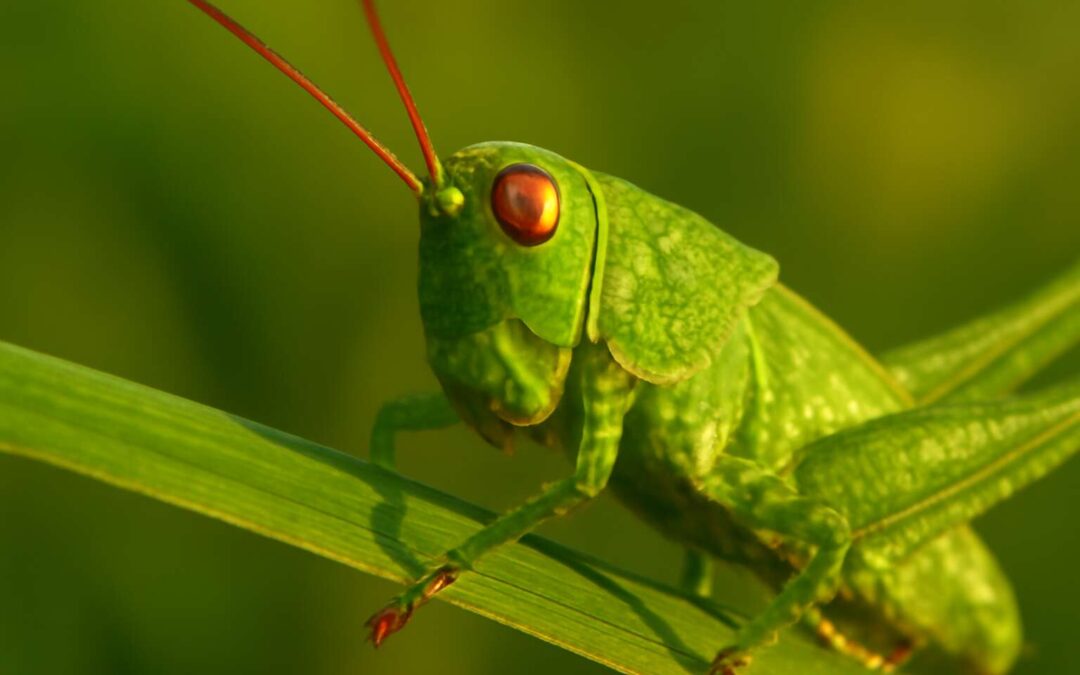
Understanding Grasshoppers as Insects
What are grasshoppers: key characteristics
In the sunlit veld of southern climates, grasshoppers insects rise like tiny harbingers of season, their chorus a murmur and a scream rolled into one. A recent study notes they can leap up to 20 times their body length—astonishing, and I have seen fields pause as they thunder across the grass!
Understanding their form is to read a small saga of adaptation. Here are key characteristics that define these amphitheatrical wanderers:
- Powerful hind legs crafted for explosive leaps that launch them into the air.
- Chewing mouthparts for a herbivorous diet—precision in leaf and stem.
- Wings on many species that enable short, directional flights when danger draws near.
From nymph to adult, their metamorphosis is a swift, nocturnal tale of survival. They play a crucial role in South African ecosystems, pacing the rhythm of crops and fynbos alike while inviting awe and a touch of dread in equal measure.
Differences between grasshoppers and crickets
Across South Africa’s sun-warmed veld, grasshoppers insects assemble a living percussion that shifts with every breeze. “Speed is survival,” notes a field ecologist, and their chorus answers in a language of leaps and light. Reading their presence asks us to trace a lineage shaped by wind, grass, and patient evolution.
What sets grasshoppers apart from crickets is more than noise; it is cadence and build. Consider these distinctions:
- Sound and daily rhythms: grasshoppers are largely diurnal, often producing notes with wing actions; crickets are famed nocturnal serenaders, whose songs fill the night air.
- Antennae length and body form: grasshoppers are short-horned with relatively modest antennae; crickets carry long, whip-like antennae and a more slender frame.
- Wings and posture: grasshoppers typically show robust hind legs and shorter forewings; crickets often bear longer wings and a leaner silhouette.
In South Africa’s mosaic—from fynbos to farmlands—these insects thread food webs with surprising precision, reminding us that the simplest leap can echo through an ecosystem.
Why grasshoppers are important insects
In the sun-warmed velds of South Africa, a rain-filled burst can populate a hectare with thousands of grasshoppers insects. “Speed is survival,” notes a field ecologist, and every leap writes a signature across the grasses, a living pulse echoing the season.
Understanding grasshoppers as insects reveals their weighty role in ecosystems. They turn plant energy into prey for birds, lizards, and small mammals, shaping vegetation patterns and aiding nutrient cycling. In South Africa’s mosaics—from fynbos to farmlands—their numbers rise and fall with rainfall.
- Food web linkage
- Herbivore-to-predator energy transfer
- Habitat-health indicator
These insects remind us how a single leap can sculpt soils and sky, threading life through South Africa’s landscapes.
Common myths about grasshoppers
The sun-warmed velds reveal a striking truth: grasshoppers insects can surge to thousands per hectare after a season of rain. I’ve stood among the grasses and watched their leaps sketch bright interruptions into the landscape. Understanding grasshoppers as insects helps us see how they link plants, predators, and soil health in South Africa!
Common myths persist about grasshoppers. Here’s what isn’t always true:
- They’re all crop pests that ruin farms.
- They only eat crops and never other plants.
- They always chirp and swarm noisily.
- They pose a danger to people or pets.
In reality, their impact shifts with rainfall and habitat, and many species inhabit diverse roles in the ecosystem.
Lifecycle and Biology of Grasshoppers
Egg, nymph, and adult stages
Across South Africa, grasshoppers insects unfold a lifecycle as brisk as a veld morning, and a single female can lay hundreds of eggs in a season. Observers marvel how such small beings orchestrate a population boom when rain kisses the ground—what a performance!
Eggs lie in pods just beneath the soil surface, protected by a crust and timed to moisture and warmth. When the rains come, tiny nymphs emerge, a sign that the cycle has accelerated from nap to sprint.
Stages at a glance:
- Eggs — ground-hugging embryos awaiting moisture; hatch in days to weeks
- Nymphs — wingless youngsters that molt through instars and grow strong hind legs
- Adults — fully formed, capable of flight and reproduction, driving the cycle forward
Biology-wise, kinesthetic hind legs power leaps, labrum mouthparts crunch leaves, and rapid molting ensures rapid growth. The lifecycle is a brisk, efficient performance, not a chaotic swarm but a choreographed procession.
Anatomy and locomotion: jumping and flight
Across South Africa’s sunlit velds, grasshoppers insects reveal a body built for speed and precision. Their hind legs brace like taut springs, capable of leaping up to 20 body lengths in a single bound. When warmed by the sun, many species ignite into brief bursts of flight, using wings to ride the air and escape danger in a single breath.
- Hind legs with enlarged femur and tibia store kinetic energy for explosive jumps
- Wings: membranous surfaces for lift in some species, hardened forewings for protection in others
- Chewing mouthparts, including a strong labrum, crunch leaves with ease
- Exoskeleton and rapid molts keep pace with growth and activity
The biology here is kinetic and rhythmic, a testament to how form drives function in an open veld and a shifting season.
Physiology: diet and metabolism
Speed is survival in the sun-warmed plains of South Africa; grasshoppers insects move with a metabolic rhythm suited for rapid bursts. Their gut extracts energy from greens, turning nourishment into ready fuel for hops and bursts on demand. Warm days quicken appetite and pace.
Diet and metabolism shape resilience. The diverse diet of grasses and forbs provides energy for daily activity and growth.
- Leaf quality and diversity determine intake
- Water balance affects digestion
- Temperature steers growth and energy use
In this choreography, these insects allocate resources to movement and survival, a balance that echoes veld wanderings and seasonal abundance. Diet and metabolism together forge endurance, from sprinting leaps to patient foraging.
Habitat, Diet, and Behavior
Typical habitats around the world
Across Africa’s sunlit plains, a chorus of wings announces the dawn—”The wind carries the story of every leap,” locals say—proof that grasshoppers insects thrive where heat hums in the veld. Their habitats range from open savannas to shadowed woodlands, each blade offering shelter and sustenance.
- Open savannas and grasslands
- Woodlands and shrublands
- Deserts and semi-arid regions
- Alpine meadows and mountain slopes
Diet is broad and opportunistic; they graze on grasses, forbs, and sometimes crops. As grasshoppers insects, their chewing powers energy for long leaps and bursts of flight, with plant choices shifting with season and rainfall.
Behaviour blends quiet patience with sudden bursts: daily routines, thermoregulatory basking, and discreet signaling through leg flicks. In the right wind, a lone grasshopper can ripple through a field like a thread of living gold!
Feeding habits and plant preferences
On the sun-warmed veld of southern Africa, grasshoppers insects serve as a living barometer of the season—after rain, numbers surge into the thousands per square meter. They thrive from open savannas to cool mountain slopes, each blade offering shelter and sustenance.
- Greens in fresh growth
- Soft stems and shoots
- Crop margins when nearby
Diet is opportunistic, shifting with rainfall and season.
Behavior blends patience with sudden bursts—a tiny show of audacity in a dusty theatre. They bask to warm, then leap, leveraging leg signals to read the wind. In the right breeze, a lone grasshopper can gild a field.
Behavioral patterns: mating calls, migration, and crowding
In South Africa’s sun-warmed veld, grasshoppers insects occupy a spectrum of habitats—from open savannas to cool slopes and river margins. I’ve watched their silhouettes fuse with the horizon as heat fades into dusk.
Their diet is opportunistic, drawn to fresh growth and tender shoots at field edges where sun and rain fuse. They sample margins and passes between crops, a quiet testament to resilience.
Behavioral patterns rise with the seasons: mating calls drift on evening air, migrations trace wide arcs, and crowding swells after rain.
- Mating calls: subtle chirps carried by warm wind
- Migration: seasonal movements weaving across grassland
- Crowding: post-rain swarms heighten field activity
Predators and defense mechanisms
Across South Africa’s sun-warmed veld, grasshoppers insects cling to a mosaic of homes—from open savannas and cool slopes to river margins and clumps of grass by the road. After rain, hundreds of individuals can convene in a single square meter, turning the patch into a buzzing tapestry as light drains and shadows lengthen!
Their diet is opportunistic, feasting on fresh growth and tender shoots at field edges where sun and rain converge. They sample margins between crops, sipping guidance from new green tips and surviving on the edges of abundance. For grasshoppers insects, the menu is vast and flexible.
When danger stirs, behavior becomes a language of survival. Camouflage and sudden leaps are their quiet defense, and I notice how even a rustle of grass can scatter a swarm.
- Lizards skimming sun-warmed rocks
- Ground birds sweeping grass for prey
- Rodents tracing leaf litter
- Ants drawn to movement among blades
Seasonal changes and life cycle timing
Across South Africa’s sun-warmed veld, habitat becomes a living tapestry for grasshoppers insects. They cling to open savannas, cool slopes, river margins, and grass clumps by the road, drawing life from the chorus of rain, heat, and a whisper of wind.
Their diet is opportunistic, feasting on fresh growth at field edges where sun and rain converge. They sample margins between crops, sipping new green tips and surviving on the edge of abundance. They adapt their menus with the seasons.
When danger stirs, camouflage and sudden leaps become their survival language. Seasonal shifts tighten the veld’s tempo: rains trigger a green surge, crowds pulse briefly, and then the landscape falls silent again. For grasshoppers insects, life-phase timing hinges on moisture and heat.
- Post-rain plant flush cues emergence of new growth
- Soil warmth and moisture govern maturation timing
- Dry-season refuges shape movement and crowding
Ecological Impact and Human Relevance
Role in ecosystems and food webs
South Africa’s sunburnt plains host a tireless orchestra: grasshoppers insects dancing from blade to blade, turning every leaf into a page in nature’s ledger. As ecologists remind, “Every bite writes a note in the web of life.” They nibble plants, and in turn become the buffet for hawks, small owls, and reptiles, weaving energy from ground to canopy.
Ecologically, their roles span several threads:
- Vital prey for a wide array of predators, from birds to small mammals
- Shapers of plant communities through selective feeding and grazing pressure
- Contributors to nutrient cycling, converting plant matter into soil-enriching waste
In farms and reserves, their ebb and flow reflect rainfall, veld condition, and land use—an early warning system for biodiversity and yield. In South African soil, they are both nuisance and necessity, a reminder that even the smallest hopper is a key thread in the tapestry.
Agricultural impacts and pest management
In the South African veld, a single grasshoppers insects swarm can strip a hectare in days—a brutal reminder that appetite travels faster than rumor.
Ecological impact: These creatures are a crucial rung in the food web, serving as prey for hawks, owls, and lizards, while their grazing sculpts plant communities. As grasshoppers insects, they shuttle energy from the ground to the canopy, and their droppings enrich soils, speeding nutrient cycling across sunlit plains.
Human relevance: Agricultural impacts and pest management. In farming landscapes, outbreaks track rainfall, veld condition, and land use, sometimes trimming pasture and crop yields. The approach blends monitoring, ecological safeguards, and policy—without bravado. Natural enemies—birds, wasps, and microbes—keep the balance in check.
- Monitoring programs and outbreak thresholds
- Conservation of natural enemies and habitat management
- Regulatory considerations guiding interventions
Conservation and educational value
Across South Africa’s veld, grasshoppers insects act as energy couriers, shuttling sun-warmed vitality from the ground to the canopy where hawks and owls observe with intention.
Their grazing sculpts plant communities and their droppings nourish soil, a quiet engine behind nutrient cycling and habitat resilience that educators can weave into ecological stories.
- Educational value for classrooms and field excursions
- Conservation and monitoring signals for habitat health
Responsible policy, habitat management, and the guardians of natural enemies keep this balance intact, reminding us that these denizens are stewards of South Africa’s biodiversity.