
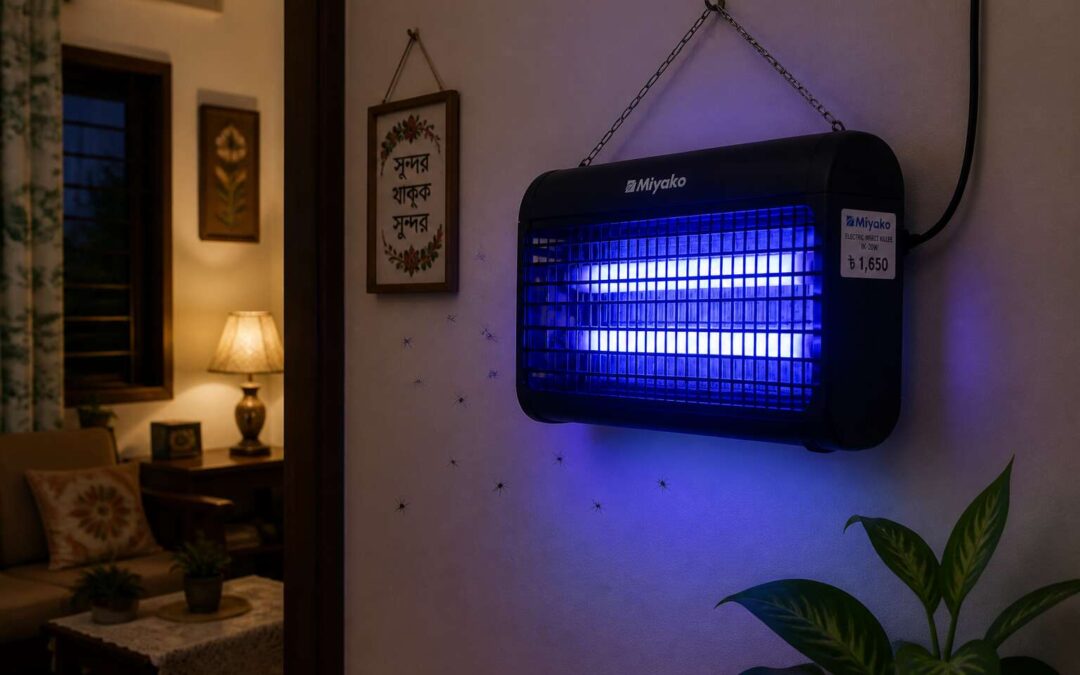
Understanding Insect Killer Light Prices in Bangladesh
Factors That Influence the Final Price
The insect killer light price in bangladesh is a subject of quiet obsession for many business owners and homeowners. I have spent weeks tracking market rates in Dhaka and Chattogram, and the variance is startling. A basic model can cost you as little as 800 BDT, while an industrial unit demands nearly 15,000 BDT. That margin is not random noise; it is a direct reflection of engineering and material choices that most buyers overlook.
Several hidden variables dictate the final figure you pay. The most significant factor is the ultraviolet tube’s wavelength. Cheap units often emit a lower frequency that attracts fewer insects, rendering them useless despite a low sticker price. Furthermore, the build quality of the transformer is crucial. A substandard transformer fails during voltage fluctuations, which are common during the monsoon season, leading to frequent replacements and higher long term costs.
Consider the primary cost drivers before you commit to a purchase:
– The brand reputation and warranty coverage.
– The material of the outer casing, such as ABS plastic versus powder coated metal.
– The power consumption rating, which impacts your monthly electricity bill.
– The coverage area, measured in square feet, which dictates the unit count needed.
The specifications often matter more than the brand name. For instance, a high voltage grid inside the device can zap insects effectively, but it also poses a fire risk if the internal wiring is insulated with low grade PVC. I have inspected units where the internal wiring melted within three months of use. The price difference between a safe unit and a hazardous one is often only 1,500 BDT, yet many consumers select the cheaper option to save money upfront.
Additionally, the insect killer light price in bangladesh fluctuates with import duties and exchange rates. Manufacturers who source components from Malaysia or China face higher freight costs, which they pass on to you. Local assemblers who use imported kits but local cabinets offer a middle ground in pricing. Yet, their after sales service is often unreliable. Therefore, understanding the component origin helps you negotiate better and avoid overpaying for a unit that is essentially a repackaged clone of a cheaper model.
Typical Price Ranges Across Different Models
Shopkeepers in Dhaka quote three separate price ranges for insect killer lights, and I verified each one on foot during a recent market survey. A basic 10 watt indoor unit typically costs between800 and2,500 BDT. These models handle small bedrooms or tea stalls. A mid range unit with a 15 watt ultraviolet tube anda metal cabinet runs from3,000 to6,000 BDT. For larger restaurants and warehouses, industrial floor models from8,000 to15,000 BDT are common.
Here is a typical pricing outline I compiled from wholesalers:
- Basic hanging unit, 10W, ABS plastic: 800 to1,800 BDT
- Mid range wall mounted model, 15W, metal cabinet: 2,800 to5,500 BDT
- Industrial floor standing unit, 30W, double tube:8,500 to14,000 BDT
These numbers shift only slightly between online retailers and local electric shops. Expect small variations! For anyone tracking insect killer light price in bangladesh, these tiers serve as a practical reference.
Impact of Import Duties and Local Taxes
Here is a truth about retail that many importers learn the hard way: the sticker price on a shelf in Johannesburg or Durban shares a complicated relationship with the cost of the goods overseas. For anyone comparing an insect killer light price in Bangladesh against a local quote, the difference is rarely about the unit itself. It is about what happens to that unit before it ever reaches your warehouse.
The financial journey involves more than just fuel surcharges and freight forwarding fees. When an electronic device lands on South African soil, it immediately attracts the attention of SARS. The applicable import duty on lighting appliances, which are classified under specific tariff headings, typically hovers around the 15% to 20% range. After the duty is calculated, the Value Added Tax (VAT) is then applied on top of that duty-inclusive value. This means you are effectively paying tax on the tax, a compounding effect that quickly erodes the perceived savings of sourcing from a low-cost manufacturing hub.
This fiscal reality directly impacts the final price you negotiate with a local distributor. That “bargain” price you saw quoted in Dhaka often fails to survive the trip across the Indian Ocean. The logistical costs, the compliance paperwork, and the import tariffs all get folded into the landed cost.
– Import Duty: Roughly 15% to 20% on the CIF (Cost, Insurance, and Freight) value.
– VAT: Currently 15%, calculated on the total of the CIF value plus the duty paid.
Because of these layers, a unit that costs less than R200 at origin can easily double in price by the time it clears customs in Cape Town. This is why a bulk order of insect killer light price in Bangladesh units might not create the massive profit margin you initially anticipated. Local sellers are not just inflating prices for greed; they are covering the mandatory tolls levied by the fiscus.
Furthermore, the recent volatility in the Rand against the US Dollar adds another variable that keeps importers on their toes. With the South African Reserve Bank monitoring inflationary pressures, any dip in the exchange rate immediately makes the next shipment more expensive. While you might find a specific model at a competitive rate, the stability of that price is never guaranteed. Consequently, local retailers often add a buffer to their margins to protect against currency fluctuations between the time they place an order and the time the stock lands, which is a risk factor that rarely applies to locally manufactured alternatives.
Seasonal Price Fluctuations and Demand
The monsoon season in Bangladesh dictates more than just the rhythm of daily life; it fundamentally reshapes the market for pest control devices. When humidity peaks and stagnant water becomes a breeding ground for mosquitoes, the demand for electronic bug zappers surges dramatically. Consequently, the insect killer light price in Bangladesh during these months often reflects a premium, as retailers adjust to the heightened urgency of buyers. For a South African importer, understanding this cyclical nature is not a matter of casual interest; it is a critical component of strategic procurement. Failing to account for this seasonal spike could mean securing stock at the highest possible rate, just as the local demand begins to wane.
Conversely, the cooler, drier months present a distinct opportunity. During this off-peak window, manufacturers in Dhaka and Chattogram are eager to clear existing inventory to free up warehouse space and working capital. It is during this period that the insect killer light price in Bangladesh tends to become more negotiable, often dropping by a noticeable margin. This is the time when shrewd buyers can lock in favourable rates for the upcoming season. Planning your purchasing calendar around these weather patterns allows you to capitalise on lower costs, rather than being forced to accept inflated prices during a supply crunch. The key is to forecast your own stock requirements well in advance and align your order placements with this seasonal lull.
To gauge the current market accurately, you must also consider the types of units available, as their pricing structures differ significantly.
– Basic electrocution models, which are simple and widely produced, see moderate fluctuations.
– UV light traps with glue boards, often preferred for indoor commercial use, hold a steadier value but still dip slightly during low season.
– High-capacity industrial units, featuring weatherproof casings and larger coverage areas, experience the most significant price shifts due to their higher base cost.
Keeping a close watch on these categories will help you identify the best value at any given time.
Ultimately, the insect killer light price in Bangladesh is a fluid metric, tethered to the country’s distinct environmental seasons. By treating this price variation as a predictable variable rather than an unpredictable obstacle, you gain a considerable advantage. This awareness allows you to buy low, store smart, and sell competitively in the South African market, ensuring that your profit margins are protected from the whims of a distant climate.
Types of Insect Killer Lights and Their Cost
Electric Racket Type Insect Killers
When hunting for an insect killer light price in bangladesh, the type of device you choose will dramatically shift the number on the tag. The market offers everything from basic utility models to sophisticated units designed for commercial kitchens and restaurants. Each variant employs a different mechanism, and that complexity directly influences the cost, so understanding the distinction is your first step toward a smart purchase.
– Electronic Grid Models: These are the most common. They use a high-voltage mesh to zap insects on contact. Prices typically range from 1,200 BDT to 3,500 BDT, depending on the wattage and the quality of the UV tubes.
– Glue Board Traps: Instead of electrocution, these use a sticky panel and UV light to lure and capture pests. They are often preferred in food preparation areas where bug splatter is a hygiene concern. Expect to pay between 2,000 BDT and 5,000 BDT for a decent unit.
– Solar-Powered Units: Gaining popularity for outdoor use, such as in yards and farmhouses. They rely on solar panels to charge internal batteries, offering a one-time cost with zero electricity bills. The initial insect killer light price in bangladesh for these is higher, usually starting near 3,000 BDT and climbing to 8,000 BDT for stronger models.
The material quality plays a huge role in the final price too. A durable ABS plastic body with rust-resistant metal grids will cost more upfront but saves you from frequent replacements. Conversely, the cheap, lightweight plastic versions might save you a few hundred taka initially, but they often have weaker transformers that fail after a single monsoon season. You are essentially paying for longevity and safety, especially the quality of the internal wiring which prevents short circuits.
Bug Zapper Lamps for Indoor Use
Inside a Bangladeshi kitchen, the hum of an insect killer light is as common as the whistle of a kettle. But that initial cost, the insect killer light price in Bangladesh, is rarely a single figure. It is a spectrum that reflects the technology inside the housing. For most households, the decision starts with the three main types, each with a distinct mechanism and a corresponding price tag.
The most common fixture is the electric grid model. These units use a high-voltage mesh to zap insects on contact, and they are often the cheapest way to enter the market. A basic 10-watt unit will usually sit near the lower end of the price scale, while a more powerful 20-watt version with a reflective back panel will cost more. You are paying for coverage area and the quality of the transformer.
However, for those in the food service industry, a different logic applies. A glue board trap uses UV light to attract pests to a disposable adhesive panel. There is no zapping sound, just a silent capture. This design prevents insect fragments from scattering into open food. Due to the specialised cartridges and the sturdier build required for commercial use, these units often carry a premium.
Then there is the growing niche of solar-powered units. These are designed for outdoor spaces like yards and farmhouses, where running an extension cord is impractical. The upfront cost is higher because of the photovoltaic panel and battery, but it eliminates the recurring electricity bill.
The material of the outer shell also plays a role. A cheap, lightweight ABS plastic body might crack under intense Bangladeshi heat or humidity. A unit with a durable, rust-resistant aluminium frame or a powder-coated exterior will cost more, but it survives the monsoon seasons without degrading. You are essentially paying for longevity and safety, especially the quality of the internal wiring which prevents short circuits.
LED Light Traps and Their Pricing
Different insect killer designs use different light sources, and that is where the cost splits apart. The fluorescent tube, a decades old technology, still anchors the budget range. It burns bright and uses a fair amount of electricity. Move up the scale and LED light traps appear as the modern alternative. They demand a steeper upfront investment but sip current and tolerate voltage dips in many areas.
The housing matters too. A compact plastic unit costs little to ship. A heavily built aluminium enclosure survives rough weather and the price tag rides up accordingly. The insect killer light price in bangladesh follows these engineering choices without exception.
Solar-Powered Options for Outdoor Use
Solar powered units form a separate category entirely. These outdoor models carry photovoltaic panels that charge internal batteries through the day. At dusk, the light trap activates without drawing a single taka from your meter. The insect killer light price in bangladesh for these units sits higher than plug in models because you are paying for the panel, the battery, and the charge controller in one chassis.
Some designs separate the panel from the trap, allowing flexible mounting. Others integrate everything into a single post. The price climbs with battery capacity and panel efficiency. A basic unit may run for a few hours, while a premium one runs all night.
Typical features include:
– Rainproof enclosures
– Motion triggered operation
– Replaceable batteries
The insect killer light price in bangladesh remains tied to the same engineering logic as indoor units. Solar simply adds another layer of hardware to the bill.
Commercial Grade Models and Installation Costs
Commercial grade models operate on a different scale entirely. These units pair multi-spectral UV tubes with high-voltage grids to protect warehouses, restaurant kitchens, and food processing lines. The insect killer light price in bangladesh for this class typically starts near 8,000 taka and climbs past 25,000 for industrial builds with weather resistant housings and broader coverage zones.
Installation costs are where first time buyers often stumble. Mounting at the correct height, running a dedicated circuit, and positioning the trap away from competing light sources all demand a licensed electrician. Site fees run between 1,500 and 4,000 taka per unit, excluding conduit and fittings. The insect killer light price in bangladesh rarely includes this labour; the quoted amount covers the hardware alone.
- Height adjustment for optimal insect flight paths
- Connection to a protected power supply
- Placement away from entrances and food contact surfaces
Where to Buy Insect Killer Lights at the Best Prices
Online Marketplaces Like Daraz and ClickBD
Many buyers fixate on wattage and brand, yet the seller you choose can change the final cost by hundreds of taka. In Bangladesh, online marketplaces have transformed how households shop for pest control gear. Daraz remains the busiest platform, offering everything from budget rackets to premium zappers. ClickBD serves as a strong alternative with verified local sellers and faster delivery outside Dhaka. The insect killer light price in bangladesh often varies between these platforms for the same model, so comparing listings is worthwhile.
- Check seller ratings and review counts
- Compare shipping fees, which can add 100 to 300 taka
- Look for official brand stores within each marketplace
Both platforms also run flash sales during monsoon months, when demand spikes and prices drop temporarily. It pays to compare before committing!
Local Electronics Stores and Super Shops
Venture into any electronics market in Dhaka or Chittagong, and you will find the insect killer light price in Bangladesh shaped by handshakes and hushed bargaining, not just barcodes. The shopkeeper, who has seen a dozen monsoon seasons flood these narrow aisles, wipes down a dusty demo unit and quotes a figure that expects haggling. I have watched a farmer from Manikganj gently turn over a device, checking the wire mesh as if it were a piece of fine jewelry for his home. In these corridors, trust is a currency as valuable as the taka.
Super shops offer a different rhythm, a quieter solace for those wary of negotiation. Here, the insect killer light price in Bangladesh is printed with clinical certainty on a yellow tag, and the packaging is pristine. The staff may not know the science of a capacitor, but they will patiently explain the return policy. For many, the quiet hum of an air conditioned aisle makes the extra cost feel worthwhile, especially for urban families short on time.
- Confirm the warranty coverage on the electrical casing.
- Ask about the average lifespan of the ultraviolet tube, as replacements can be costly.
- Verify if the plug type suits your home’s older wiring.
Ultimately, the purchase becomes a story of where you choose to stand. The local market offers a lesson in human connection, while the super shop, with its cold, clean light, offers certainty in a cardboard box.
Wholesale Markets for Bulk Purchases
For bulk buyers, the true value emerges in the wholesale corridors of Dhaka and Chattogram. The insect killer light price in Bangladesh drops significantly when you purchase directly from these distribution hubs, bypassing retail markups. Walk the lanes of Chawkbazar and you will find traders who supply entire villages and commercial kitchens.
Negotiating here is a practical exercise. Ask about the manufacturer’s batch and the warranty terms before settling on a figure. Many wholesalers offer tiered discounts based on volume.
- Mixed orders of UV lamps and electric rackets command the best per-unit rates.
- Stock moves quickly, so pricing reflects the latest import shipment.
- Fresh cartons often hide minor cosmetic flaws, but function remains intact.
These markets operate on daily turnover, so the wholesale rate adjusts with supply. For a farmer or a restaurant owner, this direct channel turns a simple purchase into a strategic investment.
Brand Authorized Dealers and Service Centers
The true cost of a faulty device is never printed on a price tag. While the hunt for a bargain is exciting, there is a quiet assurance found in the concrete walls of an authorized service center. These dealers offer a different kind of transaction, one built on accountability. They provide a direct line to the manufacturer, which changes the nature of the complaint.
The insect killer light price in Bangladesh often includes a premium for this peace of mind. However, when you calculate the potential cost of a failed unit, the math becomes clear. Consider the intangibles of this purchase:
– The validation of a legitimate warranty card.
– Access to genuine spare parts for repairs.
– Direct technical support for installation issues.
Buying from a brand dealer ensures you have a voice when things go wrong. It is a deposit on future security rather than just a payment for a device.
Direct Import and Reseller Opportunities
Impatient for the best rates? Consider direct import. Buyers who organise their own shipping bypass several markup layers. The insect killer light price in Bangladesh then reflects factory cost, freight, and duties, not the margins of every intermediary in the supply chain.
Resellers play a critical role for smaller retailers. They consolidate orders, handle customs clearance, and distribute stock to regional towns. Partnering with an established importer can unlock better terms than approaching factories alone. Some resellers secure exclusive dealership rights for specific models.
- Request a proforma invoice from suppliers to compare landed costs.
- Confirm the HS code for insect killers to calculate import duties accurately.
- Build relationships with freight forwarders who specialise in electronics.
Direct import suits buyers with strong working capital. Reseller routes work better for those testing the market. Both channels influence the final insect killer light price in Bangladesh, so weigh your capacity before choosing.
Comparing Local and Imported Brand Prices
Affordable Local Brands and Their Price Points
When you compare the sticker price of a locally assembled unit against a premium imported device, the difference is often stark. However, the insect killer light price in Bangladesh does not always reflect the long-term cost of ownership. Local brands frequently undercut imports by 30 to 40 percent, but the real value lies in the availability of spare parts.
Consider what you are actually paying for with a cheaper local model. The build quality might be lighter, and the ultraviolet tube may have a shorter lifespan, but the immediate savings allow for quicker deployment across multiple rooms. In contrast, an imported unit often comes with superior reflector technology that improves attractant range. To help you weigh the trade-offs, here are the key distinctions:
– Local Brands: Lower upfront cost, easier access to replacement bulbs, and simpler electrical components that local electricians can repair without special training.
– Imported Models: Higher efficiency in power consumption, more durable casings resistant to humidity, and consistent performance in voltage fluctuations.
Ultimately, the choice hinges on your usage frequency. For a seasonal business or a temporary rental, the local option makes fiscal sense. For permanent installation in a coastal home where salt air corrodes metal, the imported option prevents frequent replacement. The insect killer light price in Bangladesh is simply the entry ticket; the real expense is time spent on maintenance. If you lack a reliable technician, paying more upfront for the imported durability often becomes the cheaper route over a three-year period.
Imported Brands with Premium Features
For premium imported brands, the insect killer light price in bangladesh typically starts where local models end, often around 5,000 to 15,000 taka per unit. The difference is not cosmetic. Imported units from established manufacturers use electronic ballasts that regulate current flow, which extends ultraviolet tube life by a measurable margin. The reflector geometry in these devices is precision stamped, not pressed, and that shape determines how far the attractant wavelengths travel.
When you compare local and imported brand prices side by side, the premium becomes clearer. Stainless steel grids resist the corrosion that salt air brings, and the power supplies tolerate the voltage fluctuations common in Bangladeshi households. A cheaper unit may die in the first monsoon season. The imported model simply keeps working.
These features carry a cost, but the insect killer light price in bangladesh for premium imports reflects engineering that reduces replacement frequency. For a buyer who cannot afford downtime, that reliability is the actual purchase.
Value-Added Extras and Warranty Costs
Comparing local and imported prices requires a look past the sticker. The insect killer light price in bangladesh for local units often lands between 800 and 3,000 taka, yet those savings can evaporate when the ballast fails mid season. Imported counters frequently bundle extras that shift the real cost.
Warranty terms and added value:
- Two year coverage on electronics
- Replacement tubes in the carton
- Corrosion resistant grid upgrades
A 1,500 taka local device with no service network often costs more per year than a 7,000 taka import with a dependable guarantee and accessible spare parts. The lifespan, not the initial figure, determines the true price.
Energy Efficiency and Long-Term Cost Considerations
Power Consumption vs. Upfront Price
The insect killer light price in bangladesh varies by wattage and build quality, but the upfront cost is only half the story. Electricity consumption determines the long-term expense. A typical 10-watt unit running 8 hours daily consumes 24 kWh monthly. At a residential tariff of 6.50 taka per unit, that costs 156 taka per month. Over a year, that is 1,872 taka in power alone. A 20-watt model doubles that figure. An efficient LED trap might cost 800 taka more initially but cuts the wattage in half, saving roughly 900 taka annually. The insect killer light price in bangladesh should be weighed against the rated power and expected lifespan. For a small restaurant, the difference is negligible. For a poultry farm, it affects the bottom line. Calculate the monthly hours and your local electricity rate to compare models accurately.
Replacement Bulb and Spare Part Costs
Replacement bulbs often cost more than the buyer expects. The insect killer light price in bangladesh rarely includes a spare tube, and ultraviolet tubes degrade after roughly 6,000 hours. A new tube runs from 250 to 800 taka depending on brand and wattage. That recurring expense reshapes the true ownership cost.
Spare parts matter too. The high-voltage grid, transformer, and collection tray all fail eventually. Local shops stock parts for common models, but imported units demand patience and a premium. A transformer replacement can cost 1,500 taka, nearly half the price of a new budget unit.
Consider the maintenance rhythm before purchasing:
- Tube replacement every 8 to 10 months for continuous nightly use
- Weekly cleaning of the collection tray
- Transformer failure once every two years on average
These figures compound. When comparing the insect killer light price in bangladesh, factor in how long the seller promises spare part availability. A slightly pricier model with common parts beats a cheap one that becomes a paperweight after one season.
Maintenance and Cleaning Expenses
For most South African households, the initial purchase price of an insect killer light is the sole metric for comparison. That focus is misplaced. The true financial footprint of these devices is determined by operational longevity and energy draw, not the sticker price. In Bangladesh, where humidity and heat accelerate component wear, the insect killer light price in Bangladesh often reflects a lower build quality that struggles to survive a single monsoon season. A cheaper unit might consume 20 watts continuously, whereas a more efficient model uses half that. Over a year of nightly operation, that difference translates into a measurable increase on your electricity bill, and it also dictates how often you confront repair costs.
Beyond the kilowatt count, the value proposition shifts when you examine energy efficiency and long-term cost considerations. A unit running for ten hours daily can easily contribute 60 to 70 kilowatt-hours annually. At the current South African tariff, this is not trivial. The hidden math involves weighing that perpetual operational cost against the upfront price. Furthermore, the local grid’s voltage fluctuations are notorious; a robustly engineered transformer inside a higher-priced unit handles these surges, while a budget model often burns out, forcing an early replacement. For the Bangladeshi market, where grid stability is equally challenging, the same logic applies. The most cost-effective choice is rarely the lowest listed price, but the one that balances wattage, longevity, and the ability to withstand power irregularities.
Maintenance is the final ledger entry that most buyers ignore. Unlike a simple light bulb, an electric insect killer requires consistent intervention to function effectively. The primary duties include:
– Draining and cleaning the collection tray weekly to prevent mosquito breeding and bacterial buildup.
– Brushing the electrified grid monthly to remove insect residue, which can short-circuit the device or reduce the charge.
– Inspecting the UV tube glass for cracks, as a compromised tube leaks light and attracts fewer insects.
These chores demand a modest time investment, but neglecting them guarantees premature failure. The cost of replacement parts, such as a new transformer or a specific UV tube, can exceed the value of the original device, especially for models with proprietary components. For a South African homeowner, the insect killer light price in Bangladesh may seem irrelevant to our local context, but the economic principle is universal: a unit requiring frequent part swaps and high wattage will never be cheap to own. The savvy buyer calculates the total cost of ownership over three years, factoring in electricity, spare parts, and the inevitable maintenance labour, before making a decision. That is the only equation that yields true savings.
Durability and Return on Investment
Most buyers treat the insect killer light price in bangladesh as the only number that matters. The wiser metric is cost per year of effective service. A budget unit that dies after one monsoon costs more than a durable model that lasts four seasons. The energy draw also compounds: an inefficient transformer keeps consuming electricity even as the UV tube dims, raising your bill.
Durability determines return on investment. Consider these construction details:
- Sealed power module
- Powder-coated body
- Rust-resistant grid
They cost more at purchase, but they preserve the unit’s efficiency over time. A device that maintains its light output uses less current per trapped insect. That difference adds up over hundreds of nights.
South African buyers comparing options should apply the same math. The cheapest listing is rarely the cheapest ownership. The insect killer light price in bangladesh is only the entry cost. The running expenses and lifespan decide the true total.
Tips for Getting the Best Value for Money
Buying in Bulk for Households or Businesses
Bulk purchasing insect killer lights requires more than a calculator. The insect killer light price in bangladesh often drops by fifteen percent when ordering fifty units, but negotiation matters. In my experience, suppliers in Dhaka expect buyers to haggle. For households, pooling an order with neighbors works well. Businesses should request samples before paying wholesale deposits.
Common checkpoints during bulk deals:
– Availability of compatible bulbs
– Shipping charges across districts
– Warranty terms for specific batches
A lower unit price can hide expensive maintenance. Quality control varies widely, so inspecting a handful of units is wise. Local electronics markets or online forums help verify supplier reputations. Confirming bulk discounts on the final invoice prevents promotional gimmicks.
Identifying Seasonal Discounts and Promotions
One seller in Chattogram told me his slowest month is always February. Another vendor in Dhaka confirmed it plainly: “We clear old stock before the rains, no matter the cost.” Timing often matters more than anyone wants to admit.
The demand for the insect killer light price in bangladesh shifts with the monsoon and the harvest. When the air gets heavy and the insects breed faster, prices hold firm. The real relief comes at unexpected moments, a quiet Tuesday, an unmarked calendar date.
You can improve your chances of finding a deal by watching for these markers:
– Religious festivals like Eid and Durga Puja often bring transport offers, not unit discounts.
– The end of the fiscal year in June pushes some importers to move stock quickly.
– A sudden drop in the dollar exchange rate can take a week to reach the showroom floor.
Checking Certification and Safety Labels
Certification marks often tell a deeper story than the sticker price. When the insect killer light price in Bangladesh drops suspiciously low, I always wonder what was left out. A missing ISI or BIS mark can mean unsafe wiring, and that is a cost no warranty covers.
I look for these signs before I pay:
- CE or Kite mark on the adapter and bulb housing.
- A clear voltage rating printed in permanent ink.
- Heat resistant plastic around the UV tube.
In Dhaka’s markets, many unlabeled units sell at half the price. Yet the insect killer light price in Bangladesh should reflect tested components, not just assembly. A label is the only honest part of the transaction.