
Iconic South African Beetles
The Mighty Dung Beetle
Across the sun-scorched savannas of the veld, a diminutive powerhouse labours with singular purpose. The dung beetle, a master of the ancient craft of recycling, is a cornerstone of the ecosystem. These tireless insects of south africa perform a vital sanitation service, promptly burying droppings that would otherwise become breeding grounds for pests. Their industry returns essential nutrients to the soil, fostering plant growth and maintaining the health of the grasslands.
Observing their work offers a glimpse into a world of immense strength and complex navigation. A single beetle can move a ball of dung many times its own weight, a feat of pure physical determination. Some species are celestial navigators, using the polarised light of the Milky Way to roll their precious spheres in a perfectly straight line, even on the darkest nights. This remarkable innate behaviour ensures they are seldom robbed by less scrupulous rivals.
The ecological contributions of these beetles are profound and measurable. They serve as a primary agent for nutrient cycling and pasture aeration.
– They aerate the soil through their extensive tunnelling activities.
– Their burials reduce livestock parasite loads by removing breeding habitat.
– Their work enhances water filtration and root penetration in the soil.
These creatures epitomise resilience, transforming a common resource into a lifeline for themselves and their progeny. The sheer spectacle of their labour is a daily wonder, playing out in silent theatres of grass and earth throughout the region, cementing their status as one of the most industrious insects of south africa.
Brightly Colored Jewel Beetles
In the vast tapestry of the animal kingdom, few creatures capture the eye quite like the jewel beetle. These shimmering inhabitants are among the most visually stunning insects of South Africa, their hard shells displaying an iridescent palette that rivals any gemstone. For collectors and casual observers alike, spotting one of these flying jewels is a moment of pure wonder, a flash of metallic green, blue, or copper darting through the warm sunlight. They are a living testament to the dazzling diversity found within the region’s borders.
These beetles are not merely decorative; their lives are deeply intertwined with the health of their ecosystems. The larvae of many species are wood-borers, spending months, sometimes years, tunnelling through the heart of trees. While this activity can be detrimental to stressed plants, it plays a crucial role in the natural cycle of decomposition and nutrient recycling. By breaking down dead and dying wood, they make way for new growth, ensuring the forest floors and savannas remain productive. This quiet, unseen labour is just as important as the brilliant spectacle of the adults.
Here are a few key features that define these remarkable creatures:
– Vibrant Coloration: Their shells contain microscopic structures that refract light, creating intense, metallic hues without the use of pigments.
– Varied Sizes: Species range from a few millimetres to over seven centimetres in length.
– Sun-Loving Nature: They are most active during the hottest parts of the day, often found on flowers or tree trunks basking in the sun.
Beyond their biological role, jewel beetles hold a significant place in local culture and history. Their hard, colourful wing cases have been used for centuries in traditional jewellery and adornments. Today, they continue to inspire artists and designers, appearing in everything from contemporary fashion to intricate wire-work sculptures. This enduring appeal highlights a deep connection between the people and the remarkable wildlife that shares the landscape, reminding us that conservation efforts are vital to preserving these living treasures for generations to come.
The Cape Firefly Beetle
The Cape firefly beetle, Lampyris capensis, might be the only insect that rescues a romantic evening. While the rest of the insects of South Africa are busy with survival tactics, these beetles are broadcasting their location with a bioluminescent flare. It is a biological light show where the female, wingless and grounded, signals to an airborne male through the darkness. Finding a mate is a serious business, but the spectacle is pure magic for any human lucky enough to witness it.
Their light production is a chemical wonder, a blend of luciferin and oxygen reacting to create a cold, efficient glow. It requires no heat, only precision. When you are out on a warm, humid spring night, that flickering is not a star, but a creature using a language of light to navigate its world. Here are a few facts to spark your interest:
– The glowing larvae are known as glowworms, and they are actually voracious predators of snails.
– Each species has a unique flash pattern, a Morse code of courtship.
– The light is produced in a specialised organ in the abdomen, the lantern, shrouded by translucent cuticle.
It is a humbling reminder that some conversations happen without a single word, relying instead on pure, visual chemistry. The next time you see that gentle glow, know you are looking at a sophisticated biological engineering feat. It is a prime example of the unexpected wonders hiding within the wider cohort of insects of South Africa. They are not just bugs; they are tiny, living lanterns that turn the night into a stage.
Stag Beetles of the Fynbos
The stag beetles of the Fynbos wear their weaponry openly. Males sport mandibles shaped like antlers, used for wrestling rival males rather than defence. These duels decide which beetle earns the female’s attention. The loser wanders off to try again another evening.
Within the broader insects of south africa, these beetles stand out for their habitat demands. They rely on decaying wood from old trees. The larvae spend years chewing through rotting logs before emerging as glossy adults. Clear the dead timber and the beetles vanish from the landscape.
A few notes on their habits:
– Males duel with their mandibles, though injuries remain rare.
– Females own smaller jaws and spend more time below the soil.
– Dusk offers the best chance to observe them.
The Fynbos is one of the few places these insects of south africa persist. Each sighting rewards those who protect this fragile habitat.
Butterflies and Moths of the Region
Endemic Swallowtails
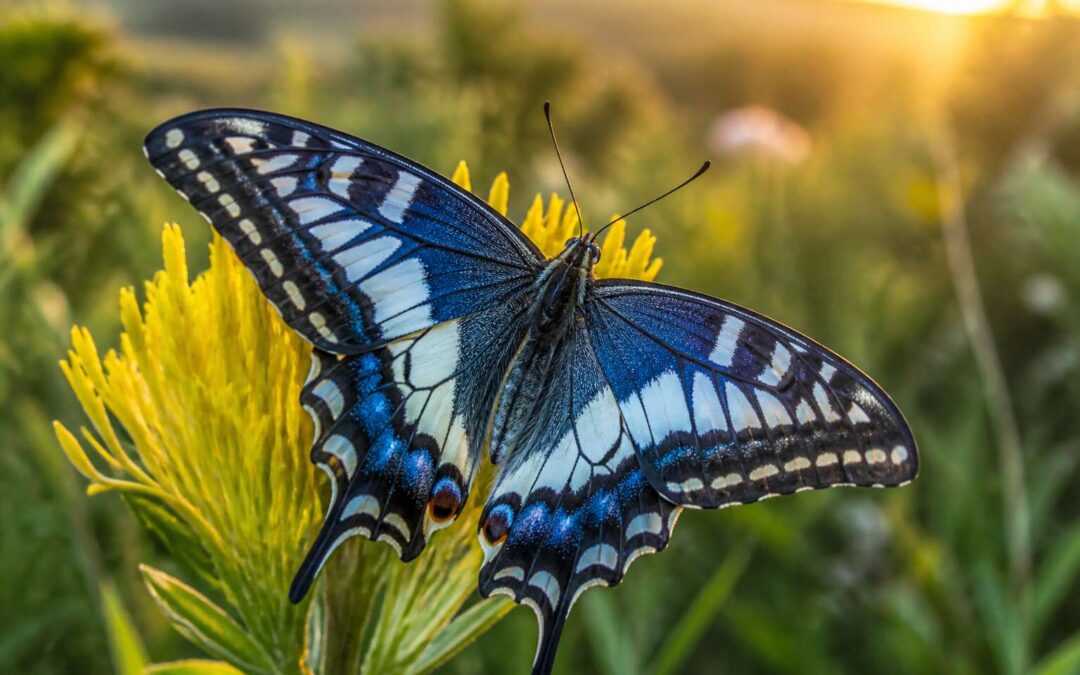
Every spring, a swallowtail with an eight centimeter wingspan crosses the granite of Table Mountain. It belongs to a small group of butterflies endemic to the Cape, which live nowhere else. These endemic swallowtails appear two weeks each year, then retreat into rock cracks.
They prefer rocky fynbos habitats. Diet varies: one species eats wild asparagus; another eats buchu. This specialization marks the rarest insects of south africa. Their larvae load toxins from these plants, which deters birds. To spot them:
- Slow, bobbing flight low over sandstone
- Wings markings shaped like crescent moons
- Strong territorial behavior pon sunny ledges
The region’s moths show similar specialization. The local emerald moth rests on bark, its scalloped wings matching the pattern. At night, it seeks mates by scent. Both groups remind me that insects of south africa do not need grand landscapes to thrive; small, specific zones suffice!
The African Monarch
Nocturnal Hawk Moths
The dusk air over the Highveld carries a different kind of movement once the sun slips away. These are the nocturnal hawk moths, the heavy lifters of the night sky. Their wings beat with a frantic, blurring speed, allowing them to hover with an unnerving precision in front of a single flower, sipping nectar without ever landing. It is a spectacle of pure aerial athleticism that few take the time to witness.
These moths, which belong to the Sphingidae family, are built for distance and speed. Their streamlined bodies and narrow wings are a stark contrast to the fluttering fragility of their daytime relatives. When they do pause, they rest with their wings folded back, revealing a camouflage that is often more intricate than the bold patterns of their nocturnal flight. The sheer variety is astonishing.
– The convolvulus hawk moth, a powerful migrant that can travel thousands of kilometers.
– The death’s head hawkmoth, famous for the skull-like marking on its thorax and its ability to squeak.
– The vibrant green and pink striped vine hawk moth, a common visitor to suburban gardens.
To see one feed is to understand its unique relationship with the flora here. They are the definitive pollinators for many deep-throated flowers, like the crinum lilies, which rely almost exclusively on these swift visitors. They do not hover randomly; they map a route with a memory that is quite remarkable. These often overlooked insects of south africa are a vital, unseen engine in the ecology of the region, proof that the most dedicated workers are sometimes the ones we never see in the light of day.
Conservation of Pollinators
The lifeblood of the Highveld’s wildflowers relies on a network of insects that work through the daylight hours. Among the most industrious are the region’s native bees and flower flies, which move between blooms with purpose. Their work ensures the genetic diversity of the flora that sustains other wildlife. When, for instance, spring rains arrive, the landscape transforms in a matter of days, a direct consequence of these tiny workers performing their essential duties.
Pollination is not a random act of chance. It is a transaction requiring precise timing between the plant and the insect. The decline of natural habitats directly impacts the populations of these vital species, creating a silence that is deafening.
When considering the threats facing these species, we must focus on the following:
– The widespread use of non-selective insecticides.
– The loss of indigenous flora to imported garden plants.
– The removal of wild growth along field margins.
Promoting a safe haven for these native insects of south africa begins with a simple change in perspective. Gardeners who refrain from spraying their blooms are rewarded with regular visits and healthy seed sets. By leaving a patch of the lawn to grow wild, one invites the local ecosystem back into the landscape. A garden that supports these pollinators is one that is truly connected to the land around it.
Ants, Bees, and Wasps
Safari Ants: Ecosystem Engineers
Safari ants are the silent architects of the South African bushveld. While the larger ecosystem often steals the spotlight, these insects of South Africa work relentlessly below the surface. Their sheer numbers create a moving force that is almost geological in its impact on the soil.
Their nests are not static structures. They form living colonies that shift and adapt, constantly processing organic matter. Their activity aerates the earth and cycles nutrients with remarkable efficiency.
Their presence influences the distribution of many other species. They do not attack, but they do pervade every possible food chain, creating a ripple effect through their habitat.
Native Bee Species and Honey
The hum of a native bee is a sound of pure purpose. Within the intricate tapestry of insects of south africa, the social dynamics of bees and wasps rival any drama. These creatures operate with a precision that human industry often struggles to match, building complex societies from wax and saliva.
The Cape honey bee stands as a unique genetic treasure. It is a subspecies found only in this region, known for its exceptional foraging vigour and a peculiar trait among its workers. This single species produces the majority of the country’s wild honey, a product of immense flavour variety. The nectar source changes with the landscape.
– Several hundred native bee species are solitary.
– They nest in the ground or hollow stems.
– Each female performs every role from builder to forager.
Wasps, often misunderstood, serve as critical population regulators. They hunt caterpillars and other pests that would otherwise decimate crops. Their role is a constant, silent pruning system that keeps the botanical world in balance. The presence of these insects of south africa signals a functioning environment.
Wasps as Biological Control
On any given afternoon in a South African field, an unseen war is being fought. The combatants are not soldiers, but the prolific and diverse insects of south africa. Chief among the generals is the wasp, a creature whose predatory precision offers a natural counterbalance to agricultural pests.
The Potter wasp is a master of ceramic architecture, yet its real genius lies in its hunting strategy. It paralyses caterpillars and larvae, sealing them within a clay cell as living provisions for its young. The solitary Mud-dauber wasp applies a similar tactic, targeting spiders with an unnerving expertise. Together with the social paper wasps, which tirelessly chew and feed prey to their developing colonies, they form a formidable frontline defence for crops.
This biological control is not a subtle process. A single colony of paper wasps can remove thousands of flies and caterpillars from a single orchard over a season. Ants also contribute to this regulation, albeit in a different manner. Their constant scavenging removes decaying matter and dead insects, preventing the spread of disease and breaking the cycle of infestation. Bees, on the other hand, focus on pollination, but their presence dictates the health of the flowering plants that these predatory insects patrol.
The economic value of this natural pest management within the insects of south africa is immense. It reduces the reliance on chemical insecticides, which often harm beneficial species along with the targeted pests. The ecological relationship is a quiet, industrial-scale operation:
– Parasitic wasps lay eggs inside live hosts, ensuring a direct food source for their offspring.
– Predatory wasps actively hunt and consume pests, providing immediate population reduction.
– Ants and bees contribute to the cyclical health of the habitat, ensuring a stable ecosystem for these controls to operate.
The interplay between these forces is complex. A decline in native bee populations often signals a stressed environment that cannot support the wasp populations either, leading to an increase in unchecked pests. This natural balance is not merely a poetic notion; it is a practical necessity for sustainable agriculture. The wasp, often overlooked, is the central figure in this quiet process of keeping the South African landscape productive.
The Role of Ants in Soil Aeration
A single ant colony can move over half a tonne of soil in a single year. That silent excavation is the engine behind the very ground beneath your feet. While wasps patrol the air and bees manage the blossoms, ants perform a less visible but equally vital function: soil aeration.
Their tunnels create pathways for air and water to reach deep into the earth. This subterranean plumbing promotes root growth and microbial activity that would otherwise be stifled. When it rains, these channels prevent surface runoff, allowing moisture to percolate directly to plant roots. The constant turnover also brings nutrient-rich particles to the surface, a process that gradually renews the topsoil.
– Ants break up compacted ground, reducing erosion risks.
– The waste from their underground chambers acts as a fertilizer.
– Their abandoned tunnels leave lasting pores for future root penetration.
Watching a colony at work is to see a thousand tiny excavators. The primordium of a healthy farm or garden lies in this hidden choreography. Ultimately, the aeration efforts of these particular insects of south africa maintain the structural integrity of the veld, ensuring the landscape can support the flowering plants that other species depend on.
Nesting Behaviors in Urban Areas
Pheidole megacephala, the coastal brown house ant, may outnumber every other ant species in Durban’s northern suburbs. That single statistic explains why urban ecologists have stopped asking whether these insects of south africa belong in cities, and started asking how they reshape them. The answer begins underground, where pavement cracks become highways and cavity walls become climate controlled nurseries.
Ants colonise the space beneath paving stones with alarming speed. A single founding queen can establish a satellite nest in a flowerpot, and from there the colony expands into the foundation drainage system. The workers prefer warm, dry cavities with stable humidity, which is why they appear in bathrooms and kitchens during winter. Their nesting behaviour creates structural pressure points in older buildings, but it also aerates compacted suburban soil that lawnmowers have beaten flat over decades.
Bees take a different approach to urban real estate. Cape honey bees, Apis mellifera capensis, will nest in chimney flues, wall cavities, and even discarded geyser blankets. Their swarming instinct responds to the city’s heat island effect, which pushes emergence dates forward by nearly three weeks compared to rural colonies. Urban beekeepers in Johannesburg have adapted by installing trap boxes on rooftops, but the feral colonies continue to thrive in stormwater drains and ceiling voids.
Wasps, particularly the paper wasps of the Polistes genus, construct their nests from chewed wood fibre mixed with saliva. They suspend these umbrellas from eaves, pergolas, and garage door tracks. Unlike bees, they do not store honey, so their nests remain small and often go unnoticed until the workers begin defending the brood.
– Vespula germanica nests in rodent burrows and wall cavities, reaching populations of 10,000 workers by late summer.
– Polistes dominula attaches its single comb to any sheltered horizontal surface, including window frames and outdoor light fittings.
– Belonogaster juncea, the African common wasp, builds elongated combs in dense vegetation and under roof overhangs.
These nesting patterns matter for pest control. The German wasp, an invasive species in the Western Cape, competes with native birds for protein and disrupts fruit harvesting. Its urban nests are harder to locate than rural ones, because the wasps adapt to artificial cavities with remarkable flexibility. The insects of south africa are not retreating from human development. They are reorganising their reproductive strategies around it, and the city grid has become just another layer of habitat.
Aquatic Insects and Dragonflies
Dragonfly Diversity in Wetlands
South Africa’s freshwater wetlands support more than 160 dragonfly species, a remarkable share of the continent’s diversity. These insects of South Africa are powerful aerial hunters, catching mosquitoes and midges on the wing. Their larvae remain less obvious, slowly crawling along submerged stems, ambushing prey with extendable jaws.
Wetland health directly shapes dragonfly abundance. Clear water full of aquatic plants yields richer communities. Skimmers, darners, and clubtails partition different zones,from still pools to slow streams. That diversity offers scientists an effective monitoring tool, often used to gauge ecosystem quality.
- Skimmers patrol shallow, warm margins
- Darners chase prey across open water
- Clubtails cling to fast-flowing stretches
Mayflies as Water Quality Indicators
Mayfly nymphs die when dissolved oxygen falls below 4 milligrams per litre. That threshold makes them precise indicators. I can hold a hand net under a riffle and know within minutes whether the water supports life.
Stonefly larvae are even less tolerant. They vanish with the first trace of metal pollution. Caddisfly larvae change how they build their cases as pH shifts. The insects of south africa work as a graded scale, each species responding at a different pollution level.
- Mayflies: oxygen demand, early warning
- Stoneflies: metal sensitivity, acute stress
- Caddisflies: pH shifts, chronic change
Sampling these larvae takes minutes. The information they carry took millions of years to encode.
Water Beetles and Their Adaptations
Beneath the surface of a quiet vlei, the insects of south africa practise some of their most extreme adaptations. Dragonfly nymphs extend a hinged labial mask to seize prey in milliseconds, while water beetles trap a thin film of air against their abdomens to breathe underwater.
Whirligigs skim the surface film with split eyes that see above and below at once. Diving beetles carry their oxygen supply like a silver bubble, a physical gill that slowly depletes as they hunt.
- Dragonfly nymphs: jet propulsion by expelling water from the rectum
- Water beetles: plastron respiration for extended dives
- Surface skaters: hydrofuge hairs that repel water
Each adaptation answers a specific pressure, refined over millions of years.
Mosquitoes and Disease Ecology
Grasshoppers, Locusts, and Crickets
The Brown Locust Swarms
The Brown Locust, or Locusta migratoria, remains a quiet enigma for years, its existence a masterclass in patience. It lives a solitary life amongst the dry, hardy grasses. Then, a miraculous chemical signal ignites. When seasonal rains nurture the first flush of green, something primal awakens and the very physiology of these insects changes, transforming them from harmless grasshoppers into a teeming, hungry calamity of biblical proportion.
This metamorphosis is the true spectacle of these fascinating insects of south africa. The sudden explosion in population density triggers a violent, rapid shift in behaviour and appearance. The result is a living storm that devours everything in its path.
Witnessing a swarm is an awe inspiring experience. The swarm moves as a single, devastating entity, darkening the skies with an estimated 50 million individuals per square kilometre. Their journey is relentless, a hunger-driven migration that turns green fields to barren earth in hours. For them, survival depends on the very chaos they bring to the dry earth. This is not just feeding; it is a force of nature.
Katydids in the Bushveld
In the Bushveld, stridulation fills the air. Grasshoppers, locusts, and katydids share this landscape, each with a distinct acoustic signature. A single katydid can produce a trill audible for hundreds of metres.
Survival depends on camouflage and rhythm. Katydids mimic leaves with veined wings. Crickets carve burrows to amplify their calls. Grasshoppers rely on sudden leaps to escape the midday heat.
You can tell them apart by listening:
- Crickets sing in the evening with a low, persistent chirp.
- Katydids answer with a rapid, rasping buzz from the treetops.
- Grasshoppers crackle in flight, a dry rattle over the grass.
These insects of south africa are a primary food source for birds and reptiles. Their emergence after rain dictates the rhythm of the entire Bushveld ecosystem.
Camel Crickets in Caves
Camel crickets live in South African caves, far from the open veld where grasshoppers jump and locusts gather. These wingless insects navigate damp rock with a slow, careful pace.
Here is what sets them apart:
- They detect vibration through their legs instead of sound.
- They feed on bat droppings and decaying plant matter.
- They remain active all year in constant cave temperatures.
Grasshoppers and locusts depend on sunlight for warmth. Cave crickets do not! For these insects of south africa, the dark provides a stable environment.
Predatory Ground Crickets
South Africa’s grassland hosts over 300 grasshopper species, yet the most engaging insects of south africa are not always the grazers. Grasshoppers chew veld grasses with powerful mandibles, while locusts shift from solitary to gregarious phases under specific rainfall patterns. They rely on sun-warmed muscles for their leaps, a truth we overlook. What a mistake that is!
Predatory ground crickets flip that expectation. These hunters prowl leaf litter and soil cracks, seizing small invertebrates with spiked forelegs. Unlike their plant-eating cousins, they track prey by touch and vibration, not sight.
- They consume pest insects like beetle larvae
- They avoid light, emerging only after dusk
- They breed during summer rains, matching prey abundance
For anyone observing insects of south africa, this contrast between vegetarian jumpers and carnivorous stalkers reveals hidden complexity in our ecosystems. The crickets rarely venture far from shelter, making them a localised but vital control on insect populations.
Venomous and Stinging Insects
Wasps and Bees of Medical Importance
South Africa’s landscapes host a remarkable variety of insects of South Africa, yet few command as much respect as its venomous wasps and bees. These creatures are not aggressive by nature; they sting to defend their colonies. However, their medical importance cannot be overstated. A single encounter with a disturbed hive can lead to severe pain, swelling, and, in sensitive individuals, a life-threatening allergic reaction known as anaphylaxis.
The most significant risk comes from the African honeybee, a subspecies renowned for its intense defensive behavior. Unlike European bees, they respond quickly and in large numbers, pursuing a threat for hundreds of meters. Social wasps, such as the paper wasp and yellow jacket, also pose a danger, particularly in late summer when their populations peak and their food sources dwindle.
Understanding the risks and applying correct first aid is crucial for anyone spending time outdoors.
- Move away from the area calmly and slowly; do not swat or flail your arms.
- Seek shelter indoors or in a vehicle as soon as possible.
- Scrape the stinger out with a fingernail or credit card, never use tweezers.
- Wash the area with soap and water and apply a cold compress to reduce swelling.
The venom itself is a complex cocktail of proteins and enzymes that break down cell walls and trigger an inflammatory cascade. While a single sting is painful, it is the cumulative effect of multiple stings that becomes a true medical emergency, leading to toxicity that can damage organs. For those with a known allergy, carrying an epinephrine auto-injector is non-negotiable. Understanding these stinging insects of South Africa is the first step in coexisting with them safely, turning fear into informed respect.
Ants that Sting
Ants are among the most numerous insects of South Africa, and several species deliver a painful venomous sting. The pugnacious ant and the Samsum ant are common examples. Their defensive response is swift, and encountering a disturbed nest often results in multiple stings.
The immediate pain is intense, followed by localised swelling and itching. For individuals who are allergic, a sting can trigger a severe reaction requiring urgent medical attention. Workers are aggressive and will readily attack anything that threatens the colony.
Some of the most notable stinging ants include:
– The pugnacious ant, known for its sharp, burning sting.
– The Samsum ant, which delivers a potent venom.
– The fire ant, an introduced species with a painful bite and sting.
These ants are widespread, from urban gardens to wild bushveld. Understanding their behaviour helps in avoiding conflict. They play a role in the ecosystem as predators and scavengers, but caution is always advised when working outdoors.
Caterpillars with Urticating Hairs
Some of the most defensive insects of South Africa are caterpillars that rely on urticating hairs. Unlike a bee stinger, these hollow setae break off at a touch and release irritating proteins. The result is an itching rash, and in sensitive people, possible respiratory distress. The lappet moth caterpillar displays dense, furry tufts that hide this arsenal. In urban settings, the processionary caterpillar forms conspicuous nests, and its fine hairs drift easily in the breeze. Common species include:
- The African lappet moth caterpillar.
- The pine processionary caterpillar.
- The painted cup moth caterpillar.
The silken trails of these larvae show that contact with hairy caterpillars is best avoided. Even empty nests retain irritant hairs. This defence has evolved over millennia, making the urticating caterpillar a true specialist among the insects of South Africa.
Blister Beetles and Their Toxins
Blister beetles carry a chemical defense so potent that a single gram of cantharidin can kill a horse. These insects of South Africa do not sting or bite to defend themselves. Instead, their hemolymph, or blood, contains cantharidin, a terpenoid toxin that oozes from their leg joints when threatened.
Contact with this fluid raises painful blisters on human skin. Grazing animals face a worse fate. Hay contaminated with crushed blister beetles can poison livestock, sometimes fatally. The beetles themselves remain unharmed by their own toxin, a biological puzzle that still intrigues researchers.
Common blister beetle species among the insects of South Africa include:
- The spotted blister beetle.
- The banded blister beetle.
- The three-striped blister beetle.
These beetles are often seen on flowers, feeding on nectar and pollen. Their bright warning colours advertise the danger hidden within.