
Insect Anatomy Basics
Three Main Body Parts: Head, Thorax, Abdomen
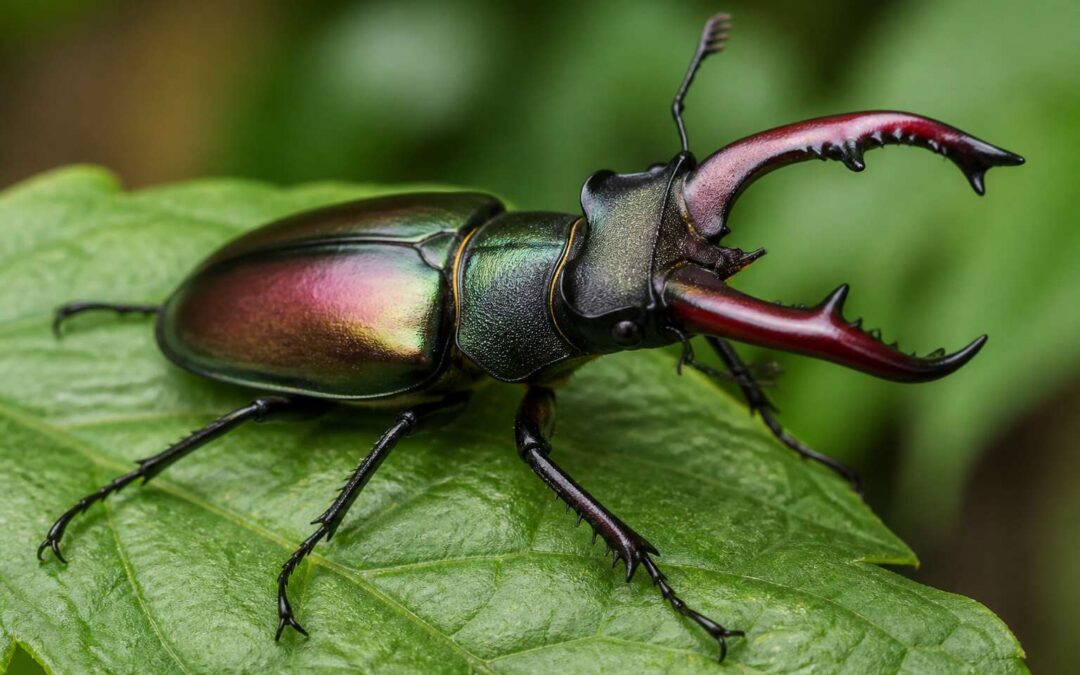
Every insect in South Africa shares the same three part body plan: the head, thorax, and abdomen. To understand how many legs do insects have, you must start with the thorax. This middle segment is the locomotive centre. It carries all the legs and any wings. The head handles sensory input. The abdomen manages digestion and reproduction.
Here is how the parts break down:
- Head: eyes, antennae, and mouthparts
- Thorax: legs and wings
- Abdomen: internal organs
Because legs only attach to the thorax, the leg count stays uniform across all insect species. This fixed anatomy makes the answer simple and unchanging.
Segmentation and the Attachment of Appendages
Insect bodies are built from repeated segments, a structure most visible in the thorax. Each thoracic segment carries one pair of legs, which is why the answer to how many legs do insects have stays fixed at six. The attachment points are sockets, not ball joints, granting controlled movement without sacrificing stability.
Spiracles, the breathing openings, sit between segments, a reminder that this exoskeleton is alive. Legs divide into sections: coxa, femur, tibia, and tarsus. These linked pieces let an insect grip, jump, or run across varied surfaces.
The segmentation does not vary, and neither does the leg count. This uniformity defines the insect plan across every species.
The Role of the Exoskeleton in Leg Support and Movement
An insect’s skeleton sits on the outside of its body, a structural arrangement that dictates every aspect of how it moves. This external casing offers more than defence. It provides each leg with a stable platform from which to push off. Without this rigidity, the matter of how many legs do insects have would be purely academic. A soft-bodied creature could not stand, let alone sprint.
Consider the cuticle. It is composed of layered chitin and protein, hardened in places and left flexible at the joints. Its role in leg support comes down to three functions:
- Muscle attachment sites on the interior wall
- Flexible joint membranes that permit bending
- Elastic recoil that powers the following stride
Muscles do not pull against a central spine. They attach directly to the inside of this shell. One group contracts to flex the leg, another to extend it, and the shell holds its shape throughout. That efficiency produces the effortless scuttle of a beetle crossing your kitchen floor.
Counting Legs Across Insect Orders
True Insects vs. Other Arthropods: Defining Characteristics
Six legs, no exceptions! The question of how many legs do insects have finds its answer in the order of nature itself: every true insect, from a weevil to a wasp, stands upon exactly six. Yet within this fixed count, evolution modifies their legs for particular functions:
- Mantises: raptorial forelegs for grasping prey
- Beetles: thickened tibiae for burrowing
- Flies: adhesive pulvilli for walking on glass
These adaptations never change the number. When we place true insects against other arthropods, the difference is stark. Spiders have eight legs, while centipedes possess one pair per segment. Caterpillars may display prolegs, but these are not true legs. Always six, a constant in a world of endless variation.
Common Examples: Beetles, Ants, Butterflies, and Flies
A foraging ant and a buzzing fly both land on the same number: six. That is how many legs do insects have, regardless of order or habitat. Beetles carry six sturdy legs built for digging or scrambling through soil. Ants move with six coordinated limbs along chemical trails. Butterflies perch on six slender legs, often tasting through their feet. Flies walk on six legs equipped with sticky pads that grip smooth glass. The count stays constant across all these groups. We rarely notice the pattern until we look closely, but every true insect obeys this rule. Spiders, centipedes, and other arthropods break it, yet insects never do. Six legs, repeated across millions of species, from tiny ants to broad winged moths. The uniformity is almost eerie, a fixed law written into their anatomy. Next time you see a beetle or butterfly, pause and count. You will find the same answer every time.
Larval Stages and the Temporary Absence of Legs
Larval stages often obscure the true count, so asking how many legs do insects have requires looking at the adult form. A blowfly maggot has no visible thoracic legs at all. A honey bee larva likewise wriggles without any legs in its brood cell. Meanwhile, a butterfly caterpillar displays six true legs, though fleshy prolegs farther back mimic extra appendages.
- Blowfly maggot: zero thoracic legs
- Honey bee larva: zero visible legs
- Caterpillar: six true legs plus prolegs
These temporary absences or additions vanish at metamorphosis. I have watched a caterpillar shed its prolegs during pupation, and the adult moth emerged with exactly six legs. So the uniform answer holds in every order!
Exceptional Cases: Twisted-Wing Parasites and Reduced Legs
The question of how many legs do insects have usually gets a crisp answer: six. Twisted-wing parasites complicate that answer. Males have a complete set of six legs, while females are legless, living inside wasps and bees as stationary egg producers. Their reduced limbs are an evolutionary adaptation to a parasitic lifestyle.
Other lineages also trim their limbs. Scale insects and certain parasitic wasps show reduced legs in some life stages, though rarely to zero. These exceptions are worth noting when entomologists count appendages.
- Male twisted-wing parasite: six legs
- Female twisted-wing parasite: no legs
- Most adult insects: six legs
So the standard answer remains intact for the vast majority of adults, even if a few reclusive species choose to shed their appendages entirely.
Why Six Legs? Evolutionary and Functional Benefits
Locomotion and Stability on Land
The question of how many legs do insects have finds its most poetic answer in the number six. Three pairs of legs create a living tripod, a design refined over 400 million years. When an insect walks, it lifts one leg from each side while the other two pairs anchor the body. This alternating stance ensures that three points of contact remain on the ground, granting stability on uneven soil or swaying branches.
This configuration permits agility. A cockroach can reverse direction in less than a second. A mantis can strike with precision while balanced on two legs. I find that remarkable! The six-legged plan reduces the energetic cost of movement, allowing insects to cover vast distances on foot. Each leg functions independently, yet they move in coordination. The result is a stride both powerful and delicate, a quiet marvel of natural engineering that carries life across every terrestrial habitat.
Energy Efficiency and Speed
The question of how many legs do insects have leads directly to an evolutionary trade-off between speed and stability. Six legs allow a division of labor that is impossible with four. A rear pair can provide thrust, a middle pair can manage turning, and a front pair can sense the terrain. This separation reduces neurological overload, because each leg does not have to perform every task.
Energy efficiency comes from the straight-line push of the hind legs. The body moves forward with minimal vertical bounce, which saves muscle power. Speed follows from that same economy, because the insect does not waste energy lifting its center of mass. Here is what that means in practice:
– Each stride uses less oxygen per gram of body weight than a vertebrate’s step.
– The alternating tripod keeps the body level, reducing drag.
– Legs recover elastic energy from the ground, like a spring.
So when someone asks how many legs do insects have, the number six is not arbitrary. It is a functional answer shaped by millions of years of selection for efficient, rapid movement across the soil and the veld.
Evolutionary Transition from Many-Legged Ancestors
The arthropod lineage underwent significant change over deep time. The earliest fossilised hexapods, such as those from the Devonian period, show evidence of a gradual loss of limbs. Where ancient relatives managed a dozen or more appendages, the insect body consolidated around three pairs.
The answer to how many legs do insects have lies in this reduction. I find the precision of that outcome remarkable. Six legs became the equilibrium between too many limbs, which create drag and neurological confusion, and too few, which sacrifice stability. Each pair assumed a separate duty:
- The rear pair generates propulsion.
- The middle pair maintains course.
- The front pair explores the substrate.
This functional triage allowed insects to claim every terrestrial niche. The shift from many-legged ancestors produced a more precise and economical mode of movement.
Survival Advantages in Predator Evasion
Six legs solve a survival problem. Consider the mathematics of escape. With three points of contact, an insect can lose a limb and still bolt. Add speed, and the advantage compounds.
For predator evasion, six legs offer a triangular base that allows instant direction changes without teetering. That is why the question of how many legs do insects have becomes a matter of life or death. A grasshopper’s leap, a cockroach’s zigzag, they all rely on this tripod gait.
While two legs might stumble and eight legs might tangle, six deliver a balance between agility and efficiency. So when a bird lunges, the insect is already gone.
Constraints of the Insect Nervous System
Consider the insect’s nervous system. It is not a single brain running everything. Instead, each leg carries its own cluster of neurons, called ganglia. This design directly shapes the answer to how many legs do insects have. Six legs work because they fit the neural budget. The tripod gait requires only three legs to coordinate at any moment. Three legs move, three legs anchor. That leaves the other half ready for a sudden turn. Eight legs would demand more coordination. Two legs would need constant balance adjustments. Six is the efficient compromise.
- Each leg’s ganglia operate independently.
- The tripod pattern uses three points of contact.
- No central processor is overloaded.
Evolution kept six because the system runs cheaply and reliably. That is the functional truth behind the number.
Comparing Insect Legs to Other Arthropods
Arachnids: Why Spiders Have Eight Legs
Curiosity often leads to the question, how many legs do insects have? The answer remains constant: six. Spiders, however, break that pattern with eight legs. This difference stems from their lineage as arachnids, not insects.
Insect legs attach to the thorax in three pairs. Spider legs emerge from a fused head and chest region called the cephalothorax. That placement changes how each creature supports its body and captures prey!
- Insects: three pairs of legs, six total
- Arachnids: four pairs of legs, eight total
Recognizing this leg count offers a practical way to sort arthropods during nature walks.
Crustaceans: Decapods and Beyond
Follow the shoreline where the Indian Ocean meets the rocks, and a different leg count emerges among the arthropods. The question how many legs do insects have finds a striking answer when you observe a Cape rock crab sidling across a boulder. That crab, a decapod, carries ten legs in five pairs. Its front pair has evolved into pincers, leaving four pairs for walking. Insects, by contrast, rely on exactly three pairs of legs attached to the thorax. No pincers, no swimming appendages. Just six legs built for running, hopping, or clinging to leaves.
The structural difference runs deeper than numbers. A crab’s legs emerge from a fused cephalothorax, while insect legs articulate on a segmented thorax. Consider how these legs behave:
- Insect legs move in a tripod gait, always keeping three points on the ground.
- Decapod legs scuttle sideways, with each pair moving in sequence.
So the answer stays six, a number that separates true insects from the ten-legged decapods of the tide pools.
Myriapods: Centipedes and Millipedes
In the damp leaf litter of a KwaZulu-Natal forest, you might find a centipede coiling under a log. It carries one pair of legs per body segment, and a large stone centipede can have over thirty pairs. This stands in sharp contrast to the answer to how many legs do insects have, which remains six for every true insect.
Millipedes push the comparison further. They have two pairs of legs per segment and move in a slow, undulating wave rather than the insect’s tripod gait.
- Centipedes have one pair of legs per segment.
- Millipedes have two pairs per segment.
Counting legs on a myriapod takes patience. Counting them on an insect takes seconds. That difference is why the question how many legs do insects have stays simple, while other arthropods remain open ended.
Quick Field Guide: Distinguishing Leg Counts at a Glance
When you encounter an unknown arthropod on a forest path, count the legs before anything else! The answer to how many legs do insects have remains fixed at six, so that number instantly separates true insects from spiders, which carry eight, and from crustaceans like the river crab with ten. Myriapods break every pattern, but their many pairs take longer to tally.
- Check the animal’s movement; insects use a steady tripod gait.
- Look for the three body sections, though legs are easier.
- Note the leg count; six means insect, eight means arachnid.
Pill bugs offer a common trap, as their fourteen legs look insect-like but do not match the six. With this quick field guide, you can classify in seconds and avoid the patience that myriapods demand.
Common Misconceptions and Identification Tips
Spiders vs. Insects: The Leg Count Test
Many people think spiders are insects because both appear in the same corners of the home. The leg count test clears this up immediately. A spider has eight legs, while an insect has six. This single difference separates the two groups reliably.
So how many legs do insects have? Six, always, in the adult stage. Beetles, ants, butterflies, and flies all carry six legs attached to the thorax. Spiders, mites, and ticks are arachnids with eight legs. The confusion usually comes from looking at the whole body rather than counting the limbs directly.
Here is what to check when you find one:
- Count the legs carefully. Six means insect, eight means arachnid.
- Look for antennae. Insects possess them, spiders do not.
Counting legs removes the guesswork and settles the identification instantly.
Counting Legs in the Wild Without Getting Too Close
Out in the veld, the real challenge is not identifying an insect, it is getting close enough to count its legs without startling it. A common misconception is that wings or size somehow alter the total. They do not. The answer to how many legs do insects have remains fixed at six for every adult insect, regardless of speed or posture.
I have learnt to rely on indirect cues. Snap a rapid series of photographs and zoom in on the screen. Or watch the shadow cast on a flat rock. The leg pattern becomes visible, even when the animal is moving.
- Check for a tripod walking gait: three legs on the ground at a time.
- Look for sensitive antennae sweeping forward. Spiders never display this.
- Wait for a pause, then count the paired limbs from front to back.
Each of these methods keeps you at a respectful distance while giving you a definitive read on how many legs do insects have in the wild.
Why Leg Count Matters in Pest Control and Entomology
Many assume a creature’s habitat or feeding habits might change its leg count, yet the answer to how many legs do insects have remains six for every mature specimen. The misconception that some persistent household visitors possess extra limbs stems from confusing them with arachnids or myriapods. In pest control, this distinction is not academic, it is survival.
An exterminator who misreads eight legs as six may apply the wrong chemical, wasting resources and risking ineffective treatment. The leg count tells you which class of pest you face, and that determines which control strategy applies.
- Six legs means insect, requiring insecticidal approaches.
- Eight legs means arachnid, often needing targeted acaricides.
- More than eight legs signals a myriapod, which may require physical removal.
Entomologists rely on the same count when cataloguing species, because leg structure and number anchor taxonomic classification. Getting this wrong distorts research data and hampers public health responses to vector-borne diseases.
Debunking the ‘All Bugs Have Six Legs’ Myth
The belief that every creepy crawly is an insect creates endless identification errors. Ask any curious gardener how many legs do insects have, and the answer remains six. Yet many South Africans point to a spider or a centipede as proof of extra limbs. A simple field check can save you from misidentifying a harmless visitor as a threat. Consider these quick clues:
- Insects: six legs, three body sections
- Spiders: eight legs, two body sections
- Centipedes: one pair per segment
Turning over a rock reveals the truth. Count legs before you classify, because the word “bug” carries no scientific weight. Accurate identification prevents unnecessary panic and guides proper pest control choices.
Handling Legless Larvae and Other Ambiguous Cases
People often misidentify a legless grub as a worm. The standard answer to how many legs do insects have assumes an adult with six visible legs. Yet a maggot or a beetle larva can show no legs at all. This does not make it a worm.
Try these identification steps:
- Look for a hardened head capsule with mouthparts.
- Check for tiny nubs that may become legs later.
- Observe whether it moves by wriggling or by crawling with its body.
Ambiguous cases also include adult insects that have lost legs through injury. The leg count shifts, but the body plan remains that of an insect. Count the thoracic segments instead. That gives you a reliable answer without needing a precise leg number.