
Garden Predators That Keep Plants Healthy
Ladybugs and the Suppression of Aphid Populations
There is a certain theatre to a South African garden, a daily drama where the meek and the ravenous play out their parts. The starring roles often belong to the aphid, a pest that multiplies with the urgency of a rumour in a small town. But before you reach for the chemical sprays, consider the quiet competence of the ladybird. This beetle, with its cheerful scarlet shell, is not merely a pretty visitor. It is a voracious predator, and it is one of the most effective insects that help us in the eternal fight for our roses and vegetables.
A single ladybird can dispatch fifty or more aphids in a single day, a statistic that makes any gardener sit up and take notice. They are the epitome of sustainable pest control, working without fuss or fanfare. To welcome them is to introduce a natural balance that synthetic interventions cannot replicate. You want them content, and their preferred menu is extensive, which works in your favour. In a single season, their offspring can clear an infestation that would otherwise stunt your plants.
The lifecycle is a spectacle of efficiency.
– The larvae, which resemble tiny black alligators, are even more ferocious than the adults.
– They consume soft-bodied insects and scale, tidying up the undersides of leaves.
– A healthy population will police your borders with zero instruction.
What is truly fascinating is the manner of this work. When a ladybird settles on a stem, it does not simply take the nearest aphid. It patrols, probing with its mandibles, seeking the plumpest and most succulent of the colony. This selective feeding keeps an ecosystem in check, preventing a total collapse but ensuring the plants survive. For gardeners in the Cape or the Highveld, recognising this behaviour is part of understanding the intricate social contract of the soil. To see them at work is to witness a refined, miniature economy of survival.
Ultimately, the suppression of aphid populations is a matter of patience. A garden free of these red-winged allies is a garden that must fight a constant, thankless battle. But with them, you gain a partner. They are the discreet heroes whose presence ensures your garden thrives without the heavy hand of human interference. It is a compelling reason to remain observant, and to appreciate the contribution of these extraordinary insects that help us keep our green spaces alive.
Green Lacewings: Aphid Lions in Disguise
A single green lacewing larva can pierce and drain up to two hundred aphids in a week. These insects that help us arrive as pale green adults with lace like wings. Their offspring are the primary hunters. I have watched a larva patrol a rose stem, seizing soft bodied pests one after another.
The larva injects digestive enzymes and sucks out the contents, leaving a hollow husk. This keeps leaf surfaces cleaner. Adults also sip nectar and pollen, so they pollinate as they hunt. A few traits make them ideal residents:
- Larvae hunt aphids, thrips, and mites on leaf undersides.
- Adults survive on nectar and honeydew.
- Females lay eggs on stalks to avoid cannibalism.
Praying Mantises: Ambush Hunters of the Garden
A praying mantis can rotate its head 180 degrees, a skill that would make any surveillance expert jealous. These insects that help us are pure ambush predators. They wait motionless on stems, then strike with raptorial forelegs in under 100 milliseconds. That speed turns caterpillars, grasshoppers, and cockroaches into a quick meal.
Unlike other beneficial bugs, mantises do not discriminate. They will eat pests, but also pollinators if the chance arises. This makes them a chaotic neutral force in the garden. Their camouflage is extraordinary. Some species mimic leaves so well that gardeners order them as biological control agents.
Here is what a mantis typically targets:
- Aphids and small soft bodied insects
- Beetles and leafhoppers
- Even small spiders and flies
Watching a mantis stalk its prey is theater. It sways to mimic foliage, then lunges with a precision that leaves nothing to chance.
Pollination Heroes Behind Our Food Supply
Honeybees and Their Role in Global Agriculture
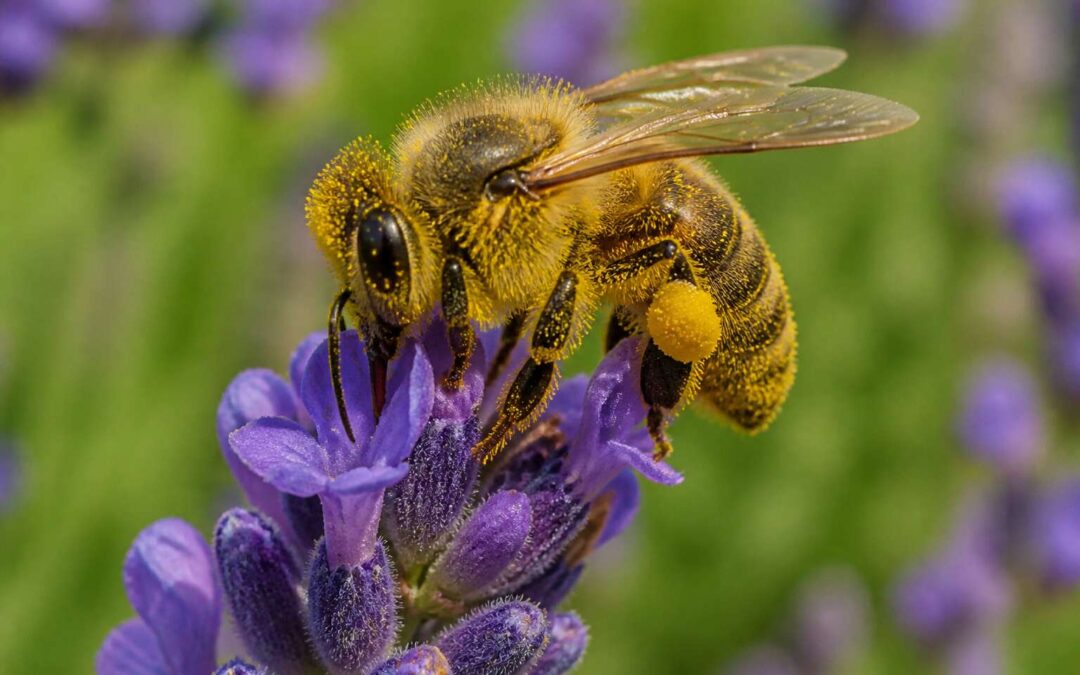
One honeybee colony can log over three million flower visits in a single day. That tiny forager sustains vast swaths of global agriculture. Here in South Africa, growers of avocados, macadamias, and canola lean on honeybee pollination for reliable harvests. I find it remarkable how these insects that help us feed the world operate with such chemical precision.
Honeybees practice floral fidelity, sticking to one bloom species per foraging trip. This habit sharpens cross-pollination and can lift orchard yields by nearly a third! That is a staggering return for a creature weighing less than a gram. The next time you bite into a local apple, thank the quiet hive down the road.
Native Solitary Bees: Invisible Laborers of Orchards
Somewhere in a dusty Cape orchard, a bluebanded bee works alone. Unlike the honeybee’s communal activity, these solitary natives, the carpenter and sweat bees, perform a quieter task. Their buzz pollination releases tomato and eggplant flowers with a vibration that honeybees cannot produce. This is one of the vital insects that help us, yet they receive no applause.
Each female fends for herself, building a small cell and provisioning it with pollen. No queen, no hive, no fanfare. A single mason bee can pollinate as many blossoms as a hundred honeybees, according to several orchard studies. For South African fruit growers, this means natural backup when commercial hives struggle. I find this humble resilience moving. These insects require nothing but a little untidy ground, and what a fair trade that is!
Butterflies and Moths as Flowering Plant Partners
Butterflies and moths are often admired for their wings, yet their work as pollinators goes unnoticed. Unlike bees, these insects that help us do not deliberately collect pollen. They brush against anthers while feeding on nectar, transferring grains between flowers. Some hawk moths possess tongues longer than their bodies, reaching deep into tubular blossoms that other visitors cannot access.
A single night-flying moth can visit dozens of flowers in one evening. In South Africa, certain wild orchids depend entirely on moth pollination for reproduction.
Their habits differ from other pollinators in several ways:
- They prefer large, vividly colored flowers with a strong scent.
- They remain active at dusk and after rainfall, periods when bees are absent.
- They carry pollen over greater distances, promoting genetic diversity in plant populations.
These activities maintain wild plant communities that feed and shelter countless other creatures.
Flies and Beetles: Overlooked Pollinators of Ancient Crops
Flies and beetles pollinated flowers long before bees appeared. These insects that help us work unnoticed among orchard blossoms, yet they perform vital duties. Mango and avocado flowers attract flies with their pungent scent. South African mango orchards depend heavily on these visitors.
Beetles serve as pollen carriers for primitive plant families. They crawl through blossoms, brushing against anthers and stigmas in their search for food. Custard apples and certain palms rely on beetle activity to set fruit.
Unlike bees, these pollinators remain active in cooler conditions and during overcast weather. Their work ensures fruit production when other visitors cannot fly. Gardeners who avoid pesticides during flowering periods support these overlooked allies.
Nature’s Recycling Team and Soil Builders
Dung Beetles and the Nutrient Cycle in Grazing Lands
A single dung beetle can move a ball of manure weighing ten times its own body weight in one night. That labour keeps South African pastures alive. These coprophagous insects are the primary recyclers in grazing systems, and they are prime examples of insects that help us maintain productive land without synthetic fertilisers.
Their work is direct:
- Burying dung removes breeding sites for horn flies.
- Tunnels aerate the soil and improve water penetration.
- Manure is converted into plant-available nitrogen and phosphorus.
In the Karoo and Highveld, where livestock roam vast areas, dung beetles recycle tonnes of waste annually. When they bury dung, they redistribute nutrients from the surface into the root zone. This keeps grasses thriving and reduces the spread of parasites. I have watched them roll dung across a dusty paddock, and the efficiency is astonishing!
Termites and the Breakdown of Dead Wood
A single termite mound can shift a cubic meter of soil every year. That quiet labour reshapes the landscape beneath your feet. These insects that help us break down dead wood are the invisible engineers of the bushveld.
Termites carry fallen branches and trunks back into their nests. Their gut microbes digest cellulose, releasing carbon and nitrogen into the surrounding soil. The network of tunnels they excavate lets water sink deep, even after a short thunderstorm.
- They remove dry wood that could fuel runaway fires.
- They mix organic litter with mineral particles, creating richer topsoil.
- Their mounds provide shelter and nesting sites for birds and reptiles.
I watched a dead acacia stump disappear over one rainy season. All that remained was a mound of fine crumbly earth, ready for new roots. That is the quiet power of a recycling team that never rests.
Ants as Soil Engineers and Seed Dispersers
Ants move more soil than earthworms in many South African landscapes. In the Karoo, harvester ants alone shift up to 1,500 kilograms of subsoil per hectare each year. These insects that help us aerate the ground create channels that absorb rainfall slowly, reducing runoff and erosion.
Their nests enrich the soil with organic matter gathered from the surrounding veld. Seed-dispersing ants such as the pugnacious ant carry fynbos protea and erica seeds into underground chambers. Many of those seeds cannot germinate without passing through an ant nest, where fire cannot reach them and the soil holds nutrients they need.
Where ants thrive, plant diversity follows. I have seen abandoned nests in the Western Cape blooming with seedlings that grew nowhere else. Their constant excavation opens pathways for roots and water, sustaining the balance of the entire landscape. These are insects that help us keep productive land intact.
Insects as Sources of Valuable Natural Products
Honeybees: Honey, Royal Jelly, and Propolis
Among the insects that help us, honeybees produce valuable natural products. A single colony can turn nectar and pollen into honey, royal jelly, and propolis. Royal jelly, the milky secretion fed to future queens, contains fatty acids that researchers study for their effects on cellular signalling. Propolis, a sticky resin gathered from tree buds, seals gaps in the hive and slows bacterial growth.
- Honey stores energy for winter survival.
- Royal jelly supports queen development with proteins and vitamins.
- Propolis protects the colony from infection and weather.
South African beekeepers know that harvesting these products demands restraint. Leaving enough honey for the bees ensures the colony survives the dry months. Propolis and royal jelly, though less common, open niche markets for small-scale producers. The balance between human need and insect welfare defines this ancient partnership.
Silkworms and the History of Silk Production
Silkworms spin a single filament that can stretch for a kilometer before breaking. This delicate thread has woven itself through human history. Sericulture began in ancient China, where the secret of silk production remained guarded for millennia. The silkworm larva secretes fibroin from its salivary glands, and each cocoon yields a continuous protein strand that artisans value for its lustre and tensile strength.
Here in South Africa, small scale silk farms are reviving this craft. Mulberry trees thrive in several provinces, and local cooperatives harvest cocoons for niche textile markets. I have watched a handful of cocoons transform into skeins of golden thread. The insects that help us are not limited to pollination and pest control; they also supply raw materials that clothe us with elegance and history.
Cochineal Insects and the Carmine Red Dye
It takes roughly 70,000 cochineal insects to produce one kilogram of carmine red dye. These scale insects feed on prickly pear cacti, concentrating carminic acid in their bodies. That acid yields a deep crimson pigment when extracted. The pigment resists fading from heat and light.
Historically, the dye was a trade commodity as valuable as silver. South African artisans now experiment with cochineal for local textile projects. The insects that help us include these tiny creatures, offering natural colour without synthetic additives. I have watched the pigment release from crushed bodies into a steaming pot, a sight that never loses its impact! Common applications include:
- Food colouring in yoghurts and drinks
- Cosmetic pigments for lipsticks and blushes
- Textile dyes for wool and silk
Lac Bugs and Shellac in Everyday Goods
Roughly 20,000 tonnes of lac resin are harvested each year from the lac bug, Kerria lacca. These scale insects cluster on host branches and secrete a hardening resin that encases their colonies. In India and Thailand, harvesters scrape the encrusted bark and refine the raw lac into shellac.
Common goods depend on this material:
- Glazing chocolates and fruit for shine
- Sealing wooden furniture and floors
- Coating pharmaceutical tablets
I have watched shellac flakes dissolve in alcohol, releasing a scent that hangs in the air of woodworking shops. The insects that help us here supply a natural resin used in South African furniture, confectionery, and medicine. Most people will never see a lac bug, yet they may touch its work every day!
Waxworms and the Future of Plastic Degradation
In 2017, a beekeeper noticed waxworms eating through a plastic bag. Those larvae, Galleria mellonella, digest polyethylene using salivary enzymes. This happened outside any laboratory, in an ordinary apiary. I find that detail remarkable.
Scientists isolated the enzyme, called Demetra, which oxidizes plastic polymers. The insects that help us here might soon drive bioremediation. South African researchers are examining local waxworm strains for similar capabilities.
- Polyethylene grocery bags
- Mulch films used in agriculture
- Plastic packaging waste
Insects Advancing Medicine and Forensic Science
Maggot Therapy in Chronic Wound Treatment
When antibiotics falter, sterile blowfly larvae step in. Maggot therapy, the deliberate application of these larvae to chronic wounds, has halved healing times in some studies. In South Africa, where diabetes-related foot ulcers burden many clinics, these larvae debride necrotic tissue and disinfect. I have seen patients wince at the idea, then marvel at the results.
The larvae secrete enzymes that dissolve dead tissue while leaving healthy flesh intact. They also excrete antimicrobial compounds that combat resistant bacteria. For chronic wounds that refuse to close, maggots could be the turning point. This is one of the most remarkable insects that help us, yet it remains overlooked. From burn units to rural hospices, the humble maggot proves that healing often comes from unexpected quarters.
Fruit Flies in Genetic and Disease Research
In the quiet corner of a genetics lab, Drosophila melanogaster outnumbers every researcher. Nearly 60% of human disease genes have a counterpart in this humble fly. That statistic explains why fruit flies anchor modern biomedical inquiry!
These insects that help us reveal how DNA mutations drive conditions like Parkinson’s and cancer. Their rapid breeding allows scientists to observe generational effects in weeks, not decades. Consider what flies offer:
- A transparent model for studying gene expression
- Tools for testing therapeutic compounds
- Insights into circadian rhythms and ageing
Such contributions feel absurd until you validate them. Then the absurdity turns into respect. Fruit flies compress decades of human medicine into petri dishes, and we, their beneficiaries, barely acknowledge the debt.
Ant and Bee Venom Compounds in Drug Development
A single bee sting delivers dozens of peptide toxins. Researchers now turn those toxins into drug leads for inflammatory and infectious diseases. Melittin, a dominant peptide in bee venom, punctures bacterial membranes without harming human cells at controlled doses. Ant venom adds thrombin-inhibiting peptides that could prevent dangerous blood clots.
These insects that help us reveal molecular strategies that synthetic chemistry struggles to replicate. Their venom compounds bind selectively to biological targets, offering specificity.
Consider what researchers value in these secretions:
- Stability under physiological stress
- Target specificity across species
- Rapid clearance from the body
Venom developed for predation now informs human therapeutics. It is a translation of evolutionary biology.
Forensic Entomology: How Insects Help Solve Crimes
Determining time of death once relied on circumstantial observation. Forensic entomology now provides a measurable biological record. Insect species present and their developmental stages reveal hours or days since death. Blow flies arrive within minutes, their eggs hatching according to predictable temperature thresholds. Each successive insect wave marks another stage in decomposition.
These insects that help us reconstruct events are not passive witnesses. Their feeding patterns alter the scene, and understanding those changes prevents investigators from misreading evidence. A medicolegal autopsy gains corroboration from the insects that colonized the remains.
- Blow flies establish the earliest post-mortem interval
- Beetles indicate later stages of decomposition
- Environmental conditions adjust every calculation
South African forensic teams depend on regional species data, since development rates vary by climate and altitude. A single day of error can shift an entire investigation. Insects that help us answer such questions do so with fidelity that laboratory methods cannot match.