
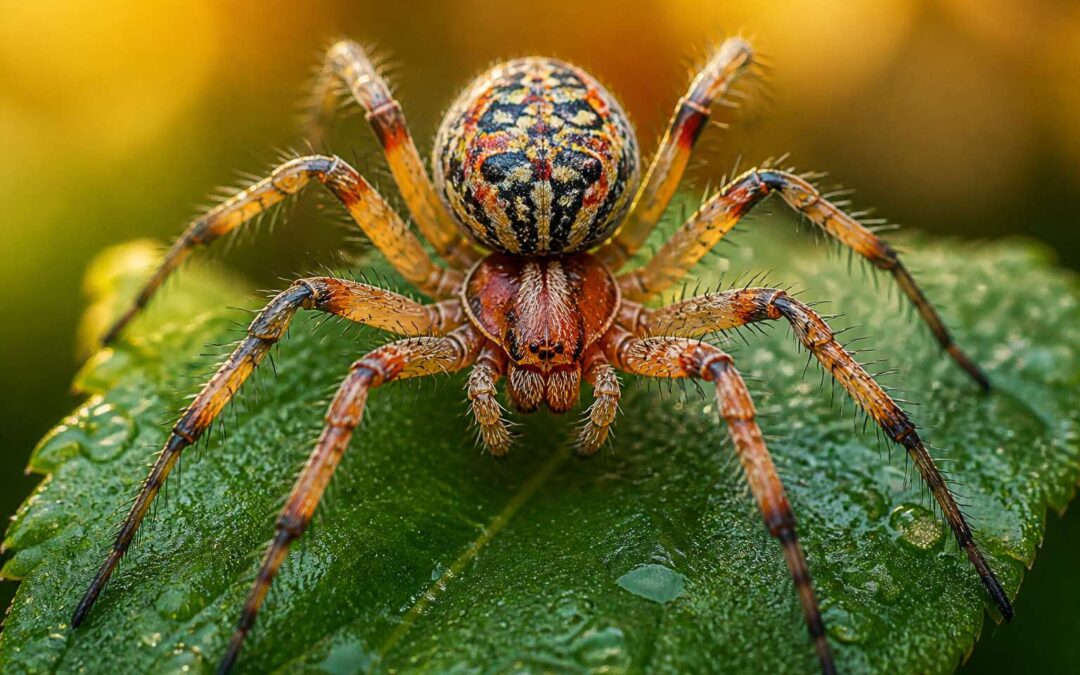
The Truth About Eight-Legged Arthropods
Why Insects Have Six Legs, Not Eight
When a person types insects 8 legs into a search bar, they are looking for something that does not exist. True insects are hexapods. They carry exactly six legs, arranged in three pairs, on a body split into three segments. Eight legs belong to a different class of animals entirely: arachnids.
Spiders, ticks, scorpions, and mites all have eight legs. They have no antennae and only two body parts. This difference changes how each creature hunts, hides, and reproduces compared with any true insect.
Here is the clearest way to separate them:
- Insects: six legs, antennae, three body segments
- Arachnids: eight legs, no antennae, two body segments
So the phrase insects 8 legs is a contradiction. What people usually find in a dusty corner or a thatched roof is an eight legged arthropod, not an insect. Knowing the difference changes how you approach pest control and how you read the crawling world around you.
Defining Characteristics of Arachnids
Nature draws a firm line between six legs and eight. When you search for insects 8 legs, you are actually describing an arachnid. The eight legged body is a masterpiece of a different design.
Arachnids carry two main body sections. The cephalothorax holds the brain, mouth, and legs. The abdomen houses digestion and reproduction. They lack antennae entirely. Their world is read through vibration and touch, not scent.
– Spiders have fangs and silk glands.
– Scorpions use pincers and a venomous tail.
– Ticks are parasitic and feed on blood.
– Mites are tiny, often microscopic scavengers.
Their eight legs are not for speed alone. They allow for a wider stance and more precise control. A spider can walk on a ceiling because its legs grip with tiny hairs. A tick uses its legs to latch onto a passing host. This anatomy is the reason they hunt and hide in ways insects cannot.
So, the phrase insects 8 legs is a natural mistake. The true owner of those eight legs is an arachnid. Look closely at the next creature you find. Count the legs and check for antennae. The body will tell you the truth.
Common Misconceptions Explained
In natural history, few mistakes are as persistent as calling an arachnid an insect, whether it is scuttling across a Durban veranda or a Karoo gravel patch. The search term insects 8 legs is a gentle confession of this confusion. Most people assume eight limbs simply mean a bigger, fiercer insect. The count signals an entirely separate lineage.
Common assumptions deserve correction:
- Every eight-legged creature is a spider.
- All arachnids bite or sting.
- Eight legs simply mean a hardy insect.
None of these hold up! The harvestman, scorpion, and tick share eight legs but little else. Their behaviours, mouthparts, and life cycles diverge enormously.
The word insect belongs to order Insecta. Eight-legged arthropods occupy Arachnida, a distinction many searches overlook.
Major Arachnid Groups With Eight Legs
Spiders: The Largest and Most Diverse Order
Few animals move with the strategic precision of a spider. With over 48,000 described species, this order has colonized nearly every corner of South Africa, from the highveld to the shady corners of your patio. When people search for insects 8 legs, they are usually hunting for these masters of adaptation!
These arachnids do not merely walk. Their legs function as versatile tools:
- Detecting vibrations through sensory hairs
- Propelling the body via hydraulic pressure
- Wrapping and securing prey in silk
Unlike the rigid bodies of insects, a spider’s exoskeleton allows explosive jumping and intricate web-weaving, which explains their enormous diversity compared to other arachnid groups.
Scorpions: Armored Eight-Legged Predators
When a black light sweeps across the Karoo at night, scorpions glow with an eerie fluorescence. This order has survived nearly unchanged for 430 million years. They are the most ancient arachnids on Earth.
Scorpions are not insects. The confusion around insects 8 legs persists, but scorpions carry their eight walking legs on a segmented body built for endurance. Their pectines, comb-like sensory organs, detect vibrations and chemical traces. Their pedipalps and venomous telson serve as weapons.
Here is what sets them apart:
- They can slow their metabolism to a crawl, surviving on one meal per year
- They fluoresce under ultraviolet light
- They give birth to live young, which ride on the mother’s back
In South Africa, over 120 species patrol the soil, from the arid Richtersveld to suburban gardens. I have flipped rocks in the veld and found them waiting! When people search for insects 8 legs, scorpions are rarely what they expect, yet these predators outlived the dinosaurs.
Mites and Ticks: Tiny Yet Persistent Blood Feeders
Searching for insects 8 legs often leads to mites and ticks, yet these creatures are arachnids with a simpler build. Their eight legs are barely visible to the naked eye, but they make their presence known through persistence.
Ticks wait on grass blades for a passing host, then burrow into skin to feed for days. Mites are smaller, some living in soil, others on animals.
I have pulled ticks off dogs after walks in the bush. Their hold is stubborn. Unlike insects with distinct body segments, mites and ticks appear as a single fused sac. That makes them easy to misidentify.
Here is what helps me keep them straight:
- Adult mites and ticks always have eight legs, while insect larvae have six
- Ticks need blood to molt and reproduce
- Some mites are beneficial predators in gardens
Harvestmen: The Long-Legged Relatives You Shouldn’t Fear
When someone types insects 8 legs into a search bar, harvestmen are often what they actually spotted. These gangly arachnids, known as daddy longlegs in South Africa, have a single fused body with no visible waist. Spiders have two distinct segments. Harvestmen have one.
They do not spin webs. They do not bite. They lack venom glands entirely. Instead, they scavenge for dead insects, fallen fruit, and tiny organic matter. I have watched them pick across garden walls after rain, legs lifting high with each step.
Useful identification markers:
- A single oval body with no silk glands
- Extremely long, flexible legs that can detach when seized by a predator
- Nocturnal scavenging behaviour
Pseudoscorpions: The Miniature Hidden Hunters
Pseudoscorpions are the arachnids you have never noticed, and they prefer it that way. These tiny creatures rarely exceed a few millimetres. They scuttle through leaf litter and beneath bark across South Africa. When people search for insects 8 legs, they seldom realise these miniature hunters are closer relatives to spiders than to insects.
Their most remarkable feature is a pair of oversized pincers, used to grasp springtails and other minuscule prey. A pseudoscorpion lacks a tail and stinger, unlike its scorpion cousins. It moves sideways, often riding larger insects for transport. This behaviour, called phoresy, is a useful form of travel.
Useful identification markers:
- Flat, pear shaped bodies with two long pincers
- Eight legs, though the front pair are often held like antennae
- Prefer humid microhabitats under stones and logs
They are harmless to people. A search for insects 8 legs often leads to these quiet hunters, and they offer free pest control.
Anatomy and Locomotion of Eight-Legged Species
How the Eight Legs Are Attached to the Cephalothorax
A spider’s leg bends without a single bicep. It relies on hydraulics. Each of the eight legs attaches to the cephalothorax, a fused head and thorax. The coxa, a short basal segment, fits into a socket on this plate. This connection is the foundation for all movement.
When you say insects 8 legs, you are describing an arachnid. The leg is divided into seven segments, each with a specific role. Flexor muscles pull the leg inward. Extension happens when haemolymph is pushed into the joint. This system is efficient and light.
- Coxa
- Trochanter
- Femur
- Patella
- Tibia
- Metatarsus
- Tarsus
The tarsus often ends in claws or pads. That is why a spider can climb glass. Scorpions use the same structure for rapid strikes. Mites, though tiny, follow the same layout. The cephalothorax keeps everything centralized, so the legs move in sync.
Movement Patterns and Hunting Strategies
When someone types insects 8 legs into a search bar, the results show arachnids. The label is inaccurate because true insects have six legs. Eight legs produce a tetrapod gait, unlike the alternating tripod of insects. That fourth point of contact stabilises the body during sharp turns. The front legs sense the surroundings, while the rear pairs generate thrust.
Hunting strategies exploit this stability. The rear legs brace while the front legs strike. Common movement patterns include:
- Ambush hunters holding position until a target enters range
- Active foragers using a rapid tetrapod trot
- Burrowing species pushing debris with the front legs
Some species keep all eight limbs folded, then extend them rapidly using elastic recoil in the joints. The wide stance of the eight legs creates a broad striking range. Movement and capture form one continuous action.
Sensory Functions of the Legs
Under the cuticle of any eight legged arachnid, the legs are not simple struts. Each limb is a segmented lever, driven by flexor muscles and hydraulic pressure. When a spider or scorpion moves, hemolymph surges into the leg joints, extending them with force. The result is a limb that can strike, grip, or probe with equal precision.
The legs also serve as sensory organs. Many species carry several distinct receptor types:
- Trichobothria, fine hairs that vibrate in response to air currents
- Slit sensillae, which detect strain in the exoskeleton
- Chemosensory setae, used to taste the substrate
These receptors feed constant data to the central nervous system. A wandering spider reads the surface beneath it through its tarsi. A tick detects the breath of a passing host through its forelegs. For every creature searched as insects 8 legs, the limbs serve as both motor and sensory instruments, merging motion with perception.
Where to Find Eight-Legged Creatures Around the World
Urban and Household Habitats
Walk into any Johannesburg home and you will likely find a resident huntsman spider pressed flat against a wall. These eight-legged neighbours are not confined to the wilds. They thrive in kitchen crevices, the corners of Cape Town flats, and the thatched roofs of coastal cottages.
Common urban refuges include:
- Dark spaces beneath potted plants
- The folds of stored blankets and curtains
- Gaps around window frames and skirting boards
While many people use the phrase insects 8 legs for these household visitors, the term is a misnomer. The creatures sharing your bathroom tiles are arachnids, and their presence signals a functioning ecosystem. Searching for insects 8 legs around your home leads to spiders, not true insects. I once found a scorpion under a doormat in the Karoo!
In Durban, funnel-web builders anchor their silken tubes in garden walls. In Pretoria, rain spiders emerge after summer storms. Wherever humans build shelter, eight-legged animals adapt to our structures with remarkable ease.
Garden and Forest Dwellers
Forget the house. Step into any South African garden and you are surrounded by arachnids. The leaf litter alone hosts more arachnids per square meter than most city blocks. Under a single rotting log, I once counted eleven pseudoscorpions, three harvestmen, and a velvet mite that looked suspiciously smug.
Garden and forest dwellers prefer specific niches:
- Bark crevices on acacia trees
- Moist soil beneath compost heaps
- The tangled bases of grass tussocks
Forest floors amplify this density. Rain spiders weave their sheet webs between ferns. Whip scorpions patrol the duff after dark. When people search for insects 8 legs in these habitats, they find arachnids instead. The search term persists, but the creatures ignore our language.
Desert and Tropical Specialists
The Namib desert hosts the golden wheel spider, a species that cartwheels across dunes to escape parasitoid wasps. These arachnids tolerate surface temperatures above sixty degrees Celsius by adopting a stance called stilting, lifting their bodies clear of the sand. Desert scorpions fluoresce under ultraviolet light, a property researchers use to track nightly movements.
Tropical specialists behave differently. The Amazon’s wandering spiders, which belong to the genus Phoneutria, roam the forest floor at night instead of building webs. Their eight legs carry them across leaf litter in search of amphibians and small invertebrates.
When travellers search for insects 8 legs in these regions, they discover a hidden diversity:
- Tailless whip scorpions clinging to cave entrances
- Trapdoor spiders waiting beneath silk-hinged lids
- Harvestmen with leg spans exceeding fifteen centimetres
I once watched a tailless whip scorpion on a limestone wall in Thailand. Desert dunes and rainforest floors both conceal eight-legged specialists that surface only under darkness.
Cold Climate and Arctic Species
Searching for insects 8 legs in the Arctic feels counterintuitive. Yet the tundra harbours eight-legged survivors that endure months of darkness. The Arctic wolf spider carries her egg sac through permafrost temperatures. The polar mite, barely a millimetre long, thrives beneath compacted snow.
- Arctic jumping spiders hunt springtails on sun-heated rocks
- Taiga tick larvae await passing mammals even at freezing points
- Fishing spiders break through thin ice to capture aquatic prey
I once watched a fishing spider emerge through a crack in a frozen Norwegian lake. Cold climates reward patience, and these creatures enter diapause, slowing their bodies until warmth returns. The term insects 8 legs may be a misnomer for arachnids, but their resilience in these harsh regions is genuine.
Frequently Asked Questions About Eight-Legged Creatures
Are All Eight-Legged Creatures Dangerous to Humans?
Are all eight-legged creatures dangerous to humans? No! That misconception causes more harm than the animals ever could.
Of the thousands of arachnid species in South Africa, only a small fraction possess venom harmful to people:
- The button spider, found across several provinces
- The sac spider, common inside homes
- Various scorpion species in the Karoo
The harvestman, the pseudoscorpion, and dust mites cannot pierce human skin at all. Most eight-legged creatures are shy and reclusive, and in my years of observing them, they have never caused me harm. They hunt insects and other pests, quietly keeping ecosystems balanced. When the topic of insects 8 legs comes up, people often picture fangs and stingers. The reality is far less frightening. The vast majority would rather flee than fight.
What Is the True Difference Between Insects and Arachnids?
People search “insects 8 legs” expecting a single answer. The truth is that no insect has eight legs, ever! The difference sits in the anatomy. Insects carry six legs, a three part body, and antennae. Arachnids carry eight legs, a two part body, and no antennae at all.
- Insects: six legs, compound eyes, wings in most species.
- Arachnids: eight legs, simple eyes, never wings.
When you look up insects 8 legs, you are likely staring at a spider, a mite, or a harvestman. I find this point matters more than people think. The body plan determines how an animal hunts and where it hides. A six legged insect and an eight legged arachnid live different lives entirely. The confusion persists because both groups share an exoskeleton and a taste for smaller prey, but their leg count settles the argument.
How Many Eyes Do Eight-Legged Creatures Typically Have?
Eight legged creatures do not share one eye count. A common spider has eight simple eyes, set in two rows on the face. But scroll beyond spiders and the pattern breaks.
Scorpions might bear up to twelve eyes across their armored head. Harvestmen get by with two. Mites frequently have none. When someone types insects 8 legs into a search bar, I suspect they are staring at one of these arachnids. The eyes vary, but the eight legs remain constant.
- Spiders: eight eyes
- Scorpions: up to twelve
- Harvestmen: two
- Mites: zero
So a single answer for eye number does not exist. The legs, however, never waver!
Can Arachnids Regrow Lost Legs?
A lost leg is not always a permanent handicap for arachnids. Many spiders and harvestmen can regenerate a missing limb through successive molts. The replacement leg emerges smaller and gradually increases in size with each moult. Juvenile spiders often regrow more effectively than adults. Scorpions, however, do not moult after reaching maturity, so a lost leg stays lost. Ticks and mites have limited regenerative capacity.
For those searching about insects 8 legs, remember that these creatures are arachnids, not insects. The leg count remains eight, but the limb may be a fresh growth. Regeneration is a survival strategy, not a guarantee. The process demands energy and time, which explains why some individuals sacrifice a leg to escape a predator. The next moult may bring a shorter leg, yet the creature continues its hunt.
Why Do Some Eight-Legged Creatures Build Webs?
Roughly half of all described spider species never build a capture web. That makes web building an exception among the wider eight-legged crowd. People searching for insects 8 legs often have a spider in mind. Yet orb weavers in South African gardens spin spiral silks that entangle flying prey, while funnel-web spiders send trip lines across the soil. The silk emerges from spinnerets as a liquid protein and sets instantly on contact with air.
Spider silk serves several purposes:
- It extends the hunter’s sensory reach.
- It provides a refuge from predators.
- It lets a spider subdue prey much larger than itself.
Different glands secrete different silks. Some are sticky. Some are dry. Some are shock-absorbing. The spider selects the correct type for the job at hand. No mite, tick, or harvestman produces trapping silk. Among the creatures grouped under the term insects 8 legs, webs remain a talent exclusive to spiders.
Do Eight-Legged Creatures Play a Role in the Ecosystem?
The average South African garden hosts thousands of eight-legged residents that hunt while humans sleep. One spider can consume over two thousand insects per year. Scale that across a single neighbourhood and the impact becomes enormous. These predators hold pest populations in check without any chemical intervention.
Mites and ticks recycle decaying organic matter into soil nutrients, while harvestmen break down fallen leaves and fungi. Each group fills a distinct niche in the food web. Scorpions and large spiders also serve as prey for birds, reptiles, and small mammals.
- Reduce crop damage by controlling agricultural pests
- Accelerate decomposition in compost and topsoil
- Provide a steady food source for insectivorous wildlife
When people search for insects 8 legs, they rarely consider the unseen work these creatures perform. The ecosystem functions because of them.