
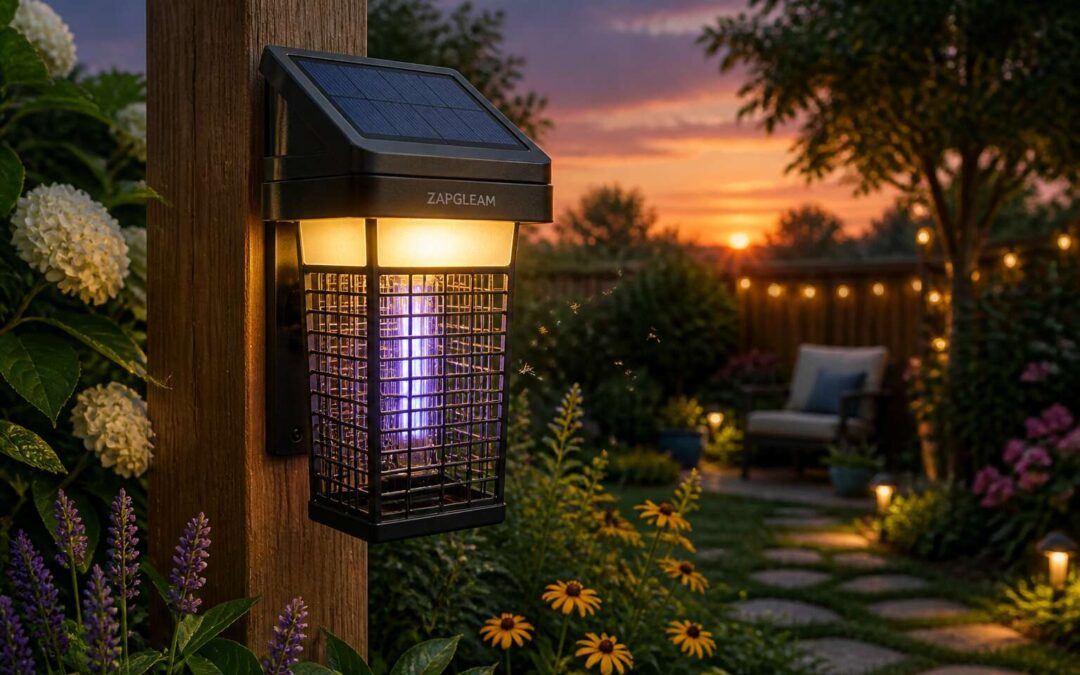
How Solar-Powered Insect Zappers Work
An Overview of Solar Energy Conversion
The sun dumps roughly 1,000 watts of energy on every square meter of South African soil, and a photovoltaic panel captures a portion of that wealth. Inside a solar bug zapper, those captured photons knock electrons loose in silicon cells, producing direct current that flows into a small battery. That battery stores the day’s sunshine until dusk triggers the light sensor.
When the sensor flips the switch, the ultraviolet LED array activates. Insects steer toward the glow and encounter an electrified mesh. The system has few moving parts, which explains its reliability:
- a photovoltaic panel to collect sunlight
- a rechargeable battery to hold the charge
- an ultraviolet LED array as the lure
- an electrified grid as the final stop
The efficiency of this arrangement matters for anyone scanning solar bug zapper lights for sale, because the panel size determines how many hours the device can run after sundown. A larger battery extends the zapping session, while a smaller one might quit before the mosquitoes do.
The Role of UV Light in Attracting Flying Pests
Here is the content item:
The African night is a hungry place. For every human ear that catches the high-pitched whine of a mosquito, there are thousands of insects steering through the darkness using ancient cues. They do not hunt by sight in the traditional sense. They navigate by light. More specifically, they navigate by the faint glow of the moon, and sometimes, by the deceptive flicker of a flame. This behaviour, known as phototaxis, is the keystone of pest control. We exploit it by offering a lure they cannot resist, an ultraviolet beacon that overrides their natural navigation systems. A UV LED array does not mimic the sun; it mimics the specific wavelengths that flying pests find irresistible, wavelengths we cannot see but they absolutely crave.
Understanding this attraction explains the practical design of the devices you see on the market. When you browse solar bug zapper lights for sale, you are not just buying a lamp, you are buying a carefully tuned trap. The bulb is the bait. Yet, the reaction is not equal across all species. Some insects are drawn to short-wave UV light, while others prefer longer wavelengths in the blue spectrum. The most effective zappers employ a broad spectrum to catch a wider variety of pests.
Here is how the photo-response typically unfolds:
1. The dusk sensor triggers the LED panel, emitting a specific frequency
2. The insect, confused by the artificial light, circles closer to investigate
3. Once within a few centimetres, the electrified grid delivers the final shock
The subtlety lies in the fact that the light itself does the heavy lifting. Because the LEDs draw very little power, the battery can afford to run them for hours. We often forget that a glowing filament generates heat, which annoys insects. A UV LED generates almost no heat, keeping the area around the zapper cool and calm, so the pests do not get spooked before they make contact. When you consider solar bug zapper lights for sale, remember that the wavelength of the bulb is the true hero. It is the silent caller in the dark, and the grid is merely the executioner waiting for the inevitable arrival.
Electric Grid Mechanism for Instant Elimination
Most people assume the shock is the main event. The truth is more surgical. The grid is a finely tuned executioner, designed to deliver a precise and instantaneous end. When a moth or mosquito bridges the gap between two electrified wires, it completes a circuit. The stored energy from the battery releases in a single, rapid pulse. This pulse is not a random jolt; it is a calculated discharge that disrupts the insect’s nervous system before it can react. The entire process lasts mere milliseconds, so there is no suffering and no escape. That is the brutal efficiency you are paying for when you compare solar bug zapper lights for sale.
The engineering behind this is deceptively simple, yet requires remarkable precision. The spacing between the grid wires is critical. It must be tight enough to catch smaller insects like gnats, but wide enough to prevent accidental contact from larger creatures. The voltage is stepped up using a transformer, creating a high-voltage, low-ampere charge. This combination is lethal for insects but safe for humans and pets. Here is how the mechanics unfold in a single event:
1. An insect touches two adjacent grid wires simultaneously.
2. The metallic body acts as a conductor, completing the electrical circuit.
3. The capacitor releases its stored charge in a high-frequency burst.
4. The current passes through the insect’s body, causing immediate death.
The beauty of this system lies in its self-regulation. The grid does not hum with constant power. It waits, holding its charge like a coiled spring. This energy efficiency means the solar battery is not drained by continuous electrical output. Instead, the power is only unleashed when a target makes contact. This design extends the operational life of the unit overnight. It also ensures that the device remains a silent sentinel, not a crackling menace. When you search for solar bug zapper lights for sale, you are looking for this specific balance of power and patience. That is the real magic of the grid.
Crucial Features to Evaluate Before Purchasing
Battery Capacity and Charging Speed
In South Africa, the sun provides generous daylight, but a battery that cannot store it becomes a wasted investment. The capacity of your unit decides whether it guards your garden until morning or powers down long before midnight. Milliampere hours, or mAh, reveal this truth clearly. A modest 2000 mAh battery handles a small patio, while 4000 mAh or more suits larger properties.
Charging speed is equally vital! A panel that needs eight hours to refill a drained cell is useless under afternoon cloud cover. Monocrystalline panels recharge faster in diffused light. When you compare solar bug zapper lights for sale from different brands, examine the battery and the panel together. Capacity buys you nightly coverage, but speed buys you resilience. Match both to your evening usage and your local daylight hours.
Weatherproofing and Durability Factors
South African weather punishes outdoor gear with equal force: hailstones, humidity, and nine hours of direct sun. When you compare solar bug zapper lights for sale, the first question should be about the enclosure, not the bulb. I have seen units crack along their seams within one thunderstorm season. The IP rating covers water ingress, but it says nothing about UV degradation. Polycarbonate housings far outperform standard ABS plastics under our sun.
Check for rubber gaskets on the battery hatch and sealed seams around the light array. Press the edges of the housing. If they flex, walk away. A simple checklist covers the essentials:
- Anodised aluminium mounts for coastal areas
- Stainless steel fasteners that will not corrode
- Impact resistant panels rated for hail
Cheap solar bug zapper lights for sale often fail at the hinges and clips long before the electronics give out. Ask the supplier directly about spare parts and the return process. A warranty is only as strong as the company behind it.
Mounting Flexibility for Various Settings
The best solar bug zapper lights for sale will fail you if you cannot mount them where the insects actually fly. A unit that only hangs from a hook limits your options to the porch ceiling. That is not good enough for a sprawling South African garden where the braai area sits twenty metres from the nearest wall.
Mounting flexibility turns a single device into a versatile weapon. Look for designs with a detachable light head and a separate solar panel. That configuration lets you place the panel on a sunny roof while the zapper sits in a shady, insect heavy corner. The cable between them should be at least two metres long. Shorter cables mean one component compromises the other.
Pole mounts and wall brackets each serve different spaces. A pole mount suits open lawns and pathways, placing the light at insect flight height. Wall mounts work best along perimeters and entertainment areas. Some units include both options in the box. Others require separate purchases, so check what actually ships with the product.
For gardens with mixed surfaces, consider these points:
– A 360 degree rotation head to aim the light where needed
– A tilting bracket to adjust the angle as the sun shifts
– Quick release clips for seasonal cleaning and battery swaps
The bracket material matters as much as the mounting design. Coastal properties need anodised aluminium or stainless steel. Inland, a powder coated steel bracket will hold up fine. Plastic brackets on cheaper models become brittle within two summers and snap under the weight of the unit.
Installation height changes performance significantly. Hang the zapper at 2.5 to 3 metres for broad coverage. Position it lower, around 1.5 metres, for targeted control near seating areas. The best solar bug zapper lights for sale allow both configurations without extra hardware.
Best Use Cases for Outdoor Living Spaces
Enhancing Patio and Deck Comfort
On a Johannesburg evening, the patio becomes a stage for quiet conversations and braai smoke. Yet the arrival of mosquitoes can turn that ritual into a hurried retreat. Solar bug zapper lights for sale today offer a graceful solution, one that asks nothing of the grid and rewards the hours after sunset.
Place them near dining areas to reclaim the deck, or along the railing where guests gather. The soft glow does not shout; it simply holds the space. For homes in coastal regions, the salt air demands durability, and these units deliver without fuss. A single unit can transform a small courtyard, while larger decks benefit from two positioned at opposite corners. When you search solar bug zapper lights for sale, consider the specific shape of your own outdoor room.
- Position near seating clusters, not under direct eaves
- Angle away from frequently used walkways
- Allow clear exposure to daylight for charging
This is comfort, quietly earned.
Protecting Garden Areas Without Harming Pollinators
A garden is a ledger of living things, and the balance matters. Solar bug zapper lights for sale offer a way to reclaim the evening without turning flower beds into a casualty zone. The trick lives in placement and timing.
Position units away from blooming borders, where bees and butterflies perform their daylight work. The zapper’s glow only matters after sundown, when most pollinators have returned to their nests. I have seen gardens where the light was placed among the roses, and the results were unfortunate. Target the perimeter instead, the damp corners where mosquitoes breed.
- Set lights near compost heaps and standing water
- Keep them clear of lavender, salvia, and other pollinator magnets
- Run them only during peak mosquito hours
For a vegetable patch, use the same logic. Hang the unit near the access path, not among the squash blossoms. The objective is not annihilation of every flying thing. It is a selective reclaiming of space, one that honors the pollinators while discouraging the biters!
Portable Solutions for Camping and Hiking
I have carried solar bug zapper lights for sale into the bushveld at dusk, where the air turns thick and the insects grow bold. A portable unit weighs little, packs into a rucksack, and charges under the African sun. By nightfall, it sits on a camp table, casting its faint violet lure while mosquitoes meet their end in a quiet crackle.
Outdoor living spaces extend beyond the veranda. A braai area, a poolside nook, a tent’s threshold. These lights need no mains power, and that freedom matters when you are miles from the nearest socket.
Nights in the open teach their own lessons:
- Downwind placement works best, drawing the pests away from your seating
- A branch or tent pole gives the glow a wider circle to cover
The battery holds through the longest evenings, and the same unit guards your garden at home, then travels with you into the mountains.
Commercial Applications for Restaurants and Events
Restaurant terraces face a particular horror when the sun retreats. Diners arrive for the evening air, and the insects arrive for the diners. Solar bug zapper lights for sale among the potted ferns can decide whether guests linger over dessert or flee with their wine glasses half full.
Event planners in South Africa know this tension well. Wedding receptions, market evenings, garden parties. The lights stand quietly on stakes or hang from temporary frames, doing their work without cords or generators.
Placement matters in these settings:
- Keep the glow away from the serving stations
- Aim for the perimeter where the lawn meets the paving
- Position several units to cover the full seating area
The commercial appeal rests in the silence. No humming transformers, no extension cables crossing walkways. Just the occasional crackle, barely heard over the clink of glasses.
Integration with Landscape Lighting Aesthetics
Outdoor living spaces in South Africa are designed for evening use. The braai area, the pool deck, the seating nook against the garden wall. Each zone needs its own light treatment. Solar bug zapper lights for sale today are more than utilitarian devices. They can stand alongside low voltage path lights or recessed garden spots without visual conflict.
The trick is matching the finish. Bronze housings blend with timber posts. Black matte units disappear into dark foliage. The glow itself is warm, not clinical. Many solar bug zapper lights for sale in this market offer interchangeable stakes or short poles to match the height of surrounding fixtures.
Consider placement across the main entertaining zones:
- Near the braai, but not directly over the coals
- Along the transition between lawn and paved patio
- At the edges of flower beds that border seating areas
This approach keeps the insect control discreet. The lights read as part of the landscape, not as additions to it. Landscape lighting aesthetics require consistency. A unit that mimics the scale and colour of existing fittings creates a unified evening environment.
Maintenance Strategies for Optimal Performance
Routine Cleaning of Solar Panels and Bulbs
A layer of Highveld dust can cut a solar panel’s charging efficiency by nearly a third within a week, a silent thief of your evening protection. I have seen many a good unit fail simply because its photovoltaic surface was forgotten during the dry season. A soft, damp cloth used every fortnight to wipe away the grime will keep the cells absorbing the afternoon sun at their peak, ensuring the battery banks are full before the mosquitoes begin their nightly patrol.
The bulb itself demands equal attention. A buildup of dead insects and fine debris can obscure the UV light, reducing the lure radius and leaving your stoep vulnerable. For the best results:
– Gently sweep the mesh and bulb casing with a dry, soft brush to dislodge carcasses.
– Use a slightly moistened microfibre cloth to wipe the glass, never harsh chemicals.
– Check for spider webs that often form around the mounting arm and block the light path.
Take a moment during your routine to inspect the bulb’s connections and the surrounding area, as a clear perimeter ensures the light’s glow travels far. This simple ritual, performed with consistency, transforms a good product into a lasting investment, proving that the best solar bug zapper lights for sale are those that receive a little hands-on care.
Proper Placement to Maximize Sunlight Exposure
The midday sun in Johannesburg delivers far more energy than one might expect, yet a unit tucked under a pergola’s eastern beam loses half its exposure. Observing your property’s shadows across the day reveals the true solar window. I have seen solar bug zapper lights for sale mounted in deep shade, their panels collecting only oblique rays that rarely charge the battery. Place the photovoltaic face toward true north, not magnetic north, and tilt it at roughly your latitude minus ten degrees.
- Check for creeping tree canopies or new structures that shorten the sun’s reach each month.
- Reorient the unit’s angle every three months to follow the equinox and solstice shifts.
- Confirm the panel sits clear of reflective surfaces that could heat it without adding charge.
Adjustments require a few minutes with a spanner, but they extend your evening’s defence significantly.
Seasonal Adjustments and Storage Practices
Seasonal shifts in Johannesburg demand more than a glance at the calendar. As winter nights stretch longer, solar bug zapper lights for sale units face shorter charging windows. I adjust timers and panel angles every equinox, yet storage practice remains the overlooked culprit behind premature failure.
When thunderstorms roll in or you head to the coast for a fortnight, bring the units indoors. Moisture creeps into battery compartments and corrodes contacts. A dry cupboard works, but avoid sealed plastic bags; they trap condensation overnight.
- Inspect gaskets and rubber seals before storing
- Disconnect batteries at roughly 50% charge
- Wipe terminals with isopropyl alcohol to prevent residue buildup
Come spring, reassemble and test in direct morning light. Dead batteries often surprise owners who stored immaculate panels. The difference between a functioning defence and a silent fixture is twenty minutes of preseason attention.
Environmental Benefits and Safety Considerations
Eco-Friendly Pest Control Without Chemical Residues
Chemical pest control leaves a quiet legacy. Residues settle on outdoor furniture, cling to garden herbs, and wash into the soil after the next rain. Solar bug zapper lights for sale offer a different path, one where the pest dies instantly and the space remains untouched by synthetic compounds.
These devices rely on sunlight and electricity alone. The zap eliminates the insect without fog, aerosol, or liquid poison. What a difference that makes for families, pets, and the surrounding garden!
- No chemical runoff into flower beds or vegetable patches
- No airborne particles drifting through open windows
- No repeated purchasing of refill cartridges or spray bottles
Safety follows naturally. With no poisons, there is no risk of accidental ingestion from contaminated surfaces. Children can play nearby, and the electric grid sits behind a protective casing. For South African households, solar bug zapper lights for sale represent a shift toward cleaner living.
Ensuring Safety for Children and Pets
Few parents can name a single ingredient in the spray they use near the play area. Solar bug zapper lights for sale replace that uncertainty with a simpler mechanism. The insect touches the grid, the circuit closes, and the pest drops without poison ever entering the scene.
No residue waits on the grass where a dog rolls, and no film settles on the herbs a child picks. The mesh casing keeps the electrified section out of reach, so curious fingers and pet noses stay safe. Birds and frogs remain unbothered, because only insects that pass through the grid receive the charge.
For any model of solar bug zapper lights for sale, placement matters:
- Mount above head height, away from swing sets
- Position clear of water features and sprinkler paths
- Inspect the mesh casing after heavy storms
That routine keeps the device operating cleanly and keeps the family safe.
Impact on Beneficial Insects and Local Ecosystems
Insects pollinate over 75% of South Africa’s flowering plants, yet chemical foggers make no distinction between a honeybee and a biting mosquito. Solar bug zapper lights for sale offer a different kind of discrimination. The UV spectrum draws phototactic pests, while species that rely on scent or visual cues remain outside the grid’s influence.
The result is a quieter impact on local entomofauna. I have watched a single unit sit through a full season, and the birds that patrol the fence line never lost their food source. A zapper removes a narrow band of flying insects, allowing predatory species and decomposers to continue their work. The dead insects also return to the soil as nitrogen, a minor contribution to the nutrient cycle.
Safety follows the same logic. No aerial drift, no runoff after an afternoon thunderstorm. The localized nature of these devices keeps the surrounding ecosystem intact.