
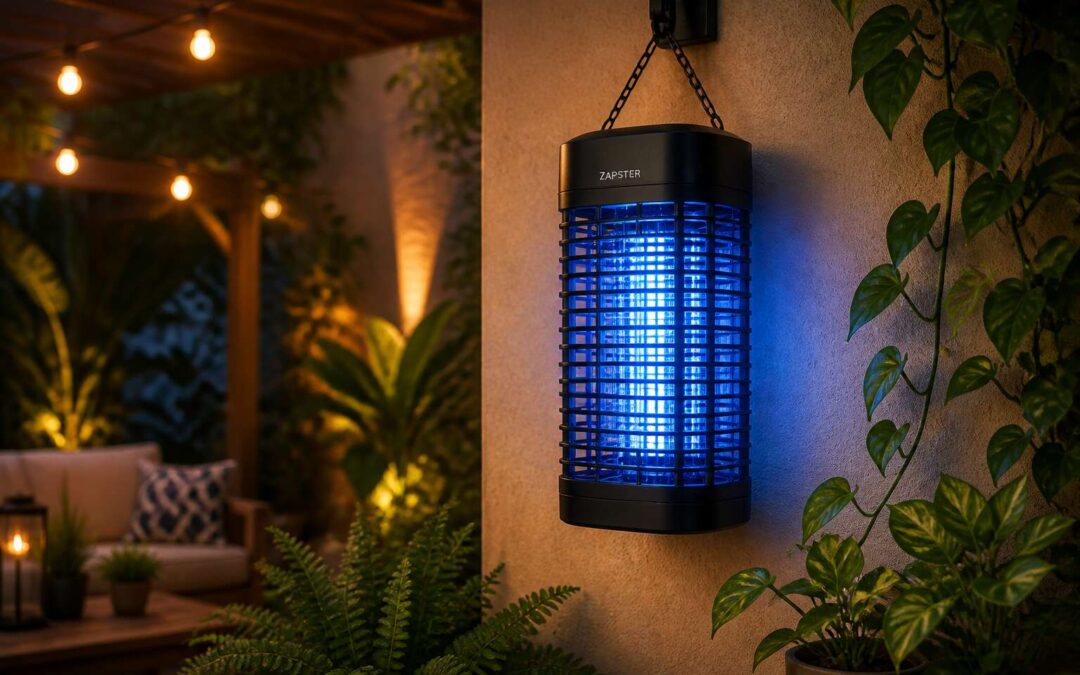
Understanding the Different Types of Flying Insect Killers
Electric Grid Zappers and Their Typical Price Points
Electric grid zappers separate into two functional classes: compact indoor units and weatherproof outdoor installations. Indoor models showcase a slim housing and a single UV tube, ideal for kitchens or garages. Outdoor counterparts demand sealed electronics, rust-resistant grates, and sturdier support brackets to withstand humidity and dust. These engineering choices directly influence the flying insect killer machine price. A basic 1,500-volt desk unit starts near R250, while a 2,500-volt commercial tower can reach R3,500. The typical price points break down as follows:
- Residential coverage up to 50 m²: R200 to R800
- Light commercial coverage 50 to 150 m²: R900 to R2,200
- Heavy duty units above 150 m²: R2,500 to R4,500
The flying insect killer machine price also adjusts with lamp type, including LED versus fluorescent, and the ease of sliding tray maintenance. Higher price often correlates with longer replacement cycles and safer grid access, factors worth weighing before purchase.
UV Light Traps with Glue Boards – Cost Variations
A single glue board can hold thousands of winged intruders before it surrenders its tack. These traps do not execute with voltage; they lure with ultraviolet light and then imprison on a sticky surface. That shift in mechanics creates a different cost story. The flying insect killer machine price for a UV glue board trap often appears modest at first glance, yet the true expense hides in consumables. Replacement boards and lamps cycle on schedules dictated by dust and fly pressure, so a cheap unit can become an expensive habit.
Entry level devices might cost R150, but their small boards fill in days. Commercial versions, with twin lamps and larger adhesive panels, demand a higher upfront sum. They also offer more efficient use of each board, stretching the interval between changes.
Several factors push the flying insect killer machine price upward:
– Number of UV tubes (single versus dual)
– Glue board size and surface treatment
– Sealed housing for washdown environments
– Tamper resistant clips for public spaces
The interplay of these elements matters more than the sticker price. A robust unit with a wide capture area and easy access for board swaps saves money over a season. That is the real arithmetic of glue board traps, where patience and replacement costs outweigh the initial outlay.
Propane-Powered Outdoor Traps – Premium Price Factors
Mosquitoes track a plume of carbon dioxide from hundreds of metres away. Propane powered outdoor traps exploit this by burning gas to release a steady current of CO2, warmth, and a secondary lure. These machines operate where electric grids and glue boards cannot survive: open spaces, damp gardens, braai perimeters. The flying insect killer machine price for such units reflects their engineering depth.
Three components drive the premium. The gas delivery system must meter propane with precision, since an uneven flame produces inconsistent plumes. The dispersal fan must push attractant across a wide radius. The housing must resist rain, dust, and corrosive coastal air.
- Precision gas valves for steady output across temperature swings
- High static pressure fans for long distance dispersal
- Corrosion resistant aluminium or stainless steel enclosures
When you compare the flying insect killer machine price across categories, propane units carry the steepest upfront cost. I have seen cheap propane units fail within a season. Refill cylinders and burner maintenance continue the expense!
Commercial-Grade Insect Killer Systems vs. Residential Units
A corner cafe and a full-scale food packaging plant demand different machines entirely. Commercial-grade insect killers run longer, lure a broader range of species, and withstand harsh sanitising chemicals. Residential units try to stay discreet and quiet; that lowers their complexity and cost. I have watched businesses buy residential units to save money, only to replace them within a season!
The flying insect killer machine price rises sharply once you enter commercial territory. Certifications, replaceable component modules, and higher duty ratings all add expense. Load shedding matters here too, and South African buyers increasingly pay extra for battery backup and inverter compatibility.
- Runtime expectations: 24/7 versus intermittent operation
- Service intervals: monthly inspections versus seasonal attention
- Compliance: health and safety certifications versus decorative design
Even a modest commercial unit carries a higher flying insect killer machine price, but the operational cost per month often ends up lower.
Key Factors That Influence the Price
Coverage Area and Killing Capacity
My neighbour paid 800 rand for a unit that barely covered his kitchen, while a warehouse spent 5,000 rand on a machine that clears a whole bay. The difference lies in coverage and killing capacity. A unit guarding 50 square meters uses a modest UV bulb and a quiet fan. Step up to 200 square meters and the flying insect killer machine price jumps, as airflow must reach every corner!
The killing capacity depends on the electrical grid’s strength and the collection tray’s size. Higher wattage attracts more insects but creates more heat and stress, so manufacturers use thicker metal.
When you compare models, look at these factors:
- Fan speed and air throw
- Wattage of the UV lamps
- Voltage and grid spacing
Each factor adds to the cost. The cheapest units fit small rooms, not large open spaces. When you see a flying insect killer machine price rise, you are paying for reach.
Build Quality and Material Durability
Open a cheap unit and you find thin aluminium that flexes under a thumb. A durable one feels like it could survive a load shedding tantrum. The flying insect killer machine price reveals what hides inside: rust resistant powder coating, sealed electrical housings, and a transformer that does not hum with desperation.
Heat is the silent killer. UV lamps run hot, and the surrounding metal expands and contracts daily. Cheaper metals warp, letting moisture creep into the grid. The unit becomes a decorative object.
- Stainless steel mesh resists corrosion from humidity and cleaning chemicals
- Reinforced brackets prevent sagging under continuous vibration
- Replaceable polymer trays instead of brittle plastic
South African conditions add another dimension. Coastal air carries salt. Highveld summers bring dust. The flying insect killer machine price climbs when manufacturers use marine grade alloys and sealed bearings. You are paying for material that holds its shape and keeps working.
Brand Reputation and Warranty Coverage
A brand’s reputation carries weight in the price. Established manufacturers have decades of field data. They know what fails in Durban’s humidity or Johannesburg’s dust. That knowledge gets built into the design. The flying insect killer machine price from a trusted brand reflects years of refinement.
Warranty coverage tells the same story. A two year guarantee on the transformer and UV lamps signals confidence. Cheap units offer three months and vanish when you call. The warranty terms reveal what the manufacturer expects to fail.
Consider what differentiates price points:
- Brands with local service centres in South Africa
- Warranties that cover labour and parts beyond the unit itself
- Response times measured in days, not months
A higher flying insect killer machine price reflects this commitment to lasting operation. I have seen cheap units die within a single Highveld thunderstorm season. You are buying peace of mind for next summer.
Extra Features Like Remote Control, Sensors, and Weatherproofing
The components you never touch often determine the flying insect killer machine price. A remote control lets you switch off a unit bolted to a Johannesburg warehouse ceiling without dragging a ladder across the floor. Sensors read ambient light and kill the UV lamps during daylight, which saves electricity and prolongs tube life. Weatherproofing matters most along the coast, where salt air corrodes cheap terminals within months.
Here is what the premium buys:
1. IP rated housings that resist coastal humidity
2. Photocell sensors that cut idle running hours
3. Remote switching for installations fifteen metres up
Each addition shifts the flying insect killer machine price, but the payoff is a machine that still fires up when the Highveld storm season arrives. You are paying for fewer callouts and a system that does not need you to babysit it.
Energy Efficiency and Running Costs
Ask any Johannesburg restaurant owner what they spend on electricity and watch them wince. That wince is worth studying. A 120-watt insect killer running twelve hours a day consumes roughly 44 kilowatt-hours a month. At current City Power rates, that is around R130. It sounds modest until you multiply it across several units, or across a factory floor. The running cost often dwarfs the original purchase within twenty-four months. In fact, the flying insect killer machine price is frequently less than a single year of keeping it plugged in.
Here is what separates efficient models from energy hogs:
- High-efficiency ballasts that cut parasitic losses
- Reflective backing that focuses UV output into the catch zone
- Low-wattage lamps that still meet the coverage spec
Mechanical timers also help, though the real savings come from matching the lamp to the room dimensions. The flying insect killer machine price tells you what you pay at the till. Your Eskom bill reveals what it truly costs.
Price Ranges for Various Models and Brands
Budget-Friendly Options Under $50
When you start comparing flying insect killer machine price tags across brands, the differences can be puzzling. One manufacturer charges like a premium coffee roaster, another prices like a corner cafe. Both might use the same plastic casing. Price ranges for various models and brands typically begin around R150 and stretch past R2,500 for residential units, depending on how much perceived prestige you want from a bug killer.
For budget-friendly options under $50, you are firmly in practical territory. These units skip smartphone alerts and weatherproofing. They simply sit there and eliminate insects.
Here is what the affordable tier delivers:
– A basic hanging loop or table stand
– A replaceable UV bulb with six months of output
– A manual cleaning brush
– A cord long enough to reach a plug without drama
The flying insect killer machine price under this threshold does not buy brand prestige, but it buys dead flies. In South Africa, that trade usually feels fair.
Mid-Range Machines Between $50 and $150
Move upward to the R950 to R2,800 band and the flying insect killer machine price starts reflecting engineering rather than assembly. This is where most South African households land after a single Highveld summer humbles a cheap unit.
The mid-range tier brings a stronger transformer, a bulb that holds output for a full season, and housing that shrugs off coastal humidity. Cleaning becomes easier with a removable tray, a feature you will appreciate at 11pm when the unit sounds like a deep fryer.
- Voltage fluctuation tolerance, useful when Eskom plays its favourite game
- Reflectors that concentrate the UV beam into a wider killing zone
- A safety cutoff switch for households with curious pets
Some units in this bracket survive a rain splash, though they stop short of full weatherproofing. You pay for durability and convenience, not a logo. For most homes, this flying insect killer machine price is the practical ceiling; anything higher buys features you rarely think about.
Premium and Commercial Units Above $150
Cross the $150 line and the flying insect killer machine price stops being about household convenience. It becomes an operational expense. A Cape Town fish processor or a Johannesburg cold storage facility cannot afford a unit that dies mid-season. That is why the premium bracket, roughly R2,800 to R30,000, pairs higher price with certification and sealed internals.
Brands differentiate themselves through:
- IP ratings that allow direct hose-downs
- Bulb warranties measured in years, not months
- Replaceable electronic boards instead of whole-unit swaps
The spread between models in this range is real. A R3,500 unit and a R15,000 unit might share the same wattage, but the latter uses corrosion-resistant fasteners and a transformer that tolerates Eskom’s voltage dips. I have seen buyers hesitate at the price, then watch a cheaper machine fail its first summer. When one shutdown costs a week of stock, the flying insect killer machine price justifies itself through avoided losses.
Comparing Price-to-Performance Across Leading Brands
Price ranges for various models and brands reveal a peculiar logic. Some Chinese imports undercut local units by half, yet their flying insect killer machine price includes no provision for replacement bulbs or spare parts. A brand like Rentokil or Ecolab charges more, but that extra cost buys distributor support and stock availability. You pay for the ecosystem around the machine.
Comparing price-to-performance across leading brands demands honesty. Mid-tier South African brands, assembled locally, deliver adequate coverage for a retail space. Premium international brands justify their figures through tolerances and service intervals. Here is what separates them at similar wattages:
- Replacement component availability in Johannesburg or Durban within 48 hours
- Guaranteed kill rates verified by third party testing
- Support for voltage fluctuation without failing
The cheapest unit often costs the most over three seasons. That is the real flying insect killer machine price, measured in downtime, not rands.
Hidden Costs and Maintenance Expenses
Replacement Bulbs, Glue Boards, and Propane Refills
A single replacement bulb can equal the original purchase cost of a flying insect killer machine price. The real expenses surface after installation. A UV lamp loses its attractant efficacy after roughly 8,000 hours, and the replacement part commands a significant portion of the initial unit’s value. Glue boards, particularly in humid coastal regions like Durban, saturate quickly and demand frequent changes.
Propane refills present a variable expense. The market price for gas cycles with supply, but each canister powers a trap for several nights. For facilities running multiple outdoor units, the recurring refill bill quickly exceeds the initial hardware investment. Consider these typical consumable costs:
- Standard UV replacement bulbs: R90 to R280 per bulb.
- Adhesive glue board refills: R45 to R150 per pack.
- Propane cylinder refills: R180 to R450 per exchange.
These figures shift with exchange rates and regional availability across South Africa. A unit priced at R1,200 might consume R500 in bulbs and boards within eighteen months. That hidden arithmetic transforms a flying insect killer machine price into a sustained budget item.
Cleaning and Servicing Requirements
The flying insect killer machine price reveals only a fraction of the real cost once cleaning and servicing enter the picture. A unit mounted near a biltong slicing station or bakery rack collects a greasy film of airborne oil and insect fragments. That residue insulates the electrical contacts and dulls the reflectors behind the UV tubes. In my experience, skipping this routine quietly reduces the catch rate by a measurable margin, which forces you to run the machine for longer hours and eat the electricity difference. The transformer bay and high-voltage grid particularly need attention in South Africa’s industrial dust belt.
Typical servicing intervals break down like this:
– Wipe the housing and internal panels with a dry, lint-free cloth every two weeks
– Vacuum the catch tray and any loose scales from the base plate monthly
– Check and reseat the wiring terminals every quarter using a micro screwdriver
An electrician or pest control technician in Johannesburg or Durban charges between R380 and R750 per callout just to perform those checks. When you calculate that against the initial flying insect killer machine price, the maintenance line item starts to rival the machine itself. The unit’s seals and rubber gaskets also perish under coastal sun, adding another recurring expense nobody mentions at the point of sale.
Electricity Consumption Over Time
The flying insect killer machine price rarely reflects what the unit will cost once electricity enters the equation. Take a typical 20-watt zapper running twelve hours a day: that consumption totals roughly 88 kilowatt-hours per year. At Johannesburg metropolitan tariffs, the added burden lands between R180 and R420 annually per machine. Scale that across a factory floor with eight units, and the electricity drain becomes a line item worth watching.
Heavier commercial models, especially those rated for large cold rooms or open loading docks, pull far more current. The UV tubes and transformer bay both draw power even during idle cycling. A site manager in Durban running six machines on a timer might still pay for a hidden baseline load.
The recurring costs stack this way:
– Annual electricity per unit: R180 to R420
– Timer device for automatic shutoff: R250 to R600 once off
– Increased usage during summer months when insects peak: 15% to 30% on top of baseline
Over three years, that operating spend can exceed the flying insect killer machine price you originally negotiated. The purchase price is only the first whisper; the meter hums the rest of the story.
Installation Costs for Hardwired or Ceiling-Mounted Units
Installation costs can ambush the unwary buyer. The flying insect killer machine price often excludes the electrician’s callout fee, which in Cape Town runs anywhere from R450 to R950 before a single screw is turned. Ceiling-mounted units demand ladder work, concrete anchors, and sometimes a second pair of hands.
Hardwired models also need a compliant circuit. That means an isolator switch, the correct breaker rating, and possibly a certificate of compliance. If the building is older, the wiring may need attention.
- Ceiling mounting kit: R150 to R400
- Electrician labour per hour: R350 to R700
- CoC inspection: R600 to R1,200
One retail manager in Pretoria paid more for installation than the flying insect killer machine price itself. The unit cost R2,100. The installation invoice ran to R2,650. Budget for the wall, because the machine is only half the expense.
Potential Repair Costs and Spare Parts Availability
Anyone who has nursed a failing unit through a busy summer understands the real cost of ownership. The flying insect killer machine price is a starting point, not a ceiling. Once the warranty lapses, repair bills emerge from components you never considered: transformers, high-voltage grids, and the capacitors that regulate current flow.
A single blown transformer can cost more than a third of the original purchase price, and that assumes the part exists locally. Imported machines without South African distributors leave owners waiting weeks for shipping. I have watched owners toss working units aside because a R40 capacitor failed, and the labour plus callout fee simply outweighed the machine’s remaining value.
Typical repair expenses include:
- High-voltage grid replacement: R350 to R900
- Transformer swap: R500 to R1,400
- Capacitor replacement: R150 to R400
Spare parts availability varies wildly. Commercial brands with local service centres command higher flying insect killer machine price tags, but that premium buys access to components. Budget units often become e-waste after a single fault.
Tips for Getting the Best Value for Your Money
Assessing Your Specific Insect Problem and Space
The fly that circles your kitchen at dusk is not the same pest as the mosquito breeding in your garden pond. A generic unit might miss both. Before you compare flying insect killer machine price, count the breeding sites and measure the zone you need to defend. A small café requires a different approach than a warehouse.
For best value, match the machine’s reach to your real problem. Use these factors:
- Identify the dominant insect species.
- Calculate the cubic volume of the space.
- Note entry points and airflow patterns.
Then set your budget accordingly. The cheapest option fails if the coverage area is inadequate. A higher flying insect killer machine price often includes robust build and better performance for your unique situation.
Reading Reviews and Independent Test Results
Star ratings tell you little without context. A five star review from a household user means nothing for a commercial kitchen. Read reviews from buyers who share your environment. Independent test results, especially from South African food safety or hospitality bodies, expose weaknesses in glue board adhesion or zapper coverage.
Patterns matter more than individual complaints. If three reviewers mention failed transformers within a month, treat it as a red flag. If local distributors stock spare parts, the flying insect killer machine price becomes easier to justify over time.
- Compare independent test results across similar coverage areas.
- Cross-check user reviews with local suppliers.
- Factor in running costs when evaluating the flying insect killer machine price.
Timing Your Purchase to Seasonal Discounts
Timing matters when you evaluate flying insect killer machine price. Retailers in South Africa often discount pest control equipment ahead of summer, when fly pressure peaks. Buying in late winter can yield savings of 15 to 25 percent. Seasonal discounts also appear after major holidays, when stock needs to move.
If you wait for these windows, you get the same unit for less. But consider this: a lower price means nothing if the machine fails during peak season. Purchase early enough to test the unit. Check whether the supplier offers price matching. Ask about bundle deals with replacement bulbs or glue boards. Some distributors include spare parts in the package, which improves overall value.
Evaluating Total Cost of Ownership Instead of Upfront Price
The cheapest flying insect killer machine price often conceals higher operating costs. A unit with poor seals or inefficient bulbs may require frequent replacements, eliminating any initial savings. In South Africa, where electricity tariffs climb steadily, energy consumption matters as much as the purchase figure. I always tell buyers to calculate the kilowatt draw against their usage hours, then compare the annual running cost to the upfront price. The gap between two machines can be substantial over a three year period.
Also consider consumables. Glue boards, bulbs, and attractant refills form a recurring expense. Some suppliers offer bulk packs that reduce per unit costs by up to thirty percent. When you factor these elements together, the real comparison emerges between total lifetime cost and flying insect killer machine price alone. That distinction changes which model represents genuine value.
Where to Buy – Online Retailers, Specialty Stores, and Wholesale Options
Hunting for a flying insect killer machine price often leads buyers to the first search result, but the sourcing channel changes the final cost. Online retailers like Takealot offer easy comparison, yet shipping fees can add hidden charges. Specialty stores provide expert advice but carry a premium. Wholesale outlets in Johannesburg give bulk pricing that lowers the per-unit flying insect killer machine price for commercial clients.
- Ask specialty suppliers about open-box or display models.
- Compare the full landed cost including delivery and VAT.
- Check local auction sites for surplus stock.
I have found that cash-and-carry stores often negotiate, especially when you buy multiple units. The cheapest flying insect killer machine price quoted online rarely includes the mounting kit, so verify the package contents. A local distributor saves you from shipping a heavy unit back for a warranty claim.
DIY vs. Professional Installation – When to Save or Splurge
Some installations tempt you to skip the expert. A plug in unit needs no help, but a ceiling mounted machine involves wiring, drilling, and load bearing walls. The flying insect killer machine price often looks lower when you buy it yourself and fit it over a weekend. That saving disappears when you damage the casing or misjudge the mounting height.
Professional installation costs more upfront, yet the unit performs as intended. Consider the room’s layout and the placement of food preparation surfaces. I have seen homeowners save on the flying insect killer machine price, then pay double for repairs after a failed DIY job.
Ask yourself three questions:
1. Are you comfortable with electrical work?
2. Is the mounting surface suitable for the unit’s weight?
3. Does your warranty require certified installation?
If you hesitate on any point, splurge on the professional. The peace of mind is worth the extra cost.