
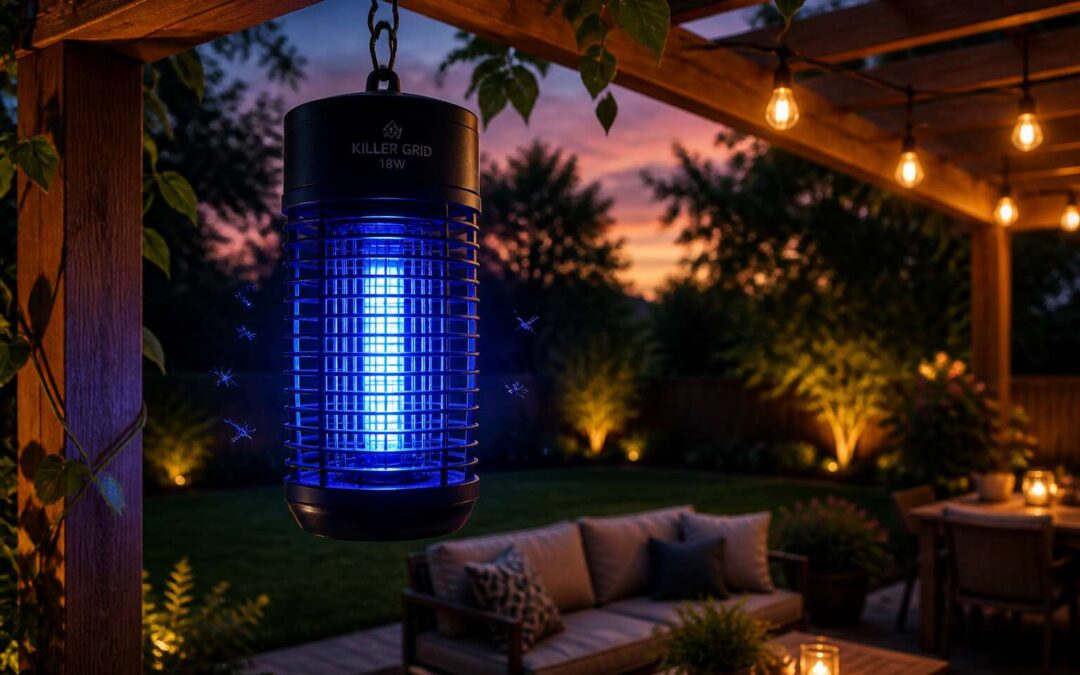
How 18-Watt Bug Zappers Operate
The Science Behind UV Light Attraction
Most insects navigate by light. They mistake UV radiation for the moon and fly straight toward it. A bug zapper 18w converts this instinct into a simple transaction. The tube emits ultraviolet light at roughly 365 nanometres, a wavelength invisible to humans but impossible for mosquitoes, moths, and midges to ignore. As they approach, the electric grid delivers a swift, lethal jolt.
The advantage of this system is its economy. The bug zapper 18w draws modest power while producing enough radiant energy to clear a patio or braai area. Flying pests are drawn from several metres away because UV light penetrates darkness better than white light. They do not learn to avoid it. They simply respond to the signal.
Placement matters less than people think. The science operates on its own. Once powered, the light handles the rest.
Electric Grid Voltage and Insect Elimination
The moment a moth bridges the two charged wires, the transaction is immediate. Inside a bug zapper 18w, a transformer steps up the mains voltage to somewhere between 2,000 and 4,000 volts. That current is lethal to insects, yet the amperage stays so low that the pulse is contained. The gap between the wires is calibrated precisely. A mosquito that slips through untouched on the first pass rarely survives the second pulse.
The sequence is quick:
1. The insect touches both grid wires simultaneously.
2. A capacitor discharges the stored energy.
3. The body vaporises instantly.
That sharp crack you hear is not the kill itself. It is the sound of air expanding after the flash. The bug zapper 18w does not poison or drown. It applies a measured electrical answer to the problem, and the grid clears itself with every jolt.
The Cycle of Attraction, Contact, and Discharge
The quiet hum of a bug zapper 18w is a promise of vigilance. Before the sharp crack of discharge, there is a silent dance of light and instinct. The ultraviolet tube casts its glow, a beacon for the disoriented flyer. It is this initial attraction that sets the entire operation in motion, pulling the insect from the darkness toward a fate it cannot perceive.
The approach is often hesitant, a series of erratic loops that bring the insect closer to the metal cage. The grid itself is the final barrier and the decisive instrument. When the insect’s body makes contact, the cycle completes with brutal efficiency:
1. The insect connects the two oppositely charged wires.
2. The high-voltage circuit instantly releases its stored charge.
3. The resulting arc passes directly through the insect’s body.
The discharge is a micro-event, a pulse of energy so brief that it leaves no lingering current. The bug zapper 18w then resets, ready for the next visitor. This continuous process of luring and eliminating is what makes the device so effective. It transforms an evening on the patio into a more peaceful experience, one free from the constant buzzing of pests. The unit works autonomously, a silent sentinel powered by a simple switch and the promise of a quieter night.
Advantages of Choosing an 18-Watt Model
Effective Coverage for Medium-Sized Spaces
One hundred and twenty square meters of patio, stoep, or open-plan living area. That is the quiet promise of a dedicated bug zapper 18w. It is the compromise between the feeble glow of a 10-watt device and the industrial hum of a 30-watt behemoth. This wattage hits a sweet spot, delivering sufficient ultraviolet output to lure insects from the perimeter of your space without creating an obnoxious light pollution that detracts from evening relaxation.
Consider the geometry of your evening. A single 18-watt unit, mounted at the correct height, projects a lure field that covers the average South African entertainment area with ease. You are not fighting against a gale-force wind or a swarm that has bred in a nearby wetland; you are handling the usual mosquitoes and moths that drift in from the garden. The coverage is effective enough to create a “safe zone” around the dinner table or the braai stand.
The advantage lies in the economy of placement. You rarely need multiple units for a standard suburban home.
– The 18-watt output offers a balance between energy draw and lamp longevity.
– It is powerful enough to attract insects across a wide radius, reducing the number of pests that actually reach your skin.
– It is lightweight enough for simple wall mounting or hanging from a pergola beam.
This model excels in the moderate arena, where a smaller unit would fail to clear the space and a larger unit would be overkill. It creates a sphere of influence that makes a single device the only necessary installation for the average household. It is the workhorse for the braai area, the veranda, and the poolside lounge. With this wattage, you are not just swatting at the problem; you are addressing the source of the nuisance with a focused, effective output.
Energy Efficiency Compared to Higher-Wattage Units
When you’re sizing up a bug zapper 18w unit, the first thought isn’t usually about power bills. It should be. An 18-watt model sits in a sweet spot that many higher-wattage units simply miss. You get enough ultraviolet output to clear a modest patio or braai area, but you never pay for the extravagant energy draw of a 40-watt or 60-watt machine. Over a full summer of nightly operation, the difference in electricity consumption becomes genuinely noticeable. You’re not just buying a tool to kill mosquitoes; you’re buying a device that respects your monthly budget.
Energy efficiency isn’t just about watts on a spec sheet. It’s about how the zapper converts that energy into attraction and elimination. A well-designed bug zapper 18w uses a high-voltage grid that delivers a quick, clean kill without constant re-firing. Higher-wattage units often burn through more power because they run larger transformers and brighter lamps, but they don’t necessarily catch more insects in a typical suburban yard. The extra brightness might draw bugs from further away, but it also attracts them past the grid, leaving you with a light show rather than a pile of dead pests. An 18-watt model, positioned correctly, covers the same practical area without the waste.
Consider the heat output too. A bug zapper 18w runs cooler than its bigger brothers. On a warm Highveld evening, you don’t want a device that radiates heat and makes the surrounding air even more uncomfortable. Cooler operation also extends the life of the internal components and the UV tube, so you replace parts less often. That’s another cost saving that quietly stacks up over time.
Here’s what you actually gain by choosing the 18-watt option over a higher-wattage unit:
– Lower electricity draw – Runs for hours on end without adding significant load to your household meter.
– Reduced heat emission – Keeps your seating area comfortable, even on still, humid nights.
– Simpler mounting – Lighter weight means you can hang it from a hook, place it on a wall bracket, or stand it on a table without heavy-duty fittings.
– Quieter operation – The transformer and grid work more gently, so you hear the satisfying crackle of a kill without a constant hum.
There’s also the matter of coverage. You might assume a 60-watt zapper clears a bigger radius, but in practice, an 18-watt model with a good reflector and proper lamp placement covers about 30 to 40 square meters effectively. That’s more than enough for a typical South African townhouse garden, a small holding, or an apartment balcony. The key isn’t raw wattage; it’s where you aim the light and how you manage surrounding competing light sources. If you’ve got a bright security floodlight nearby, even a 60-watt zapper will struggle. Fix that first, and your bug zapper 18w will do the job without complaint.
One more practical point: replacement lamps for an 18-watt zapper are cheaper and more widely available than those for odd-sized higher-wattage units. Every time you buy a new tube, you save money. Over the zapper’s lifespan, that adds up to a meaningful amount. You’re not locked into an expensive proprietary system. You just swap in a standard 15-watt or 18-watt UV bulb, and you’re back in business.
So when you weigh the advantages, the 18-watt model isn’t a compromise. It’s the rational choice for most homes. It delivers the insect control you need, keeps your electricity bill in check, and runs quietly and coolly through the summer months. The higher wattage might promise more, but in daily use, the 18-watt unit gives you the right balance of performance and economy. And that’s a trade-off worth making every single evening.
Low Noise and Minimal Disruption
The evening should sound like crickets and low laughter, not a transformer. A bug zapper 18w keeps it that way. The unit’s transformer runs at a near-silent level, and the high-voltage grid releases only a soft, intermittent snap when it makes contact. That is enough to handle the pests, but not enough to interrupt the conversation on your stoep.
Because it is quiet, this zapper is easier to live with in spaces where loud appliances feel intrusive.
- It doesn’t hum at a frequency that drills into your skull.
- It doesn’t pop loudly enough to make guests flinch.
- It doesn’t create a constant electric whine that makes you relocate to the other end of the garden.
The bug zapper 18w simply does its job. The UV lamp burns steadily, so your eyes stay on the fire or the night sky instead of a blinking trap.
Reduced Maintenance Requirements
Maintenance is where the bug zapper 18w proves its worth. Its design prevents heavy charring, so insects drop into the tray instead of fusing to the grid. This leaves the electrified surfaces clean and functional for far longer than comparable units.
You will rarely need to scrub the device. A quick wipe down every fortnight, coupled with a rinse of the collection tray, keeps it operating at peak performance. There are no intricate filters or proprietary cleaning fluids involved, which simplifies the entire process for any homeowner.
- Switch off and unplug the unit before any cleaning.
- Use a soft brush to detach any stubborn dry debris.
- Wash the tray with mild detergent and let it air dry.
Choosing the bug zapper 18w means your maintenance routine stays short and simple, leaving more time to enjoy the South African evening.
Comparing 18-Watt Zappers with Other Power Levels
12-Watt vs. 18-Watt vs. 30-Watt: What’s Different?
Wattage determines how well an electric killer handles your space. The bug zapper 18w sits between modest 12W models and heavy-duty 30W units, so picking the right one requires understanding the trade-offs.
- 12W devices work for small balconies or indoor corners, but they struggle with persistent swarms.
- An 18W model, like the bug zapper 18w, balances reach and power for typical patios and kitchens.
- 30W machines suit larger yards, yet they use more electricity and need frequent cleaning.
The real difference is practical. A 12W unit might cost less, but you may run it longer to achieve the same kill rate. Conversely, a 30W unit can be overkill for a compact braai area, and its extra ultraviolet output attracts insects from further away, potentially drawing more pests into your space. The 18W option delivers consistent results without the energy bill shock or oversized hardware.
Selecting the Right Wattage Based on Room Dimensions
The ceiling line changes everything. In a lounge with a standard 2.4 metre ceiling, a compact 12W device might handle the room, but raise that same ceiling to 3.2 metres and the coverage thins out. A bug zapper 18w holds its voltage zone close to the furniture height, where insects actually fly. The 30W machine pushes further, though at the cost of aiming and density.
Practical speaker space is a matter of volume. You have to read the room width and the height together. An 18W grid, mounted on a wall, creates reach that honestly follows the room’s cubic metres, not the wall surface. The result is a cleaner mapping of targets. The relation is useful:
– 12W: up to around 14 square metres of standard ceiling.
– bug zapper 18W: 14 to 25 square metres, with a ceiling slightly above average.
– 30W: anything over 25 square metres or a loft layout.
A long and narrow corridor is still a special case. No wattage handles that shape alone, but the bug zapper 18w tends to be the most useful in an average flat or townhouse.
Trade-offs Between Power, Coverage, and Operational Noise
In most homes, the real contest is not between killing power and silence. It is between coverage and discomfort. The bug zapper 18w sits at that intersection, offering a pragmatic trade-off. A 30W unit extends reach further, but the transformer emits a persistent hum that becomes part of the room’s furniture. I have seen more setups fail from ignoring this balance than from weak grids.
Lower wattage, say 12W, is nearly silent, yet its grid fails to hold a reliable field in a space with high ceilings. Operational noise rises almost linearly with wattage, a physical constraint rather than a design flaw. For a standard lounge, that bug zapper 18w delivers enough voltage density without introducing a persistent background drone.
Impact on Insect Species and Efficacy
Most South African households mount a 30W unit on the porch and then wonder why the catch tray stays sparse. The real difference sits deeper in the species profile. A 12W grid clips the tiniest chaffers, but it leaves the common house moth untouched. The bug zapper 18w carves its own channel. It handles the standard house moth, the smaller cockroach flyers, and the sporadic alates that appear in the evening. This is not a noise of power. It is a voltage threshold where an insect must physically load the gap to be collected.
– The 12W unit narrows only to wingless, fine-bodied insects.
– The bug zapper 18w strikes the mid sized dipterans and the pantry moth cycle.
– The 30W unit stretches the field, pulls in many larger bodies, but those larger ones often bounce free.
An 18W grid sits at the precise point where the species in a typical South African home become vulnerable. Every watt placed below, and the little flies evolve their escape. Every watt above, the tower of species changes. For the usual domestic pest profile, that narrow line is the reason the bug zapper 18w stays effective in a room that is mostly still.
Safety and Placement Considerations for Your Zapper
Indoor Safety: Avoiding Food Contamination and Fire Risks
The kitchen counter is not where a bug zapper 18w belongs. Ultraviolet light draws insects toward the device, and the electric grid can aerosolize tiny fragments of the insects it dispatches. Those particles drift onto food preparation surfaces. That’s a contamination risk worth taking seriously. The 18W unit also generates noticeable heat, so mounting it near curtains or plastic containers invites a fire hazard. Placement demands forethought:
- Keep the unit at least three meters from any food prep area.
- Never suspend it directly above a sink, stove, or open shelving.
- Verify the mounting bracket supports the weight without wobble.
A zapper shoved into a corner misses the traffic lanes insects actually use. One hung from a pantry hook may sit too close to stored grains. The unit should operate in a shadowed recess, clear of your daily routines.
Outdoor Weatherproofing and Mounting Height
The notion that a bug zapper 18w survives outdoors simply because it lives on a porch is optimistic. South African summers bring horizontal rain, persistent humidity, and a daily UV assault that will compromise a unit not rated for it. The difference between an IP44 rating and an IP65 rating is the difference between a device that lasts a season and one that lasts a decade. Moisture ingress is the primary killer, and the corrosion starts at the transformer well before the grid shows visible wear. Mounting height, however, is where most property owners sabotage their own efforts.
Field tests using the bug zapper 18w show that placement at 1.8 meters to 2.1 meters above the ground yields the highest interception rate for flying insects. Lower than that, and you attract pets and curious children. Higher, and the UV light scatters beyond the effective killing radius. The unit must also angle away from prevailing winds, otherwise the bait is diluted. Consider these guidelines for exterior setups:
– Attach the zapper to a fixed wall bracket, never a freestanding pole.
– Position it at least six meters from seating areas to keep the light out of eyesight.
– Orient the grid parallel to the perimeter fence, not facing the open yard.
The real casualty of poor outdoor installation is not the insect population but the unit itself. A bug zapper 18w hung under a thatched lapa invites heat retention, while one secured against a brick wall tends to stay cooler and draw a steadier current. The screws matter, too. Coastal properties demand stainless steel fixings, as galvanized alternatives corrode within a month of salt-laden breezes. You are not merely mounting a device; you are engineering a small ecosystem of light, voltage, and weather resistance. Get the height wrong, and the zapper becomes a decorative lantern. Get the waterproofing wrong, and it becomes an expensive paperweight.
Positioning Away from High-Traffic Areas and Eyes
Placement is a safety decision, not just an aesthetic one. A bug zapper 18w emits UV light that pulls insects toward the grid, but it also pulls curious eyes and wandering hands. Position the unit away from doorways, braai areas, and pathways where people gather. The glow is disruptive at night, and the snap of discharged insects draws attention.
Mount the zapper at least three meters from any seating zone. Keep it out of direct line of sight from windows and patios. Consider these rules:
- Face the grid toward an open wall, never toward a walkway.
- Place it above head height, around two meters, to avoid accidental contact.
That way, the bug zapper 18w works without becoming the centre of the evening. The light stays out of eyes, and the unit remains effective.
Protecting Children and Pets from Accidental Contact
A bug zapper 18w operates on an electric grid that poses a real risk to children and pets. The unit must be mounted high enough to prevent any accidental contact. A height of two meters or more works when placed away from jungle gyms, walls, or tree branches that a child could climb. Keep the zapper at least five meters from sandpits, pet runs, and outdoor play areas.
The light attracts insects, but young children and animals also notice it. They may reach toward the glowing mesh or throw objects at it. To reduce this hazard, follow simple placement rules:
- Position the unit where the base and grid are visible but not within direct jumping distance.
- Angle the unit toward an open wall, never toward a walkway or seating area.
This setup keeps the device effective while lowering the chance of shocks or burns.
Maintenance and Cleaning Tips for Longevity
Cleaning the Electric Grid Safely
The bug zapper 18w performs its grisly operation with reliable efficiency, but the electric grid slowly accrues the charred residue of its dealings. That build-up diminishes the spark and begins to smell like a burnt hair appointment. Before anything, cut the power entirely and wait a full minute for the capacitors to drain. A dry brush, preferably a stiff paintbrush, removes the crispy shell remains without forcing you into an uncomfortable electress with the metal.
- A narrow paintbrush to reach deep between the wires in a grid.
- A pair of insulating gloves, for a stray pop or an unexpected communication.
- A microfibre cloth for the exterior casing, never for the charged core.
Water is the silent saboteur. A single damp splash creates an unintended bridge for energy, and use of a liquid spray on the raw grid is exactly the wrong genius move. The Durban humidity calls for a weekly cleaning, while the Johannesburg Highveld air permits a fortnightly visit. The procedure itself is unglamorous, and it extends the life of your bug zapper 18w for several rotations, which cost you less than daily replacement unit.
When and How to Replace UV Bulbs
Every bug zapper 18w relies on its UV bulb to attract insects. After roughly 7000 hours of operation, the light output diminishes, and the unit catches fewer insects. Replace the bulb annually in Durban’s humidity, or every eighteen months on the Highveld, where the air is drier.
Turn off the unit and wait for the capacitors to settle. Remove the bulb by twisting a quarter turn, then lower it straight out. Dispose of it as e-waste. A fresh bulb slots back with the same reverse motion. Inspect the bulb’s ends for blackening; that is the first sign of burnout. Regular replacement keeps your bug zapper 18w performing without the cost of a full new unit.
Seasonal Storage and Winterizing
A bug zapper 18w demands simple upkeep to perform through KwaZulu-Natal’s humidity or the dry Gauteng winds. Unplug the device first. Then follow these steps: brush the grid with a soft-bristle brush to dislodge crispy remains, empty the collection tray, and wipe all surfaces with a dry microfibre cloth. Never use water or spray cleaners near the transformer. For seasonal storage, give the unit one final clean, let every part air-dry, and store it in a sealed plastic container with silica gel. Tuck the cord loosely to avoid kinks. This routine keeps your bug zapper 18w ready for the next warm season.
Troubleshooting Common Issues like Dim Light or Low Zapping
They say a whisper of care is worth a shout of repair. When your bug zapper 18w starts dimming like a tired firefly, the transformer might still be humming. The culprit is often a film of insect residue and dust settling on the UV tubes. This film blocks the very light that lures mosquitoes and flies to their end. Wipe the tubes with a dry cloth every two weeks. The electric grid itself also tells a story. A faint clicking sound during operation is normal. A loud, constant snap without visible prey suggests a short caused by moisture or a stray spider web. In South Africa, where Highveld thunderstorms arrive without warning, this is common.
If the zapping sound fades to nothing, inspect the high-voltage wires for corrosion. Salt-laden coastal air from Durban to Cape Town accelerates this. Also check that the collection tray has not filled to the point where it touches the grid, which grounds the charge. Your bug zapper 18w has no moving parts, so the only wear comes from environmental grime and loose connections. Tighten any screws at the base of the UV tubes. Confirm the power cord has no breaks near the plug. A faulty connection reduces voltage to the transformer, leaving the unit in a state of dim light and low zapping power. Keep the reflective backing behind the tubes polished. That surface is what projects the glow outward into your patio or workshop.
Consider these checks before you call the unit dead:
- Clean the grid and tubes first, as a thin layer of grime is the usual suspect.
- Test the unit in a different outlet to rule out a tripped breaker or faulty socket.
- Listen for a faint hum from the transformer. Its total silence points to an internal failure, which is rare in a quality bug zapper 18w but not impossible.
Most units fail from neglect, not from age. They sit in a corner, forgotten, until the summer insects return. A simple habit of monthly inspection, especially during the rainy season in KwaZulu-Natal, extends the life of the device. Remember to unplug the unit before any of these steps. The transformer holds a charge even after the switch is off.