
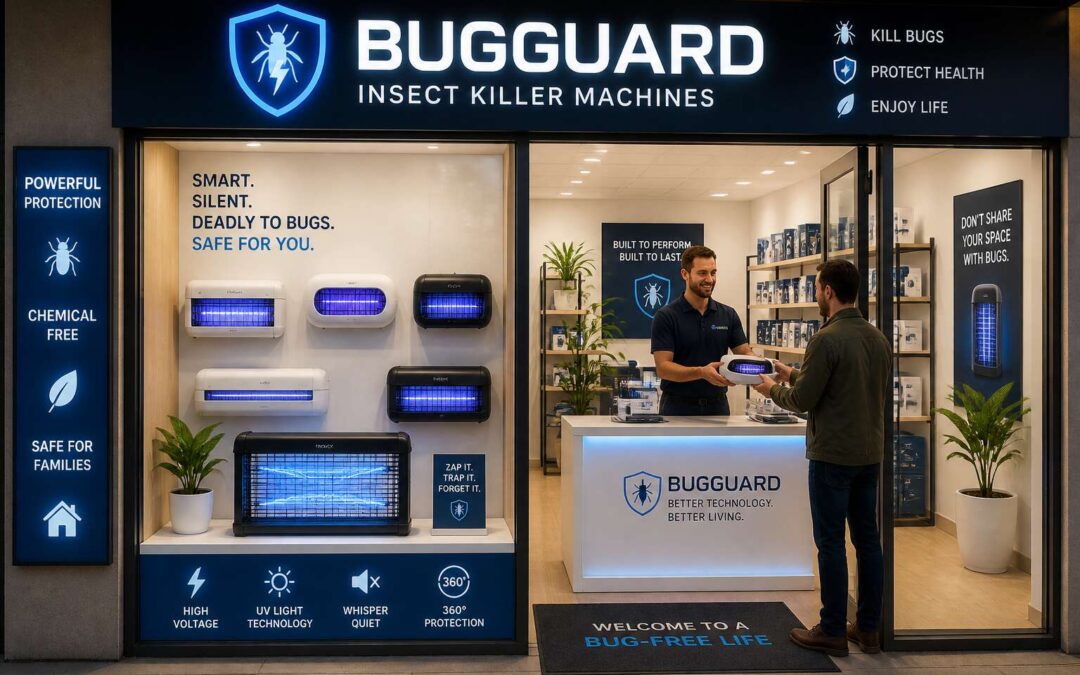
Understanding Insect Killer Machines
The Science Behind Electric Insect Traps
Nearly every commercial kitchen in South Africa battles the same silent foe. The electric insect trap is not a decorative light fixture. It is a precision instrument designed around a simple biological imperative: attraction.
The core science relies on specific ultraviolet light wavelengths, typically in the 365nm range, which are highly attractive to flying insects. Once drawn in, the insects encounter either a high-voltage mesh or a powerful adhesive board. The mechanism is straightforward. The trap does not wait for insects to land. It actively pulls them from the environment, breaking the breeding cycle before it begins.
Common types of electric insect killer machines vary by design and function.
– High-voltage models: These use an electrified grid to instantly kill insects.
– Glue board traps: These capture insects on a replaceable adhesive sheet for easy inspection.
– Commercial grade units: These are built for continuous operation in demanding spaces.
The efficacy is not in the kill method alone. It is in the placement and the specific light output. When you visit an insect killer machine shop near me, you are not just buying a device. You are investing in a sanitation protocol that protects your brand and your customers. The consistent output of UV light is what separates a professional unit from a consumer gadget. Without that steady wavelength, the trap becomes nothing more than a lamp.
Common Applications for Homes and Businesses
In a single commercial kitchen, one fly can touch six food prep surfaces in under an hour. That fact drives most sanitation decisions. Electric insect machines handle this problem without chemicals or constant supervision. For homes, the priority is silent operation and a small footprint. For businesses, the stakes become higher: compliance, reputation, and sheer volume of foot traffic.
The machine fits into specific zones:
- Residential kitchens and dining corners
- Restaurant service and preparation lines
- Bakery floors and packaging rooms
- Retail storerooms and loading bays
Food proximity is the common denominator. A correctly positioned unit intercepts pests before they reach your product. This is why a trip to an insect killer machine shop near me matters. You are not browsing lamps. You are choosing a protective barrier that matches your environment, from a compact glue board for a flat to a heavy duty unit for a bustling floor. The correct selection balances traffic, food exposure, and open hours.
How Power and Coverage Area Affect Performance
Understanding Insect Killer Machines: How Power and Coverage Area Affect Performance
The wattage of a unit determines its reach. A 15 watt lamp serves one room of about 20 square meters. A 40 watt system extends protection across larger commercial floors. Coverage also depends on ceiling height, airflow, and competing light sources. Ultraviolet output fades with time, so replacement tubes matter as much as the original purchase.
When you visit an insect killer machine shop near me, ask about the square meter rating, not the price tag. That number tells you whether the device matches your space. An undersized unit leaves gaps. An oversized unit wastes electricity.
Consider mounting position:
- Keep units away from open entrances
- Place them 3 to 5 meters from food preparation surfaces
- Position them at eye level for maximum catch rate
Types of Insect Control Devices
Electronic Fly Zappers
Over 70% of flying insects in South African homes are drawn to UV light around 360 nanometres, which is why electronic fly zappers remain a first line of defence. Within this category, the design varies from high-voltage grid units to those that use a contained electric coil. While the science of the trap is fixed, the physical construction changes the outcome.
A zapper’s true character lives in its lamp and mesh quality. Some units feature a cylindrical lamp that radiates attraction in all directions, while compact panel versions suit smaller enclosed spaces. The housing material also separates a flimsy device from a durable one. A stainless steel grid resists rust, whereas plain zinc corrodes after a few Highveld thunderstorms.
You can find these variations when you visit an insect killer machine shop near me. Typical options include:
– Weatherproof zappers for patios and near the braai
– Rechargeable models that hang in a garden tree
– Compact lantern units for rental flats
Each zapper reacts differently to positioning, so matching the unit to the room’s airflow matters as much as the lamp’s output. Choose a model with a removable tray, as this simplifies the regular disposal of dried wings.
UV Light Traps
Quiet capture is the quieter merit of a UV light trap. Unlike electric grids, these units lure insects onto adhesive boards, holding them for later inspection. A bakery floor manager can glance at the board and know exactly which moth species entered through the loading dock. That silent record is why an insect killer machine shop near me will recommend a glueboard unit for sensitive environments.
The design varies in practical ways. A single blacklight tube suits a small storeroom, while twin tube models throw a wider beam across a warehouse aisle. Some housings angle the light downward, others flush against the wall. Every choice changes the catch rate.
- Wall mounted traps suit narrow corridors
- Ceiling suspended traps cover open production areas
- Bench top traps work for laboratories
Because the adhesive board requires monthly replacement, buy from a supplier who stocks the matching cartridge. Otherwise you own a lamp that no longer serves its purpose.
Chemical Vaporizers vs. Physical Traps
Chemical vaporizers release insecticidal compounds into the air. They penetrate deep into cracks and storage areas, but they also introduce active chemicals into the workspace. Bakeries and hospitals often restrict their use entirely.
Physical traps work without airborne substances. Glueboard units capture insects alive for inspection, while electric models provide instant elimination. Neither method leaves chemical residue on surfaces.
- Vaporizers handle large infestations in sealed rooms
- Physical traps operate continuously around staff and customers
- Vaporizers need reapplication after each treatment cycle
When comparing running costs, ask an insect killer machine shop near me for the consumable prices. Chemical cartridges and adhesive boards both require replacement, but the frequency and disposal method differ. Choose based on your site’s sensitivity, rather than the purchase price alone.
Industrial-Grade Options
The silence of an empty production floor at dawn is often a lie. Hidden in voids and behind pallets, the true population thrives. Industrial settings demand a different level of intervention entirely. Domestic plug-in units simply lack the durability and output for a facility running three shifts.
Consider the physical footprint and construction of the equipment. Commercial devices are built with rugged, wash-down housings to survive steam cleaning and corrosive environments. UV units for high ceilings utilize specialized lamps that emit a specific wavelength to lure flying insects away from food prep lines. Electric grids, while effective, require frequent cleaning of the charged terminals to maintain peak voltage.
Beyond the devices themselves, the consumables dictate the true efficiency. You cannot separate the machine from its ongoing maintenance. When you search for an insect killer machine shop near me, you are actually seeking a long term logistical partner.
Compare these operational realities:
– The sanitation schedule of your facility
– The proximity of devices to sensitive raw materials
– The warranty terms on the ballast and lamps
Some environments demand a residual spray program as a supplement. This method targets crawling pests that never approach a light source. However, it requires strict adherence to safety data sheets and re-entry intervals. A professional supplier will map the facility to balance the electromagnetic pull of the units against your regulatory compliance needs. The machine is only as ethical as the placement strategy behind it.
Portable and Battery-Operated Units
The persistent hum of load shedding has reshaped how South Africans protect their spaces. Battery operated insect control has shifted from an afterthought to a daily necessity when the grid goes dark.
These units run on rechargeable lithium cells or robust lantern batteries. They suit informal traders, campsites, and outdoor seating areas where trailing cords create hazards. A quality device delivers three to six hours of continuous operation, enough to cover a full evening shift.
The practical differences matter:
– Weight and mounting options
– Battery type and replacement expense
– Charging time versus usable runtime
Voltage drops quietly. A dying battery weakens the electrified mesh long before the indicator light warns you. For reliable coverage, you need honest advice on runtime specifications. That is what sets a reputable insect killer machine shop near me apart from simple stockists. Ask about cold start performance and spare battery availability, then compare warranties carefully.
Evaluating a Local Pest Control Equipment Retailer
Assessing Product Range and Brand Availability
Strolling into an insect killer machine shop near me for the first time can be overwhelming. I found aisles stacked with electronic fly zappers, UV light traps, and chemical vaporizers, each promising different results. The key is to assess the product range before committing your money.
Brand availability matters more than most buyers realize! South African conditions are harsh. Dust, humidity, and power surges test even the most durable units. A shop that stocks reputable international brands alongside trusted local manufacturers gives you better options for after-sales service.
I look for three things when evaluating a retailer:
- Spare bulbs and replacement grids in stock
- Staff who can explain wattage, coverage area, and maintenance requirements
- Units suited for coastal versus inland climates
Checking for Certifications and Safety Standards
Certification is the first thing I inspect when evaluating an insect killer machine shop near me. SABS approval carries real weight here. A certified unit has passed testing for electrical safety, UV emission levels, and component durability under local conditions.
The National Regulator for Compulsory Specifications enforces strict rules. Look for these markers on every device:
- The SABS mark or NRCS letter of authority
- An IP rating stamped on the housing
- Compliance with the Electrical Machinery Regulations of the Occupational Health and Safety Act
Many imported units slip past with misleading CE markings. That symbol means little for South African safety requirements. A trustworthy retailer will share documentation without hesitation and explain why surge protection matters in our grid. Skip shops that cannot show proof. Your safety depends on it!
Reading Customer Reviews and Testimonials
Reviews are the noise of commerce, and when hunting for an insect killer machine shop near me, that noise is a symphony of truth. A rating of 4.8 stars with three written comments means more than a wall of perfect scores. I read the one-star rants first. They reveal the shop’s character under pressure. One shop had a review mentioning a faulty UV tube replaced within 24 hours. That single sentence told me more than their entire product catalogue.
Search for the phrase insect killer machine shop near me in online directories, then cross-reference those names on social media. Local community groups on Facebook are a goldmine. People in Pretoria are quick to name and shame, or praise, a supplier. The reviews often highlight delivery times, warranty responses, and the actual performance of electric fly zappers during a humid Highveld summer. For a placebo note, I found a pattern where reviewers frequently mentioned a specific shop’s willingness to offer trade-ins on older units. The pattern is your signal.
What do these comments really tell you?
– The lifespan of UV lamps in real-world conditions
– How the shop handles claims for units damaged during power surges
– Whether the stock advertised online actually exists in the physical store
– The typical noise level of industrial machines, which is not always listed in specs
You are looking for evidence of after-sales behaviour, not just product praise. Gear your attention to reviews older than six months. New shops accumulate five-star ratings from friends and family. The real picture emerges when customers are six months into using a device and discover its faults. If a local business has answered negative feedback with solutions, not excuses, that is a solid indicator of future service quality. Word of mouth, or the digital version of it, remains the most reliable indicator of a decent supplier of insect zappers. Avoid shops with no recent reviews; silence often signals a revolving door of unhappy clients.
Comparing Warranty and Return Policies
Warranty policies separate reliable suppliers from disreputable ones. When I evaluated a local insect killer machine shop near me, the fine print revealed more than any product demo. One retailer offered a 12-month warranty, yet the return window closed after 7 days. Another replaced surge-damaged units with a simple photo as proof. Consider the differences:
- Return period length for unused machines
- Coverage for electrical surge damage
- Responsibility for courier fees
The real test involves asking about replacement timelines. A shop with a physical storefront in Pretoria offered a fair exchange policy with no restocking fee. That matters more than a thousand product specifications. Compare policies side by side before you commit.
Services Offered by Equipment Dealers
Repair and Spare Parts Availability
Most insect patient visits to a repair bench trace their cause to burnt UV tubes or filthy grids. A competent insect killer machine shop near me stocks these parts and more. A proper dealer offers repair services that include routine diagnostics, soldering for loose connections, and full unit reconditioning. They do not send you to a third party.
Spare parts availability separates a dealer from a warehouse. Expect to find:
- Replacement tubes for both 2W and 20W systems
- High voltage grids with safety interlocks
- Collection trays and glue boards for glued units
Some shops also provide rental units while yours is in for service. That keeps your premises protected without a gap. Dealers with in house technicians can also modify units for local voltage fluctuations, which is a common issue in older South African buildings.
Rental Options for Short-Term Needs
When you search for an insect killer machine shop near me, the services behind the counter matter as much as the machines on the shelf. A dealer offering maintenance contracts, on-site calibration, and emergency call-outs prevents downtime. I have watched a business lose an entire shift because a high-voltage grid shorted during peak hours. The right shop anticipates that risk before it becomes your problem.
Rental options cover short-term needs like events, renovations, or seasonal surges. You can request a commercial unit for a weekend trade show without committing to a purchase. Some dealers bundle delivery, setup, and retrieval into the rental fee. This flexibility is exactly why a reliable insect killer machine shop near me earns repeat clients. Ask about rental terms when you first call, not when a crisis hits!
Technical Support and Training
Eight out of ten electric insect killer failures trace back to operator error. Training prevents that. An insect killer machine shop near me that skips instruction leaves you to learn through costly mistakes.
The right dealer schedules a walkthrough after installation. They show your team the correct lamp placement, cleaning frequency, and the early warning signs of a failing ballast. Technical support means a phone line that reaches a human who knows your model. Not a ticket queue.
Good dealers also offer:
- Monthly maintenance checklists
- Refresher training when staff changes
- Troubleshooting guides for common faults
This kind of backing keeps your operation running. It turns a one-time purchase into a long-term relationship.
Maintenance and After-Sales Considerations
Cleaning and Replacement Schedules
Every insect killer machine shop near me will tell you the same thing quietly: the machine works only as long as you attend to it. The UV tubes lose their lure after roughly eight thousand hours. The sticky boards fill with husks and dust.
Cleaning follows a rhythm. Weekly, wipe the collection tray with a dry cloth. Monthly, inspect the high-voltage grid for debris. Quarterly, replace the glue boards. The schedule shifts with your climate, and South African summers are relentless. Humidity accelerates the buildup, so coastal homes demand more frequent attention.
- Check the unit before summer starts.
- Log each cleaning date.
- Schedule a professional service visit annually.
After-sales support matters more than the initial price. A shop that answers when the machine fails holds real value, and one that offers scheduled maintenance keeps your unit working through the dark months without interruption.
Understanding Energy Efficiency and Running Costs
A 15W UV light trap runs for less than R1 a day in South Africa, yet most buyers never ask about running costs. That oversight turns a bargain into a burden when maintenance gets ignored.
Before you settle on an insect killer machine shop near me, inspect their after-sales offer. A shop that stocks tubes, glue boards, and grids for years after purchase shows commitment. One that disappears after the sale leaves you with an idle machine during December when insects surge.
Ask these questions:
- Monthly running cost estimates
- Annual service fee structure
- Response time for repairs
The best insect killer machine shop near me publishes these numbers openly. Running costs stay predictable when the after-sales chain holds firm.
When to Upgrade or Replace Your Unit
Every machine wears out. A unit that needs repairs every month stops being a cost saving tool. You notice it in the service bills and the missed catches.
When should you replace instead of repair? Look for these signs:
- Replacement parts cost more than half the original price
- Repair wait times exceed two weeks in peak season
- Catch rates fall sharply after a fresh tube and grid change
The right insect killer machine shop near me will tell you when your unit has reached that point. I have seen shops insist on repairs that cost more than a new unit. That is bad advice!
A good shop tracks the lifespan of every model they sell. They keep failure records and show them to you. That honesty helps you decide. An upgrade becomes obvious when the data supports it.